India is the world's most populous country — 1.4 billion people in 3.29 million km², a federal republic of 28 states that is simultaneously one of the world's oldest civilisations and its largest democracy. It is a country of bewildering diversity: 22 official languages, over 1,600 dialects, six major religions, and a landscape ranging from the Himalayan peaks to tropical beaches and from Thar Desert sand dunes to the rainforests of the Western Ghats. It contains the world's most visited building (the Taj Mahal), the most sacred river (the Ganges), the largest film industry by output (Bollywood), and some of the world's finest cuisine. India is not a destination but a lifetime.
Capital: New Delhi
Population: ~1.4 billion — the world's most populous country (surpassing China in 2023)
Area: 3,287,263 km² — seventh largest country in the world
Currency: Indian Rupee (INR)
Languages: Hindi and English (both official at federal level); 22 scheduled languages; over 1,600 dialects spoken
Independence: 15 August 1947 from Britain; partition into India and Pakistan; republic since 26 January 1950
Fascinating Facts
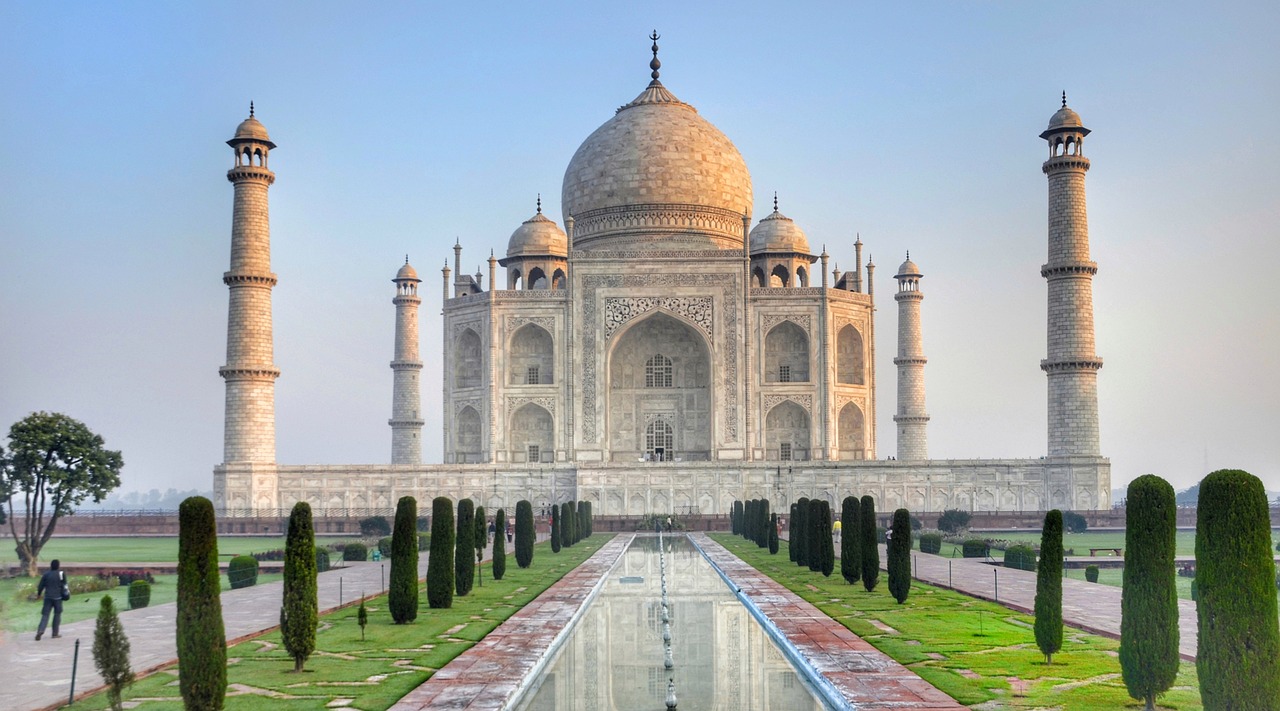
- The Taj Mahal — love in marble: The Taj Mahal in Agra — commissioned by Mughal Emperor Shah Jahan as a mausoleum for his wife Mumtaz Mahal, built by 20,000 workers over 22 years (1632–1653) — is one of the most perfect buildings in human history. Its white Makrana marble changes colour through the day — pink at dawn, white at noon, gold at sunset, silver by moonlight. It receives approximately 8 million visitors per year.
- Zero, chess, and shampoo — India's gifts to the world: India's contributions to human civilisation include: the numeral zero (developed by Indian mathematicians in the 5th century, without which modern mathematics is inconceivable), the decimal number system, chess (chaturanga, invented in the Gupta Empire, 6th century AD), yoga, the game of snakes and ladders, and the word 'shampoo' (from the Hindi champo, meaning to massage). The Vedas (composed c. 1500 BC) are among the oldest texts in continuous use in human history.
- Varanasi — the oldest living city: Varanasi (Benares) on the Ganges is one of the oldest continuously inhabited cities in the world — settled for at least 3,000 years, and considered by Hindus to be the holiest city on Earth. The dawn boat ride past the ghats (stone steps descending to the river) — where pilgrims bathe, priests perform puja, and bodies are cremated on pyres at the burning ghats — is one of the most profound travel experiences available anywhere.
- India's tiger comeback: India's tiger population has recovered from approximately 1,400 in 2006 to over 3,600 in 2022 — the most successful tiger conservation programme in the world, achieved through the Project Tiger initiative (launched 1973), the creation of 54 tiger reserves, and strict enforcement. India now holds approximately 75% of the world's wild tiger population.
Nature & Key Destinations
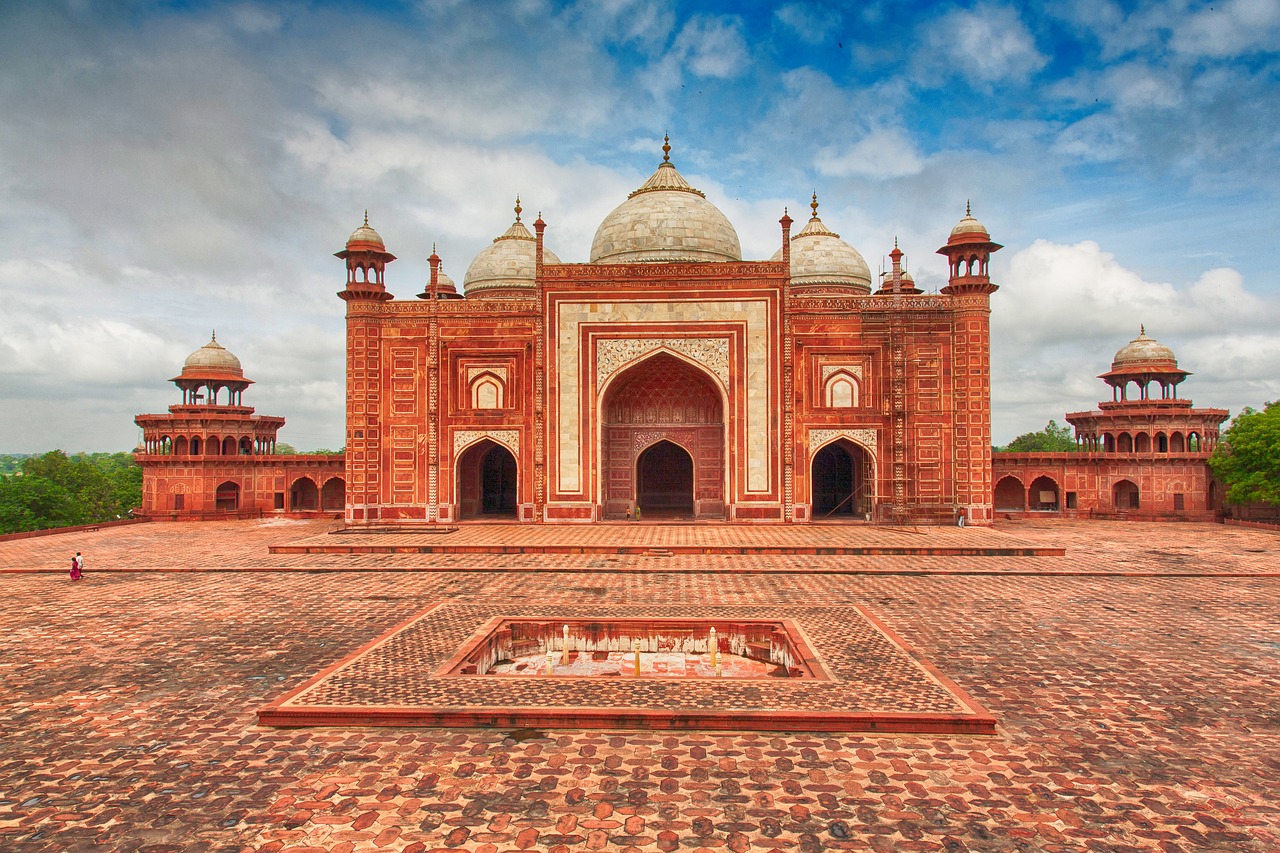
- The Golden Triangle & Agra: Delhi (the Red Fort, Jama Masjid, Humayun's Tomb, Chandni Chowk's labyrinthine markets), Agra (the Taj Mahal, Agra Fort, the ghost city of Fatehpur Sikri), and Jaipur (the Pink City — Amber Fort, Hawa Mahal, the City Palace, Jantar Mantar astronomical observatory) form India's most visited heritage circuit.
- Varanasi & the Ganges plain: Varanasi's dawn ghats, the Ganga aarti ceremony at sunset (priests swinging fire torches to drumbeats before thousands of pilgrims), the Sarnath deer park (where the Buddha gave his first sermon), and the pilgrimage city's extraordinary compression of life, death, faith, and commerce into a single riverbank.
- Kerala & the Western Ghats: Kerala's backwaters (houseboat journeys through a network of canals, lagoons, and rice-paddy waterways), the Periyar tiger reserve, the tea and spice plantations of Munnar, and the beaches of Varkala and Kovalam. The Western Ghats rainforest — a UNESCO World Heritage biodiversity hotspot with over 7,400 flowering plant species — runs the entire length of India's western coast.
- Rajasthan & tiger reserves: The desert forts and painted havelis of Rajasthan (Jaisalmer, Jodhpur, Udaipur's lake palace), the tiger safaris of Ranthambore and Bandhavgarh, and the ancient temple cities of Hampi (Karnataka) and Khajuraho (Madhya Pradesh) complete an India that extends far beyond the Golden Triangle.
Cuisine
- The infinite regional diversity: Indian cuisine is not one cuisine but thirty — each state with its own distinct traditions: the tamarind-soured seafood curries of Chettinad, the mustard-oil fish dishes of Bengal, the lentil-and-rice idli-sambar breakfast of Tamil Nadu, the tandoor breads and cream curries of Punjab (butter chicken, dal makhani), the vinegar-braised vindaloo of Goa, and the coconut-and-curry-leaf seafood of Kerala. The Western understanding of 'curry' barely scratches the surface.
- Street food culture: India's street food is among the world's most extraordinary — pani puri (hollow crispy spheres filled with spiced tamarind water, popped whole into the mouth), Mumbai's vada pav (spiced potato fritter in a bread roll, the city's defining snack), Delhi's chole bhature (chickpea curry with deep-fried bread), and the chaat culture of every city, in which sour, spicy, sweet, and savoury are combined in a single bite.
- Chai & the masala chai tradition: Masala chai — black tea simmered with milk, ginger, cardamom, cinnamon, cloves, and black pepper — is India's defining drink, consumed by hundreds of millions daily from clay kulhad cups at railway station stalls. The chai wallah (tea vendor) is a social institution, and the ritual of the morning chai is as important to Indian daily life as the coffee ceremony is to Ethiopia.
Traditions & Culture
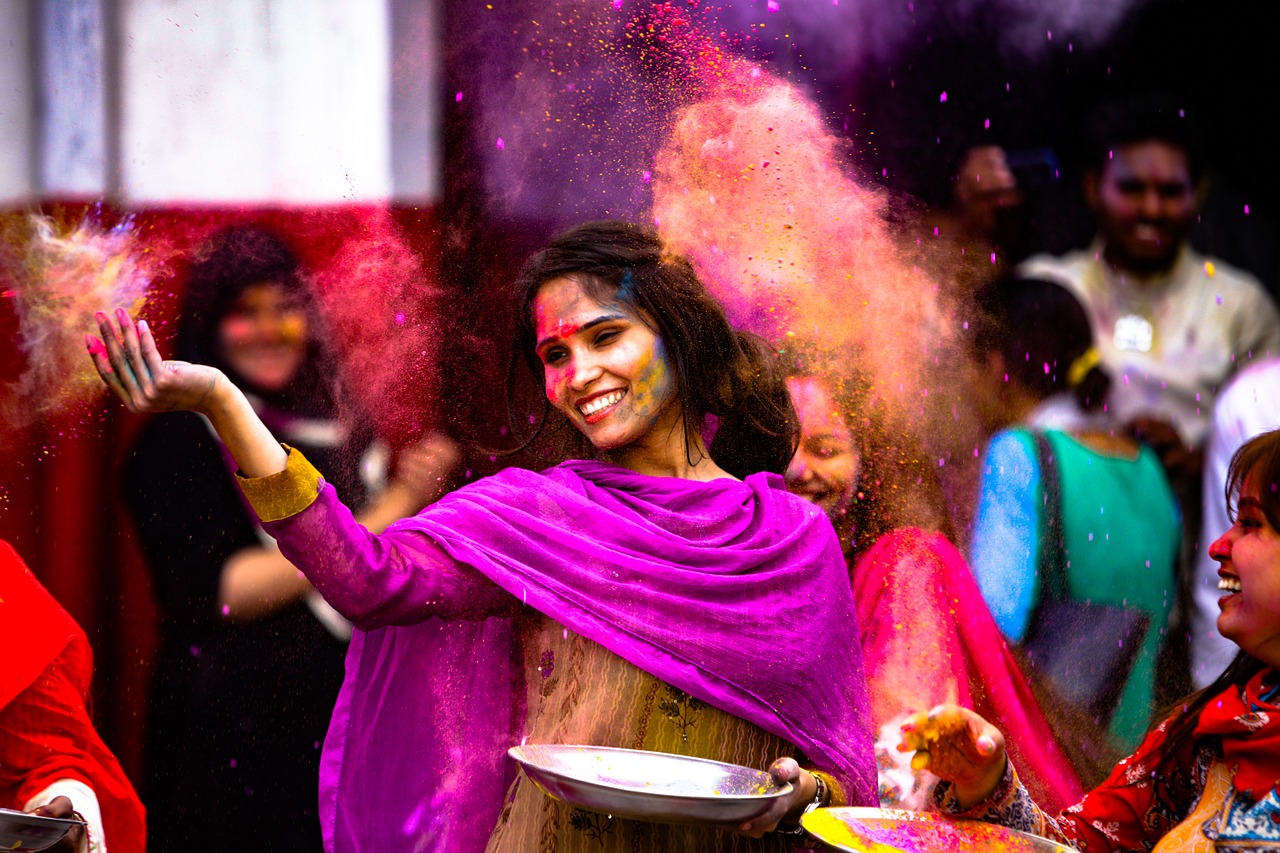
- Hinduism, diversity & the festival calendar: India's cultural calendar is a continuous sequence of festivals — Diwali (the festival of lights, when the entire country ignites with lamps and fireworks), Holi (the explosion of colour that signals spring's arrival), Durga Puja (Bengal's ten-day celebration of the goddess), Navratri, Ganesh Chaturthi, Eid, Christmas, and dozens of regional festivals make India the world's most festive nation by any measure.
- Bollywood & the art traditions: Bollywood (Mumbai's Hindi film industry) produces over 1,000 films per year — more than Hollywood — and is watched by a global audience of billions. India's classical dance traditions (Bharatanatyam, Kathak, Odissi, Manipuri), its miniature painting schools, its classical music (Carnatic and Hindustani), and its living craft traditions (Varanasi silk weaving, Rajasthani block printing, Kerala temple metalwork) represent one of the world's most diverse cultural inheritances.
Climate
- Tropical to alpine, strongly seasonal: India's climate is dominated by the monsoon (June–September), which brings life to the subcontinent but makes travel difficult in many regions. The best time for most of India is October–March — cool, dry, and clear. Rajasthan is bearable October–February; Kerala and the south are pleasant November–February; the Himalayas are accessible May–October. Avoid the pre-monsoon heat of April–May in the plains (40–47°C).

 India
India-Monkey Temple(Galtaji) – Agra-Taj Mahal-Agra Fort-Mehtab Bagh-Varanasi-Sarnath-tour-program-web-tours.jpg "Incredible India: Golden Triangle & Varanasi Experience")
