Iran is a country of 88 million people in the heart of the Middle East — the direct heir of the Persian Empire, one of the oldest and most continuously influential civilisations on Earth. From Cyrus the Great's Achaemenid Empire (the world's first to respect the rights of conquered peoples, 550–330 BC) to the Sassanid Empire that gave the world its first structured bureaucracy, to the Islamic Golden Age's Persian poetry, mathematics, and architecture — Iran's cultural contribution to humanity is immense. Its landscapes range from the Alborz Mountains and Caspian forest to the Dasht-e Kavir salt desert and the Persian Gulf coast, and its cities — Isfahan, Shiraz, Yazd, Tabriz — contain some of the finest Islamic architecture anywhere. Despite decades of international isolation, Iran's people are among the most genuinely hospitable in the world.
Capital: Tehran — population ~9 million
Population: ~88 million
Area: 1,648,195 km² — 17th largest country in the world
Currency: Iranian Rial (IRR); Iranian Toman (the common unit, equal to 10 Rials) used in daily speech
Language: Persian (Farsi — official); Azerbaijani, Kurdish, Mazanderani, Arabic, and Balochi widely spoken by minorities
History: Persian Empire from 550 BC; Islamicised 651 AD; Safavid dynasty 1501–1736; Islamic Revolution 1979
Fascinating Facts
- Persepolis — the ceremonial capital of the world: Persepolis (Takht-e Jamshid), built by Darius the Great from 518 BC on a vast stone terrace in the mountains above Shiraz, was the ceremonial capital of the Achaemenid Persian Empire — the largest empire the world had yet seen. The Apadana Staircase's bas-reliefs depict delegations from 23 subject nations bringing tribute, each in their native dress, in the most detailed record of the ancient world's ethnic and cultural diversity. Alexander the Great burned it in 330 BC; its ruins are among the most powerful in the world.
- The Persian poetry tradition: Persian literature contains some of humanity's greatest poetry — Rumi (Jalal ad-Din Muhammad Rumi, 1207–1273), whose Masnavi is considered the greatest work of mystical poetry ever written, is the best-selling poet in the United States; Hafez (1325–1390), whose ghazals are used for divination (fal-e Hafez) across Iran; Omar Khayyam, whose Rubaiyat transformed English literature through FitzGerald's translation. Iran's poets are revered as prophets; their tombs are pilgrimage sites.
- Ta'arof — the elaborate Persian politeness system: Ta'arof is Iran's intricate system of ceremonial politeness and ritual self-deprecation — a set of social protocols in which offers must be refused multiple times before being accepted, compliments must be deflected, and elaborate expressions of unworthiness precede every action. When an Iranian shopkeeper says 'it is a gift, please take it', they do not mean it; when they say so three times and you hesitate, they may begin to wonder. Mastering ta'arof is a lifelong project even for Iranians; for visitors it produces some of the most warmly confusing social encounters in the world.
- The qanat — underground water for 3,000 years: The qanat (underground aqueduct) — a technology developed in Iran approximately 3,000 years ago in which gently sloping tunnels bring groundwater from mountain aquifers to desert settlements entirely by gravity — is one of the most elegant engineering solutions in human history. Over 37,000 qanats are still functioning in Iran today, some over 2,000 years old, irrigating farms and supplying drinking water in the world's most ingenious passive water system. UNESCO-listed as a masterpiece of human ingenuity.
Nature & Key Destinations
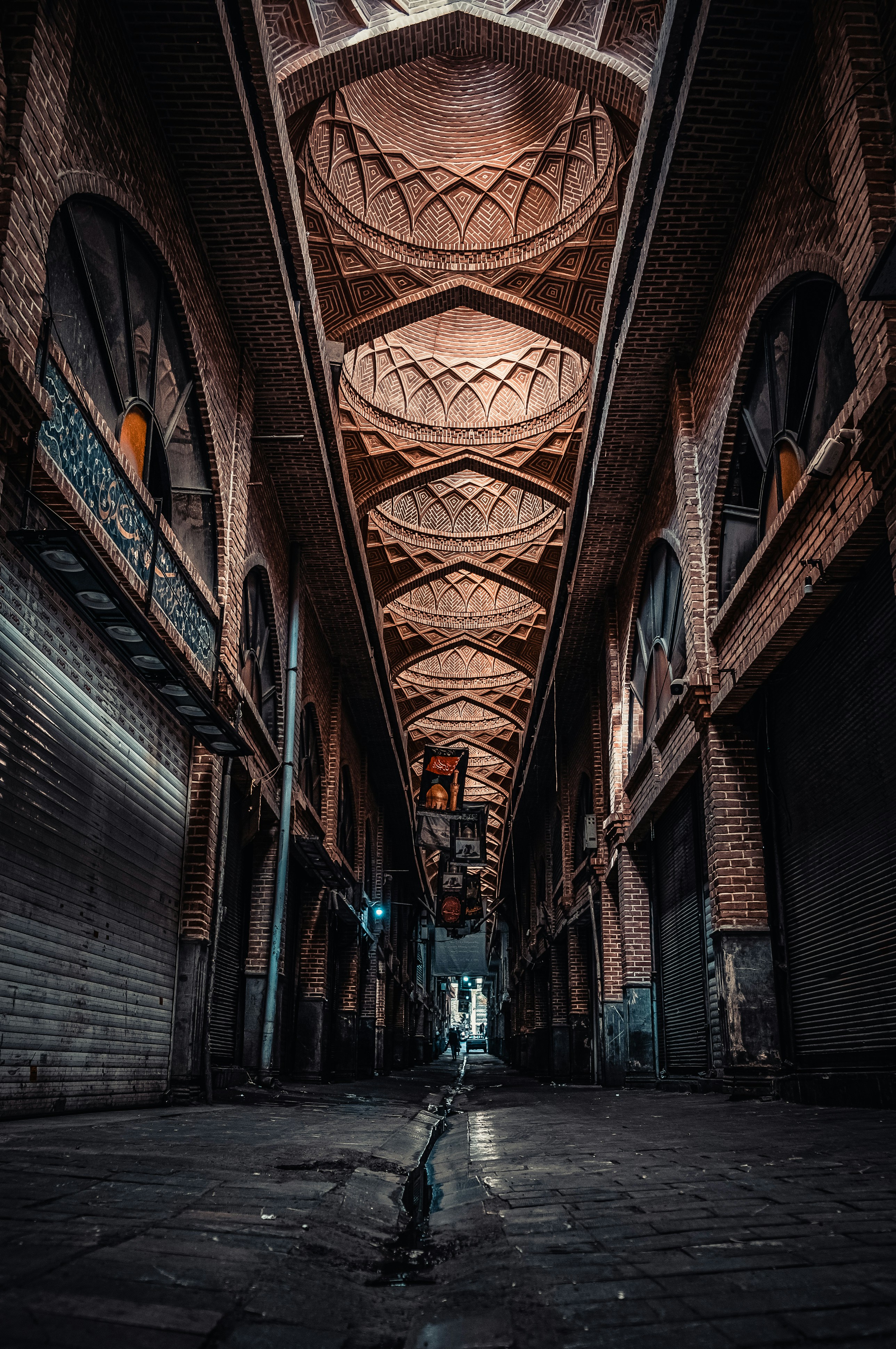
- Isfahan — the half of the world: The 17th-century Safavid capital whose Naqsh-e Jahan Square (UNESCO, one of the largest squares in the world) is framed by the Sheikh Lotfollah Mosque (its interior dome of geometric tile considered the finest in Islamic architecture), the Imam Mosque (its portal tilted to face Mecca while the square faces north — a brilliant architectural solution), the Ali Qapu Palace, and the bazaar — all still perfectly intact after 400 years.
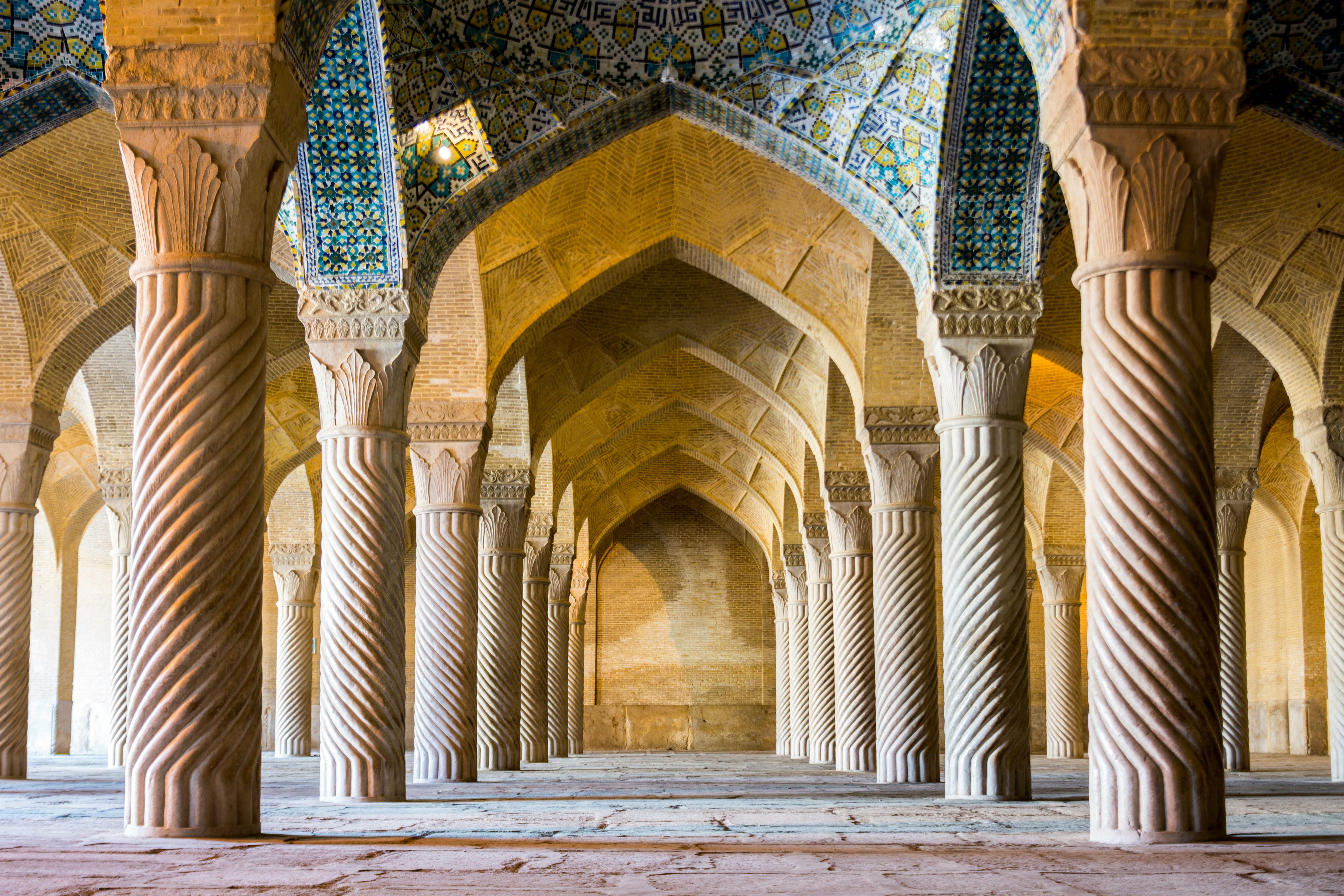
- Persepolis & Shiraz: The ruins of Persepolis (UNESCO) in the mountains above the rose and poetry city of Shiraz — the Tomb of Cyrus the Great at Pasargadae, the gardens and pavilions of Shiraz, the tomb of Hafez (where Iranians come to weep and recite poetry), and the pink mosque (Nasir ol-Molk) whose stained glass windows project a carpet of coloured light across the prayer hall at dawn.
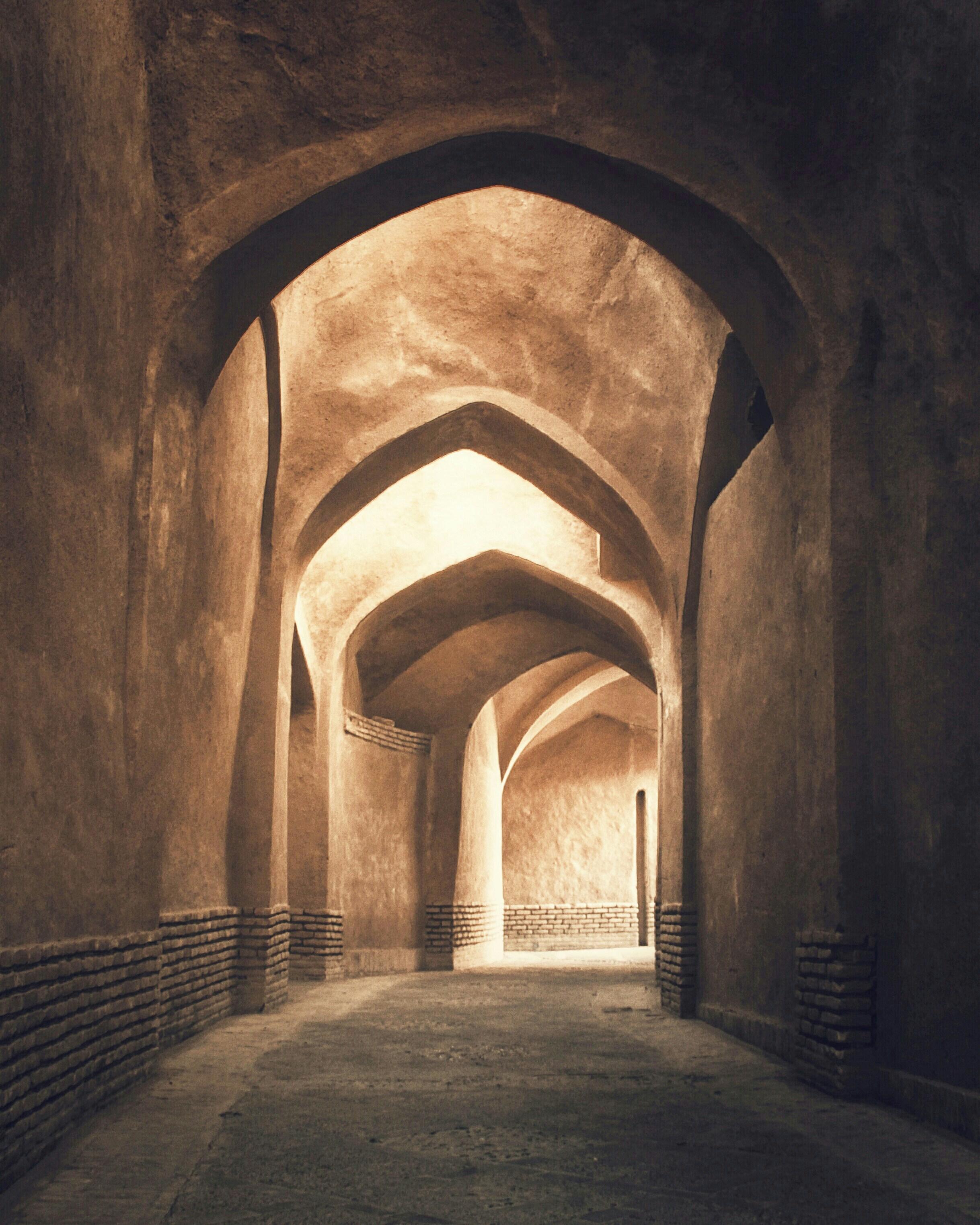
- Yazd — the desert Zoroastrian city: The ancient desert city of Yazd (UNESCO) — mud-brick badgirs (wind towers, the world's oldest natural air conditioning) rising above a labyrinthine old city of remarkable preservation, the Atash Behram fire temple where a sacred flame has burned continuously since 470 AD, and the Towers of Silence on the hills above (where Zoroastrians exposed their dead to vultures until the 1960s).
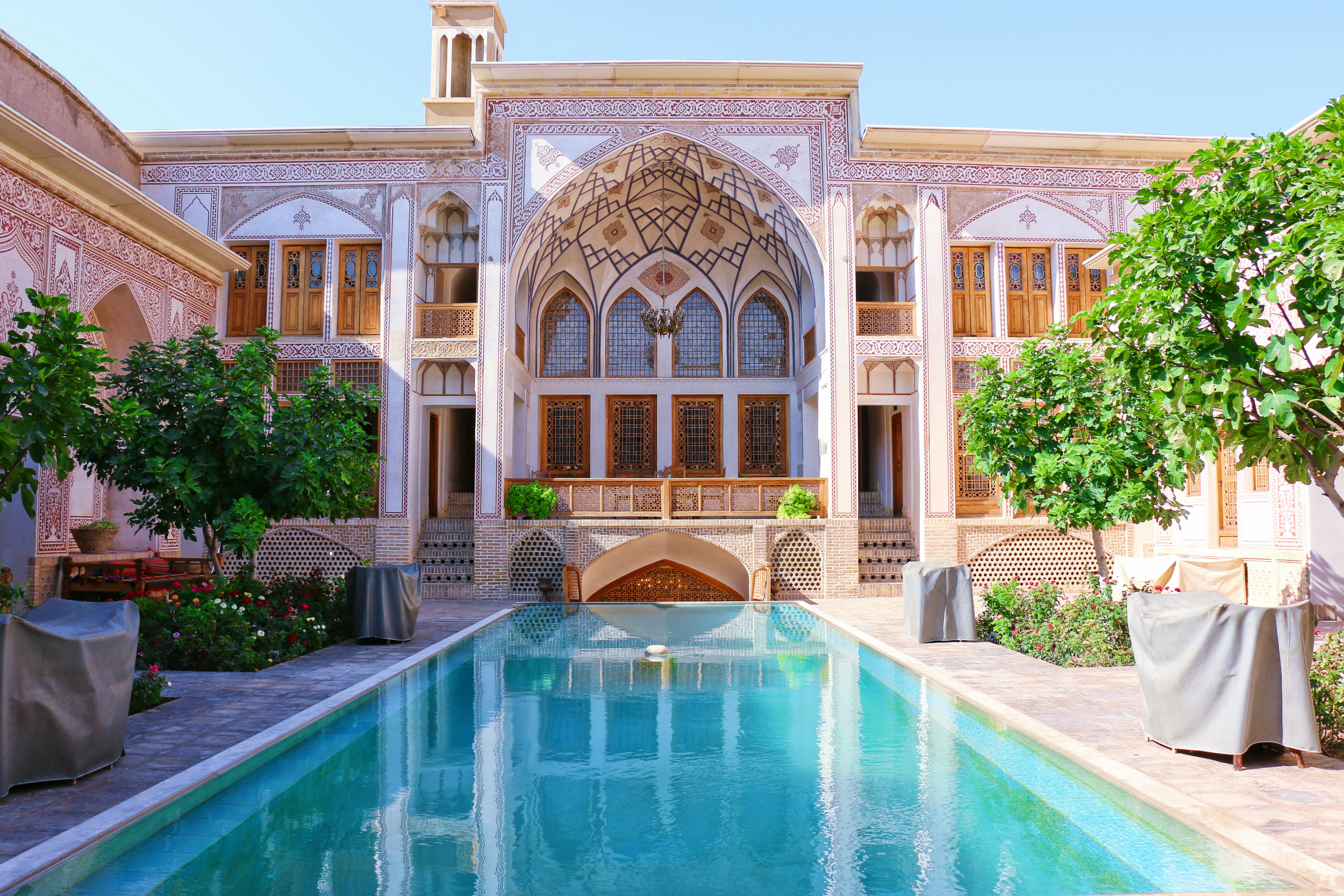
- Kashan & the Dasht-e Kavir: Kashan's extraordinary Fin Garden (the oldest surviving Persian garden, UNESCO), the 1000-year-old Tepe Sialk ziggurat, and the caravanserais of the desert roads — plus the Dasht-e Kavir (Great Salt Desert), one of the most otherworldly landscapes in Asia, where salt flats, dried riverbeds, and ancient caravanserais create a Silk Road dreamscape.
Cuisine
- Chelo kebab & Persian rice: Iranian cuisine is built around the perfection of rice — chelo (steamed white rice with a crispy tah-dig crust of saffron-golden rice or bread at the bottom of the pot, the most fought-over element of every Persian meal) served with kebab-e koobideh (minced lamb and onion on flat skewers) or joojeh (saffron-marinated chicken). The tah-dig — crispy, fragrant, the colour of autumn leaves — is the glory of the Persian kitchen.
- Khoresh & the stew tradition: Iranian khoresh (slow-cooked stews of extraordinary complexity) are the soul of Persian home cooking — khoresh-e fesenjan (duck or chicken in a dark, bittersweet sauce of pomegranate molasses and ground walnuts), ghormeh sabzi (lamb with dried limes, fenugreek, and kidney beans, the national favourite, its smell the smell of Iranian homes worldwide), and khoresh-e bademjan (lamb and aubergine in saffron tomato) are the three pillars of the khoresh tradition.
- Saffron, rose water & Persian sweets: Iran produces approximately 90% of the world's saffron — the red stigmas of Crocus sativus grown in the Khorasan region, more expensive by weight than gold, used in rice, stews, ice cream, and tea. Rose water (distilled from the Damask roses of Kashan and Shiraz, Iran's greatest perfume tradition) flavours sweets, drinks, and religious ceremonies. Persian ice cream (bastani sonnati) — saffron and rose water with pistachios and frozen cream threads — is unlike any other ice cream in the world.
Traditions & Culture
- Nowruz — Persian New Year: Nowruz (New Day), the Persian New Year celebrated at the spring equinox (around 20–21 March), is the world's oldest continuously observed New Year celebration — over 3,000 years old, predating Islam by millennia and now celebrated by approximately 300 million people from Iran to Central Asia, the Caucasus, and diaspora communities worldwide. The haft-sin table (seven items beginning with the letter S, symbolising spring's renewal) and the thirteen days of family visits, spring cleaning, and gift-giving make it Iran's supreme cultural event.
- Shia Islam & the culture of mourning: Iran is the world's largest Shia Muslim country — approximately 90–95% of Iranians are Shia, and the commemoration of Ashura (the martyrdom of Imam Hussein at Karbala in 680 AD) is the most emotionally intense event in the Iranian cultural calendar. The ta'zieh (passion play) performances depicting the Battle of Karbala, the processions of mourners in black, and the rawzeh-khani (dramatic readings of the Karbala narrative) express a culture of sacred grief and martyrdom that shapes Iranian political and social life profoundly.
Climate
- Highly varied — four distinct climate zones: Iran's size creates dramatic climatic variety — the Caspian coast is subtropical and rainy year-round (Tehran's north); the plateau (Tehran, Isfahan, Shiraz, Yazd) has hot, dry summers (35–40°C) and cold winters (below freezing in Tehran, December–February); the Persian Gulf coast is extremely hot and humid in summer. The best time to visit the plateau cities is spring (March–May) and autumn (September–October). The Alborz and Zagros mountains offer skiing in winter.