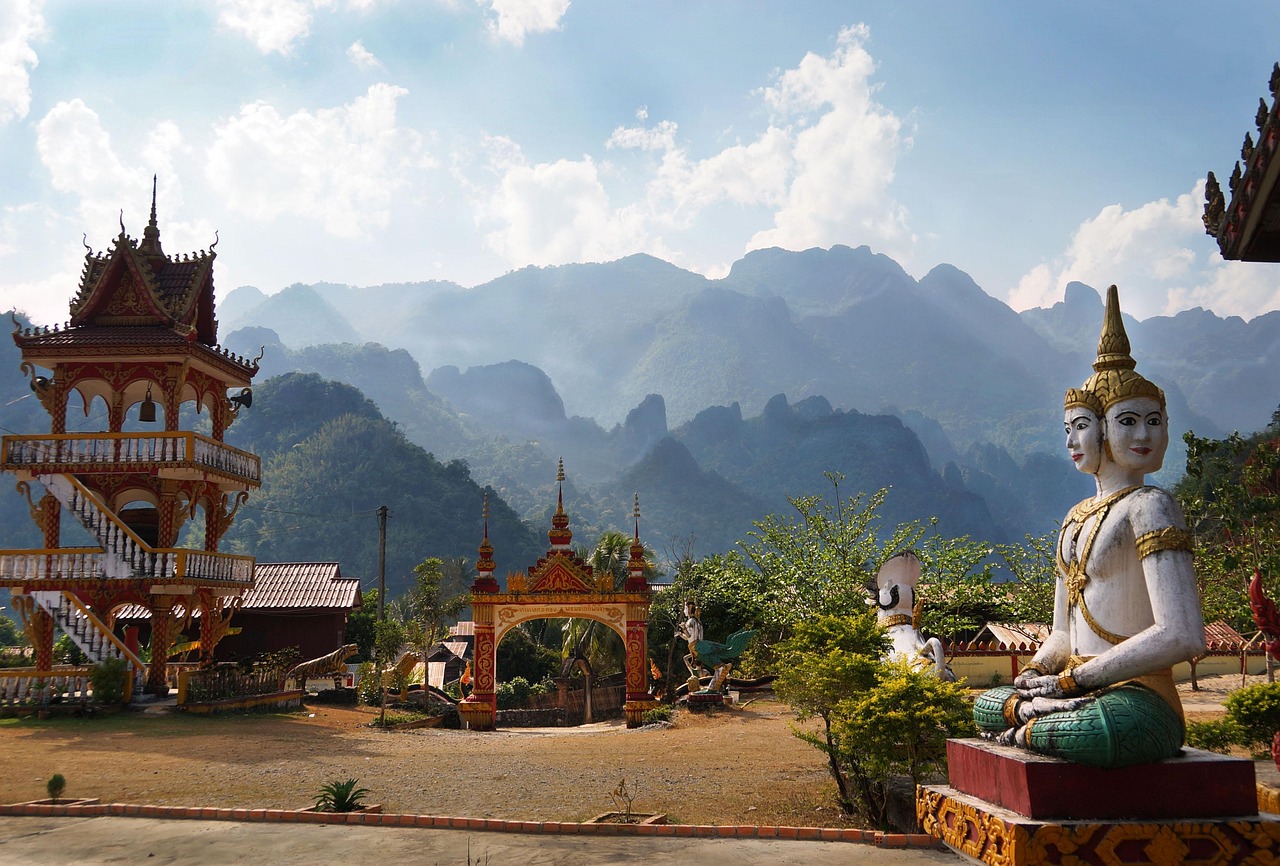
Laos is a small, landlocked country of 7.5 million people in the heart of mainland Southeast Asia — the only landlocked nation in the region, bordered by China, Vietnam, Cambodia, Thailand, and Myanmar, through whose entire length the Mekong River flows. It is the least densely populated country in Southeast Asia, the most bombed country in history per capita (the result of US bombing during the Vietnam War), and one of the region's most spiritually serene destinations. Its ancient royal capital of Luang Prabang — a UNESCO World Heritage town of extraordinary beauty where French colonial architecture and Buddhist monastery culture have somehow merged into perfect harmony — is the jewel of mainland Southeast Asia.
Capital: Vientiane — the world's smallest and most relaxed capital city in Southeast Asia
Population: ~7.5 million — the least densely populated country in Southeast Asia
Area: 236,800 km²
Currency: Lao Kip (LAK); Thai Baht and US Dollar also widely accepted
Language: Lao (official) — closely related to Thai, written in its own script
Independence: 1953 from France; communist Pathet Lao government since 1975; opening to tourism from the 1990s
Fascinating Facts
- The most bombed country in history: Between 1964 and 1973, the United States dropped approximately 2.1 million tonnes of bombs on Laos — more than was dropped on Germany and Japan combined in World War II — in a secret bombing campaign targeting the Ho Chi Minh Trail. Nearly 30% of the bombs did not explode and remain in the soil as unexploded ordnance (UXO), killing or injuring hundreds of Laotians every year. Laos received more bombs per capita than any country in history.
- Luang Prabang — the town that time preserved: Luang Prabang — the former royal capital of the Kingdom of Laos — is one of the best-preserved traditional towns in Southeast Asia: a UNESCO World Heritage peninsula at the confluence of the Mekong and Nam Khan rivers, where 32 Buddhist monasteries, French colonial shophouses, and Royal Palace now coexist in extraordinary architectural harmony. The dawn alms-giving ceremony (tak bat), in which saffron-robed monks process silently through misty streets to receive offerings from kneeling residents, is Southeast Asia's most beautiful daily ritual.
- The Plain of Jars — a Stonehenge of Southeast Asia: The Plain of Jars in Xieng Khouang province — a plateau scattered with thousands of massive stone jars (up to 3 m tall, weighing several tonnes), whose purpose remains unknown, carved between 500 BC and 500 AD — is one of the most mysterious archaeological sites in Asia. They may have been funeral urns, fermentation vessels, or ritual objects. The plain was also one of the most heavily bombed areas in the secret war; UXO removal continues alongside archaeological work.
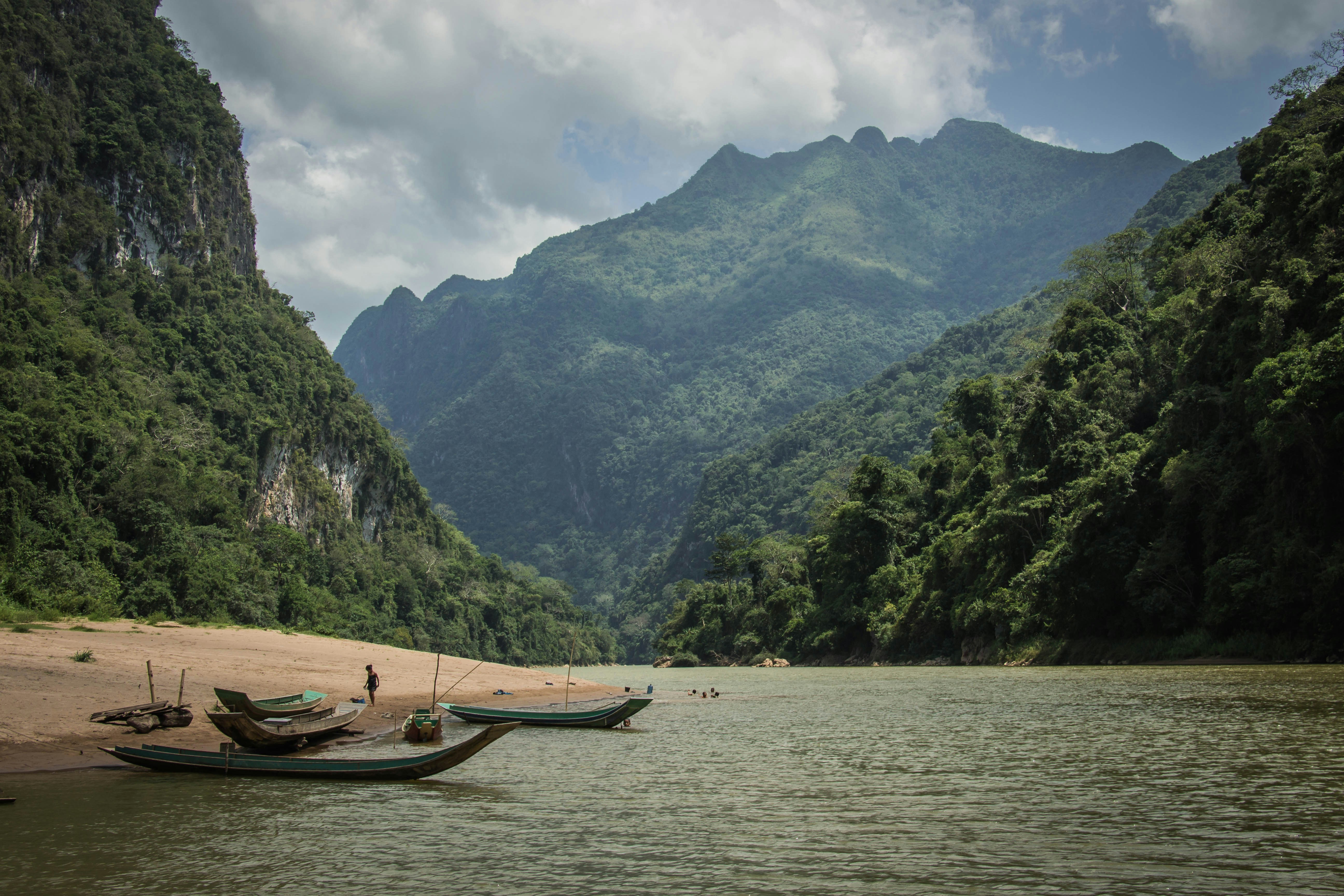
- The Mekong — the river that defines a country: The Mekong River flows the entire length of Laos (1,898 km), defining its western border with Thailand, providing the primary highway of the interior, and supplying the majority of the population's protein through its extraordinary freshwater fishery. The river's seasonal rise and fall — flooding the riverbanks each monsoon and retreating to reveal riverside vegetable gardens each dry season — is the rhythm of Lao life.
Nature & Key Destinations
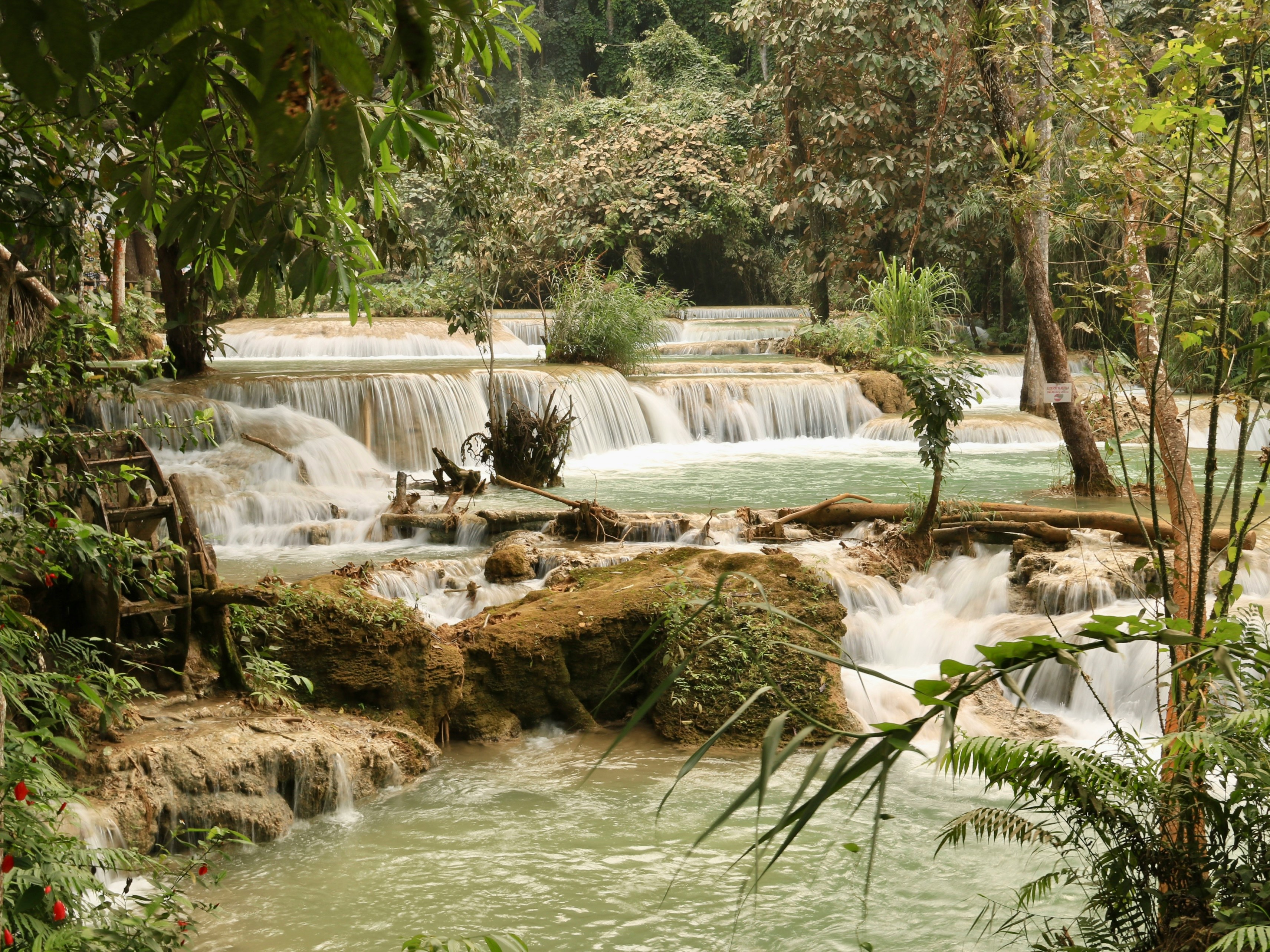
- Luang Prabang: The undisputed highlight of Laos — the dawn tak bat alms procession, the Kuang Si waterfall (a series of turquoise terraced pools in the forest, accessible by tuk-tuk), the Pak Ou caves (two river caves stuffed with thousands of Buddha images at the confluence of the Mekong and Ou rivers), the night market along the main street, and the evening boat journeys on the Mekong.
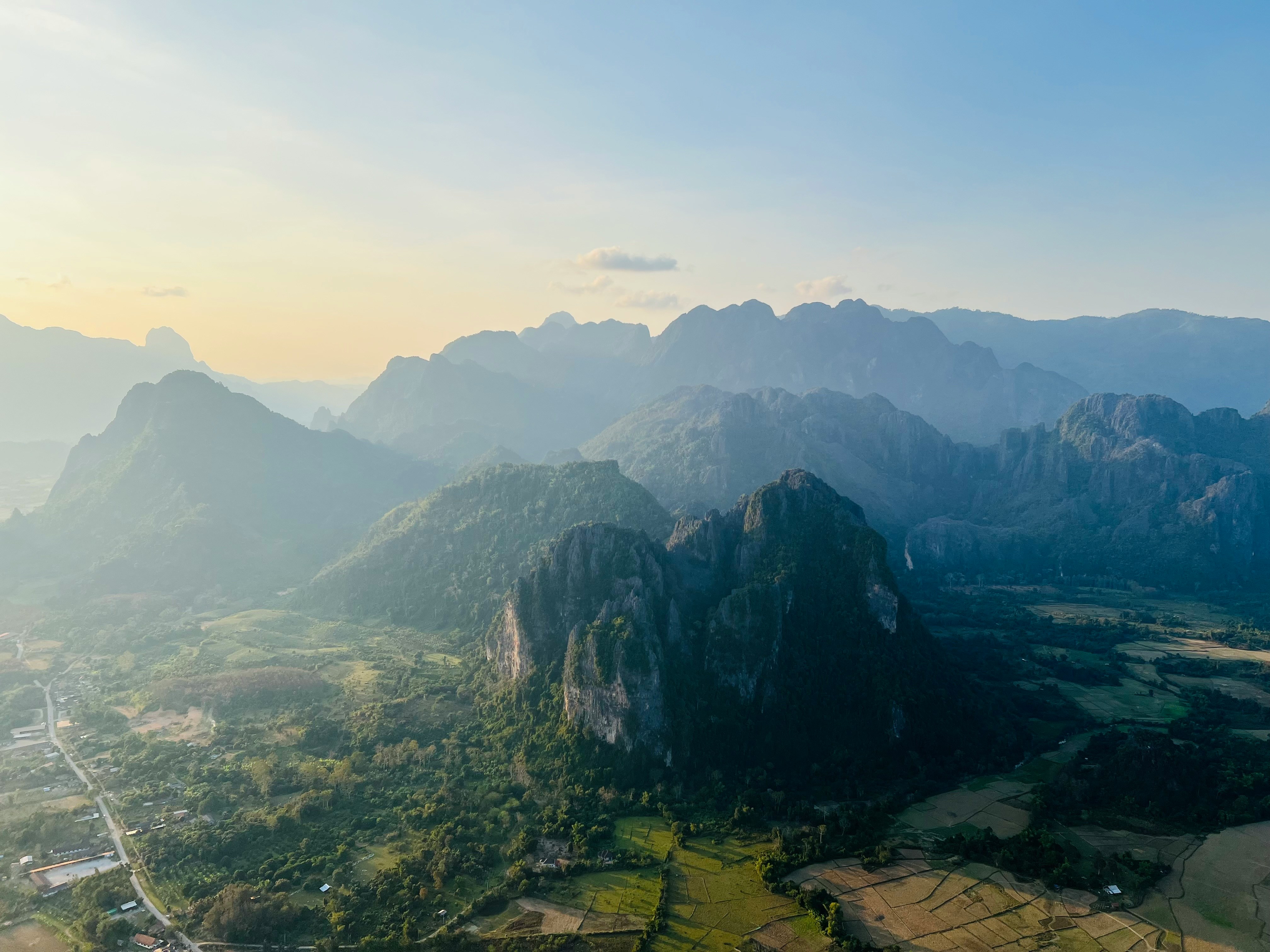
- Vang Vieng & karst landscape: A river town surrounded by dramatic limestone karst towers — tubing and kayaking on the Nam Song River through the karst landscape, trekking to Blue Lagoon swimming holes, and the morning mist over the river and peaks that makes the landscape feel like a Chinese ink painting.
- 4,000 Islands (Si Phan Don): The Mekong Delta in the far south — a maze of islands, sandbanks, and channels near the Cambodian border where the river reaches 14 km in width. Dolphin watching (the critically endangered Irrawaddy dolphins of the Mekong), watching the Khone Phapheng Falls (the widest waterfall in Asia by volume), cycling between island villages, and the radical slowness of the hammock.
- Bolaven Plateau: A cool, high plateau (1,000–1,300 m) in southern Laos — coffee and tea plantations, spectacular waterfalls (Tad Fane, a twin waterfall dropping 120 m into a gorge), and the base culture of Lao coffee (Arabica grown in volcanic soil, one of Southeast Asia's finest single-origins).
Cuisine
- Laap & sticky rice: Laap (also spelled larb) — a salad of minced meat (or fish) tossed with toasted ground rice, lime juice, fish sauce, fresh herbs (mint, coriander, sawtooth herb), dried chillies, and shallots — is Laos's national dish and one of Southeast Asia's most refreshing flavour combinations. Sticky rice (khao niao) — eaten by hand, rolled into balls and dipped into sauces — is the staple of Lao eating, consumed at every meal.
- Tam mak hoong & river fish: Tam mak hoong (green papaya salad, pounded in a mortar with tomato, long beans, lime, fish sauce, and chilli) is the ubiquitous street snack of Laos, eaten throughout the day. The Mekong's freshwater fish — the massive Mekong catfish (pa beuk, the world's largest freshwater fish), the pa khaen (a river barracuda grilled over charcoal), and river fish fermented into padaek (the intensely flavoured Lao fish paste) — define the protein culture of a river country.
- Lao coffee & Beer Lao: Lao coffee from the Bolaven Plateau — thick, strong, and served over ice with sweetened condensed milk (kafae dam) — is one of Southeast Asia's finest, produced from Arabica plants introduced by French colonists in the 1920s and now a major export. Beer Lao (a clean, malt-forward lager brewed since 1973) is the best beer in mainland Southeast Asia by wide consensus and the country's most successful commercial export.
Traditions & Culture
- Theravada Buddhism — the pace of Laos: Approximately 67% of Lao people are Theravada Buddhists, and the rhythm of monastery life shapes the pace of the entire country — the pre-dawn alms round, the afternoon nap, the evening prayers, and the baci ceremony (a blessing ritual in which white strings are tied around the wrists of guests to bind the spirit and invite good fortune) are the structures around which Lao social life is organised. Laos has the highest number of Buddhist monks per capita in the world.
- Baci & Lao social life: The baci (or basi) ceremony — in which family, friends, and visitors gather around a cone-shaped flower arrangement (pa khuan) while an elder recites blessings and ties white cotton strings around everyone's wrists, after which food and drink are shared — is performed at every significant occasion: arrivals, departures, weddings, illnesses, and new year. The white string (symbolising the 32 souls that Lao Buddhism believes inhabit the human body) is kept on the wrist for three days.
Climate
- Tropical monsoon: Laos has two seasons: the dry season (November–April) is the best for travel — clear skies, lower humidity, and the Mekong at manageable levels (25–35°C). The wet season (May–October) brings daily afternoon downpours, lush green landscapes, and spectacular waterfalls at full flow. Luang Prabang and the north are cooler (15–20°C nights) in December–January. The Bolaven Plateau is cool year-round (15–25°C). The 4,000 Islands are best November–February.

 Laos
Laos