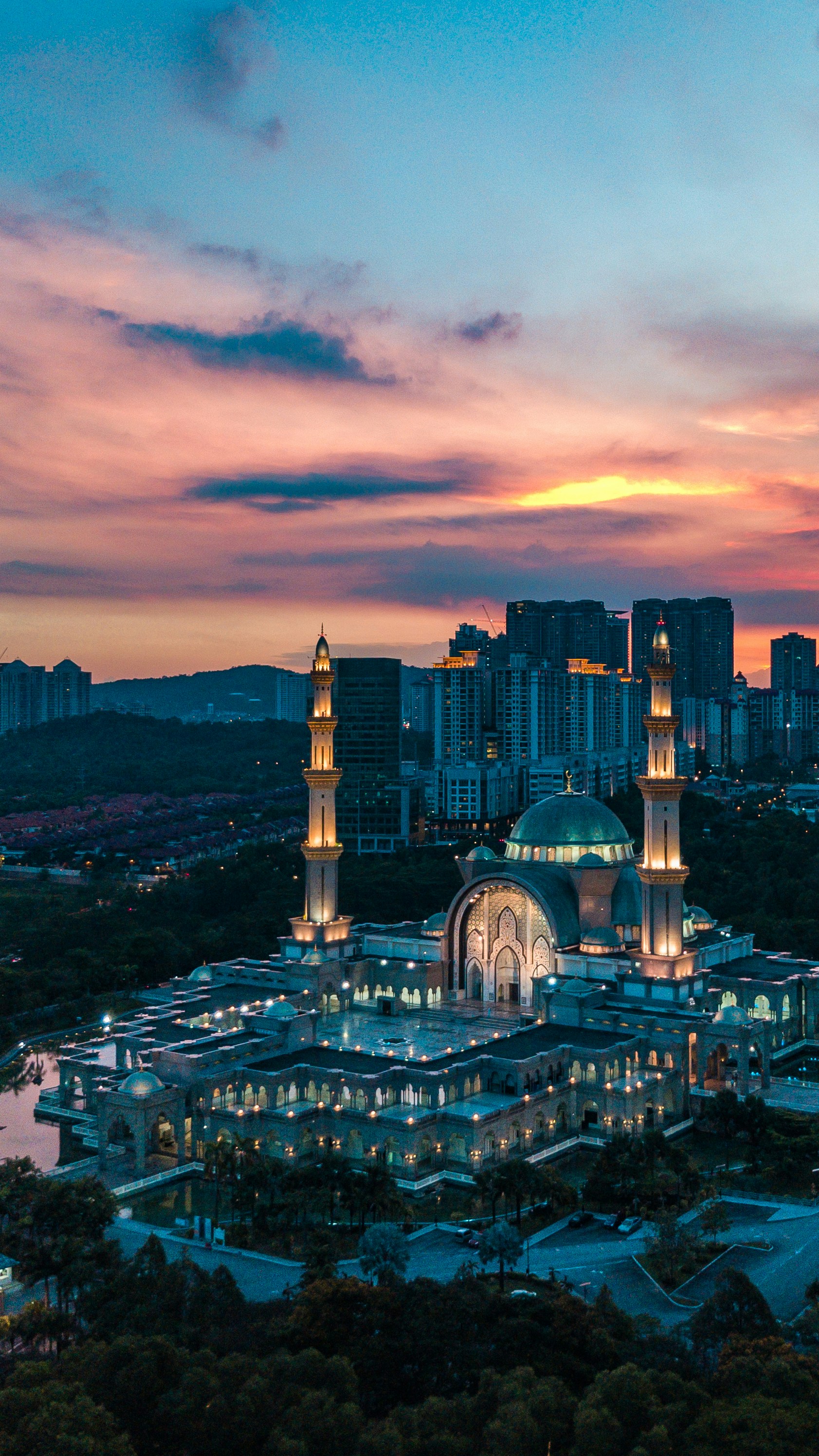
Malaysia is a Southeast Asian country of 33 million people divided into two distinct regions: Peninsular Malaysia (sharing a border with Thailand in the north and connected to Singapore by causeway in the south) and East Malaysia (the states of Sabah and Sarawak on the northern coast of Borneo, separated from the peninsula by 500 km of South China Sea). It is a country of remarkable biodiversity — the oldest rainforest on Earth (Taman Negara, estimated at 130 million years old), the orangutans, pygmy elephants, and clouded leopards of Borneo — and equally remarkable cultural diversity, with Malay, Chinese, Indian, and indigenous communities producing a synthesis of architecture, language, and above all food that is unlike anything else in Asia.
Capital: Kuala Lumpur (KL) — financial and cultural capital; Putrajaya is the administrative capital
Population: ~33 million
Area: 329,847 km² across peninsular and Bornean territories
Currency: Malaysian Ringgit (MYR)
Languages: Malay (Bahasa Malaysia — official); English, Mandarin, Tamil, and over 130 indigenous languages widely spoken
Independence: 31 August 1957 from Britain (Malaya); Malaysia formed 1963 including Singapore (which left in 1965), Sabah, and Sarawak
Fascinating Facts
- The world's oldest rainforest: Taman Negara National Park in peninsular Malaysia protects a tract of lowland rainforest estimated to be 130 million years old — predating the dinosaurs' extinction and surviving unchanged through the ice ages that transformed temperate forests worldwide. This extraordinary age accounts for its biodiversity: over 10,000 plant species, 350 bird species, Malayan tigers, Asian elephants, Sumatran rhinoceros, and the world's largest flower (Rafflesia, which blooms to 1 metre in diameter and smells of rotting flesh).
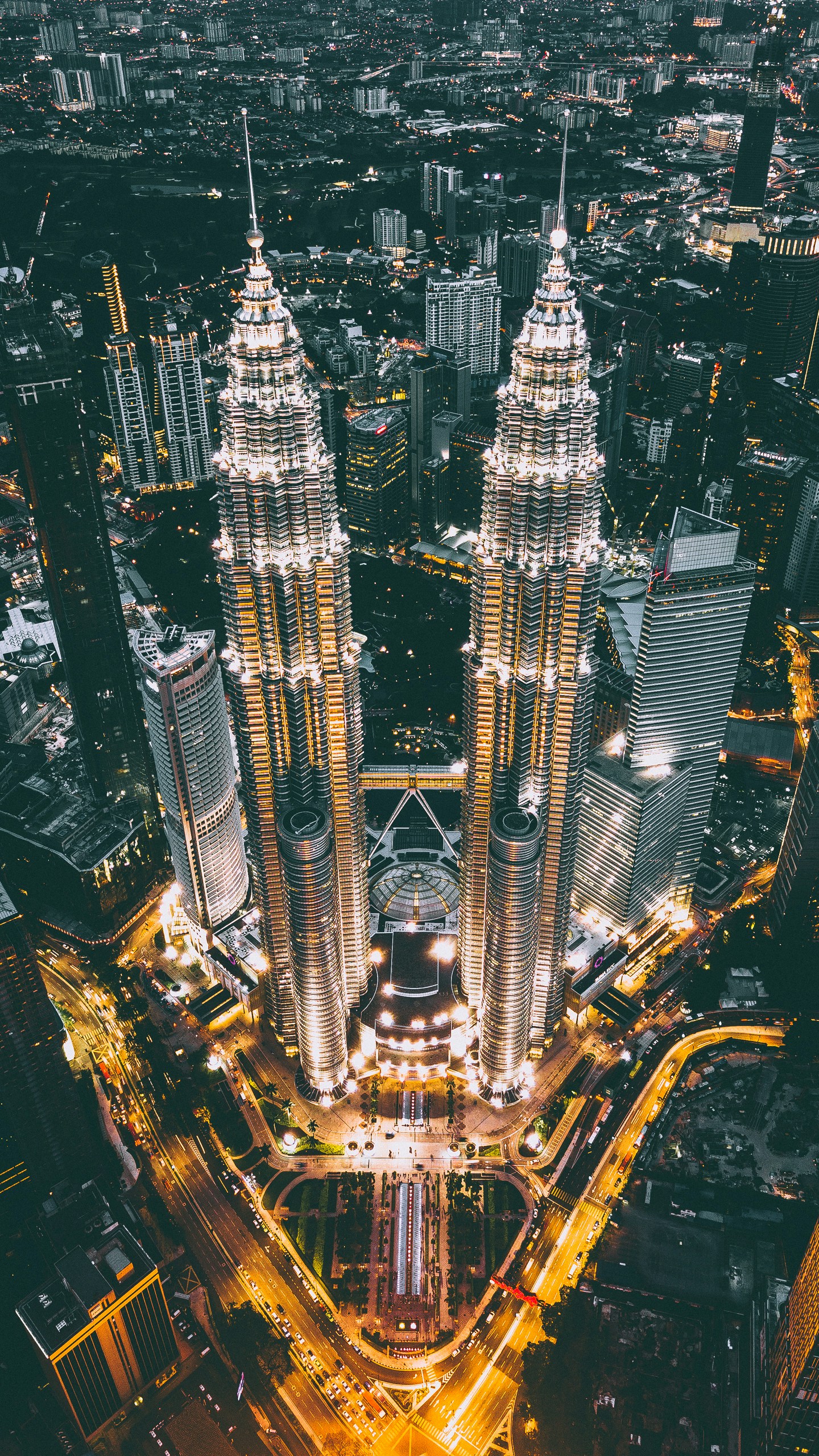
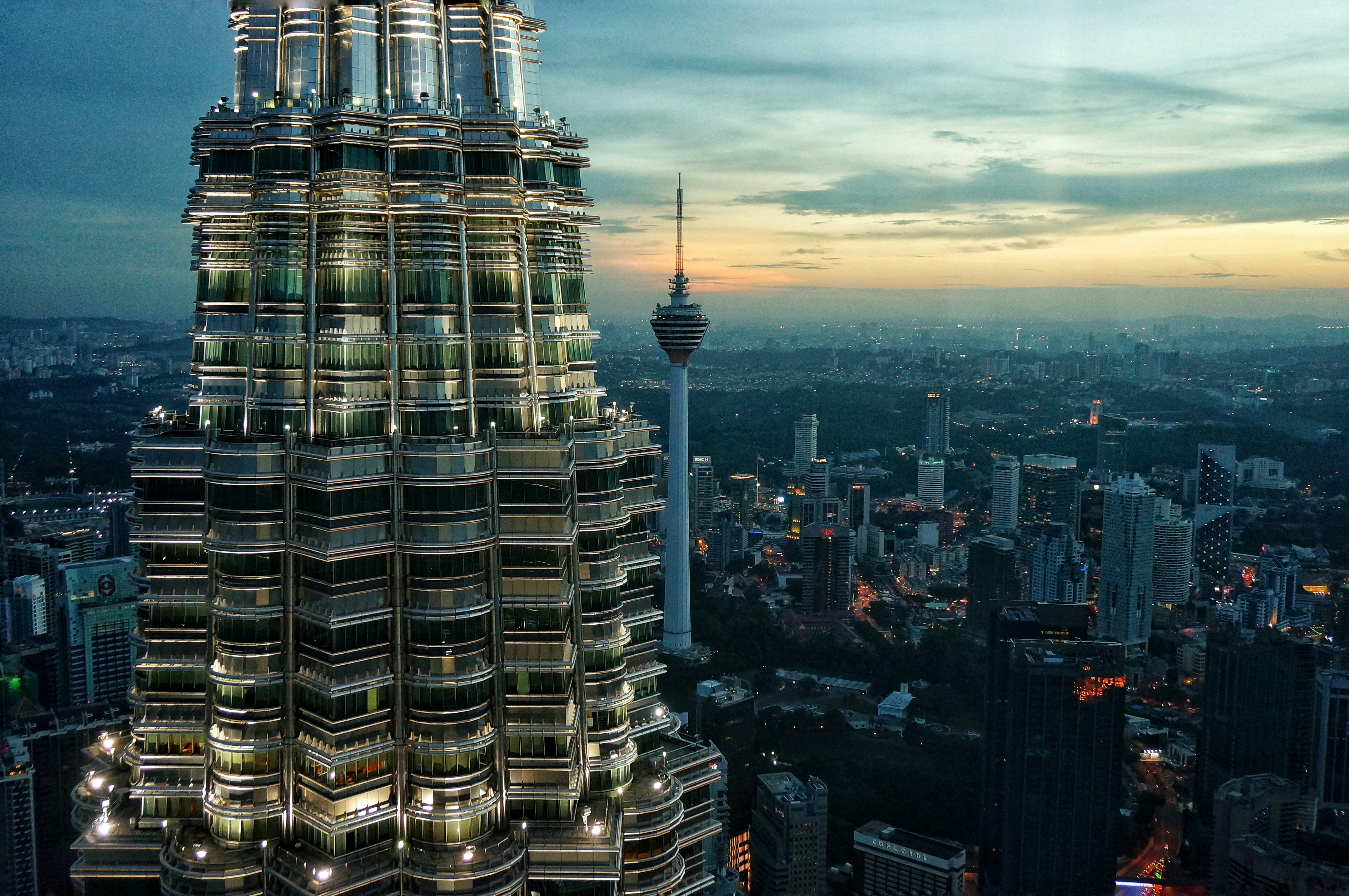
- The Petronas Towers — briefly the world's tallest: The Petronas Twin Towers in Kuala Lumpur (452 m, 88 floors, completed 1998) were the world's tallest buildings from 1998 to 2004, when Taipei 101 surpassed them. Designed by César Pelli, their floor plan is based on an eight-pointed Islamic star (the Rub el Hizb), and the skybridge connecting them at the 41st and 42nd floors was, at its construction, the highest two-storey bridge in the world. The towers symbolised Malaysia's emergence as a modern economy under Prime Minister Mahathir Mohamad's Vision 2020 programme.
- Sipadan — the world's best dive site: Sipadan Island off the east coast of Sabah is consistently rated the finest dive site in the world — a tiny oceanic island (0.16 km²) rising from the floor of the Celebes Sea, its walls dropping 600 m from the reef rim to the deep ocean floor, with permanent resident populations of hundreds of green and hawksbill turtles, schools of barracuda and chevron barracuda, hammerhead sharks circling the deep, and the richest coral biodiversity in the Coral Triangle. Access is strictly limited to 120 divers per day.
- Rojak culture — Malaysia's multicultural identity: Malaysia's three main communities — Malay (Muslim, approximately 69%), Chinese (approximately 23%), and Indian (approximately 7%) — have produced a cultural synthesis described by the concept of rojak (a mixed fruit and vegetable salad, representing the mixture of cultures). The Malaysian Chinese community (primarily Hokkien, Cantonese, Hakka, and Teochew) has maintained distinct dialects and cultural practices for generations; the Tamil community preserves a living connection to South Indian culture; and the Malay-Islamic foundation shapes the political and legal framework within which all communities operate.
Nature & Key Destinations
- Kuala Lumpur: The Petronas Towers and the KLCC park beneath them, the colonial heart of Merdeka Square (with the world's tallest flagpole, 100 m), the Batu Caves Hindu temple complex (144 steps to a cave cathedral, gold-painted Lord Murugan statue at the entrance), the Petaling Street Chinese market, and the extraordinary Jalan Alor night food street — a single lane of outdoor tables and smoking woks that represents Malaysian street food at its finest.
- George Town & Penang: The UNESCO World Heritage city of George Town on Penang island — the most intact colonial port city in Southeast Asia, its Chinese clan houses, Hindu temples, mosques, and Anglican church within walking distance of each other, its street art murals now as famous as its architecture, and its reputation as the street food capital of Asia (arguably the finest concentration of hawker food in the world, combining Penang Hokkien, Nyonya, Malay, and Indian Muslim traditions).
- Borneo — Sabah & Sarawak: Mount Kinabalu (4,095 m, the highest peak in Southeast Asia outside New Guinea, UNESCO World Heritage), the Sepilok Orangutan Rehabilitation Centre, the pygmy elephant and proboscis monkey river cruises of the Kinabatangan River, the ancient longhouse communities of Sarawak's Iban people, and the extraordinary diving of Sipadan — together making East Malaysia one of the world's most complete nature and culture destinations.
- Melaka & the Cameron Highlands: UNESCO-listed Melaka (Malacca) — the former capital of the Malaccan Sultanate and the most important port in 15th-century Asia, its Portuguese fort, Dutch Stadthuys, and Baba-Nyonya heritage houses telling the story of 500 years of colonial succession — and the Cameron Highlands tea plantations (the rolling English-style hill station built by the British at 1,500 m altitude, its strawberry farms and BOH tea estates still intact).
Cuisine
- Nasi lemak & the Malaysian breakfast: Nasi lemak — coconut rice cooked in pandan leaf and coconut milk, served with sambal belacan (chilli-shrimp paste), fried anchovies, roasted peanuts, sliced cucumber, and a hard-boiled or fried egg, wrapped in banana leaf — is Malaysia's national dish, eaten for breakfast by millions from roadside stalls. Simple in its components, perfect in its balance of creamy, spicy, salty, and crunchy — it is one of the world's great breakfasts.
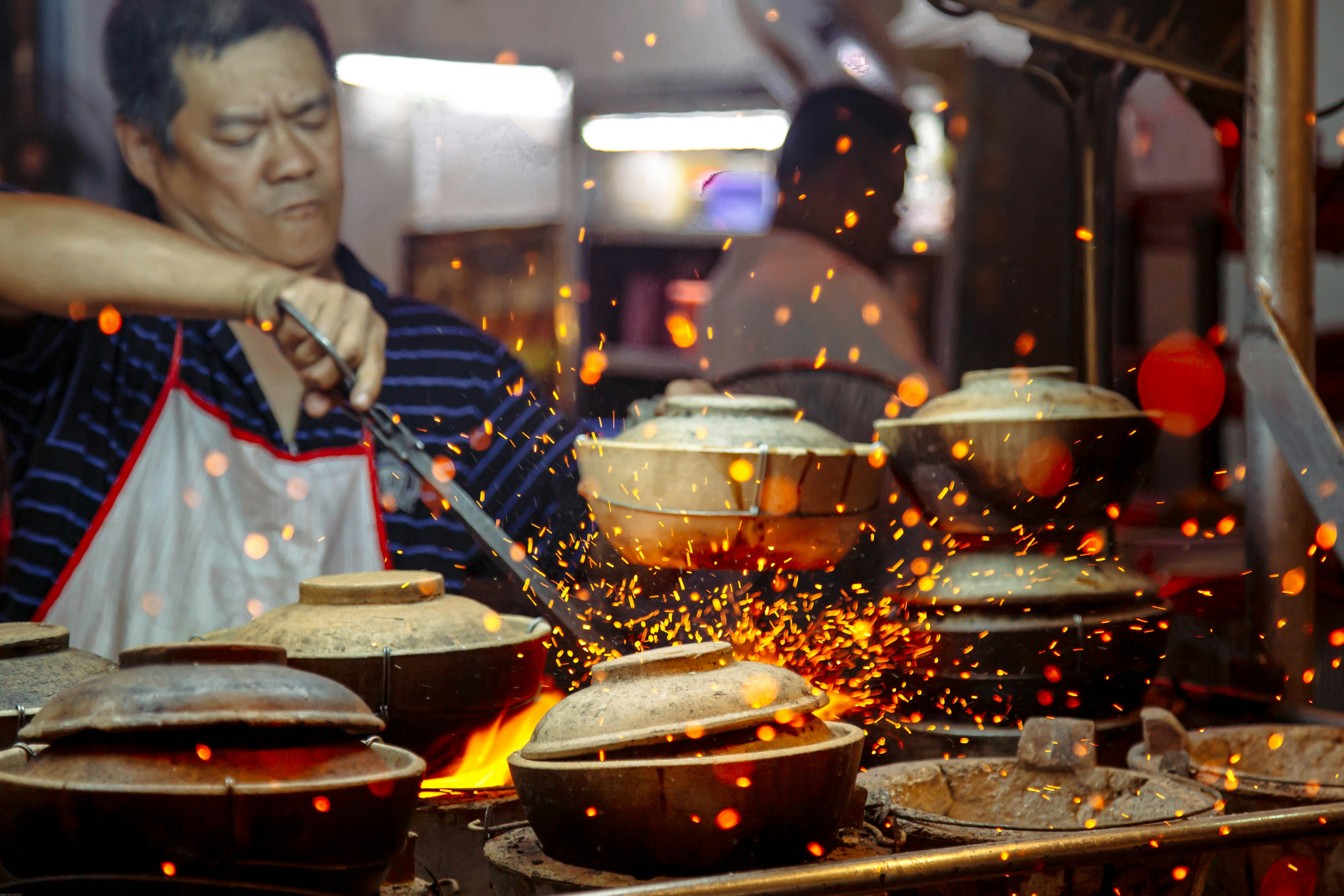
- Char kway teow, laksa & hawker culture: Malaysia's hawker centre culture — open-air collections of individual stalls each specialising in a single dish, often operated by the same family for generations — is UNESCO-listed and produces some of the finest street food in the world. Char kway teow (flat rice noodles stir-fried with cockles, Chinese sausage, and bean sprouts in dark soy over high wok heat), Penang laksa (the world's most complex noodle soup — mackerel-based broth with tamarind, lemongrass, and pineapple), and Hainanese chicken rice are the icons of Malaysian hawker eating.
- Roti canai, teh tarik & the mamak tradition: The Indian Muslim mamak restaurants — open 24 hours, serving roti canai (flaky flatbread made by slapping and folding dough, eaten with dhal or fish curry) and teh tarik ('pulled tea', hot sweet milky tea poured in a long stream between cups to create a frothy surface) — are the great social levellers of Malaysian society, where Chinese, Malay, and Indian customers sit side by side at any hour. Teh tarik is arguably Malaysia's most universally shared cultural experience.
Traditions & Culture
- Baba-Nyonya (Peranakan) culture: The Peranakan people — descendants of Chinese immigrants who settled in the Malay Archipelago from the 15th century onward and adopted Malay language, dress, and customs while maintaining Chinese religious practices — produced one of Southeast Asia's most distinctive hybrid cultures. Peranakan (Baba-Nyonya) cuisine (a fusion of Chinese and Malay techniques and ingredients), the intricate beaded kebaya blouses, the tiled clan houses of Melaka and Penang, and the Nyonya porcelain tableware are the finest expressions of this synthesis.
- Hari Raya, Chinese New Year & Deepavali: Malaysia's multicultural calendar produces a year of overlapping celebrations — Hari Raya Aidilfitri (Eid, the most important Malay celebration, when homes are opened to visitors of all races in the open house tradition), Chinese New Year (lion dances, red packets, and the most spectacular fireworks in Southeast Asia), and Deepavali (the festival of lights, when the Little India districts of KL and George Town are illuminated for weeks) together create a festival density unique in Asia.
Climate
- Equatorial, year-round warmth: Malaysia is warm and humid year-round (26–33°C), with rainfall distributed across all months but concentrated in the northeast monsoon (November–February on the east coast and Borneo's west coast) and the southwest monsoon (May–September on the west coast). The best time for the east coast beaches is March–October; for the west coast (Penang, Langkawi) November–April. Kuala Lumpur is pleasant year-round with afternoon showers. The Cameron Highlands are cool (18–25°C) in all seasons.