Mongolia is a landlocked country of 3.3 million people in Central and East Asia — the world's most sparsely populated country, with 1.97 people per km² across 1.56 million km² of steppe, desert, mountain, and taiga. It was the heartland of the Mongol Empire (1206–1368 AD), which at its peak was the largest contiguous land empire in history, stretching from Korea to Hungary and from Siberia to the Persian Gulf. Today it is a country of extraordinary wilderness — the Gobi Desert, the Altai and Khangai mountain ranges, the Mongolian steppe grasslands, and the boreal forests of the north — and a nomadic culture that has maintained remarkable continuity over three millennia.
Capital: Ulaanbaatar — home to approximately 50% of Mongolia's entire population; the world's coldest national capital
Population: ~3.3 million — the world's most sparsely populated country (1.97 people per km²)
Area: 1,564,116 km² — 18th largest country in the world
Currency: Mongolian Tögrög (MNT)
Language: Mongolian (official) — written in Cyrillic script (Soviet era); traditional vertical Mongol script being revived
History: Mongol Empire founded by Genghis Khan 1206; largest contiguous land empire in history; Qing dynasty rule 1691–1911; Soviet satellite state 1924–1990; parliamentary democracy since 1990
Fascinating Facts
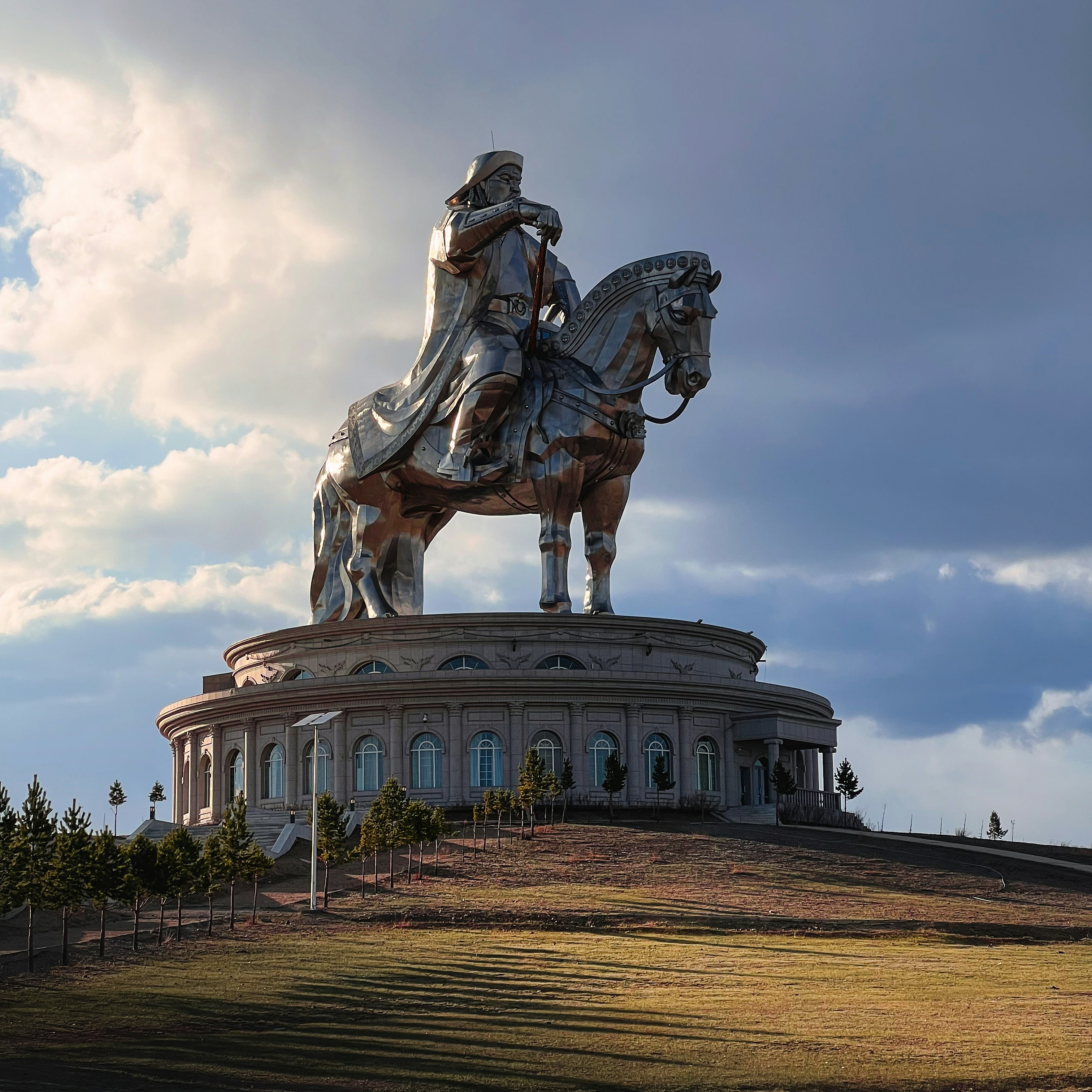
- Genghis Khan — the man who shaped the world: Temüjin, who became Genghis Khan (Universal Ruler) in 1206, united the fractious Mongolian steppe tribes and created an empire that — within his lifetime and that of his sons — conquered China, Central Asia, Persia, Russia, and reached the gates of Vienna. The Mongol Empire accelerated the exchange of ideas, technologies, and diseases between East and West (the Black Death travelled the Silk Road under Mongol protection); created the first international postal system (the Yam); and killed an estimated 40 million people — approximately 10% of the world's population. Genghis Khan's Y chromosome is carried by approximately 16 million men alive today.
- The Gobi Desert — cold, enormous, and alive: The Gobi ('waterless place' in Mongolian) is the largest desert in Asia and the fifth largest in the world — but unlike the Sahara, it is a cold desert, receiving snow in winter. Its landscapes include the singing sand dunes of Khongoryn Els (up to 300 m tall, producing a deep harmonic roaring sound in the wind), the saxaul forests of the semi-desert, the dinosaur fossil beds of the Flaming Cliffs (where Roy Chapman Andrews' American Museum expeditions in the 1920s found the first dinosaur eggs and the Velociraptor), and the snow leopard habitat of the Gobi Altai.
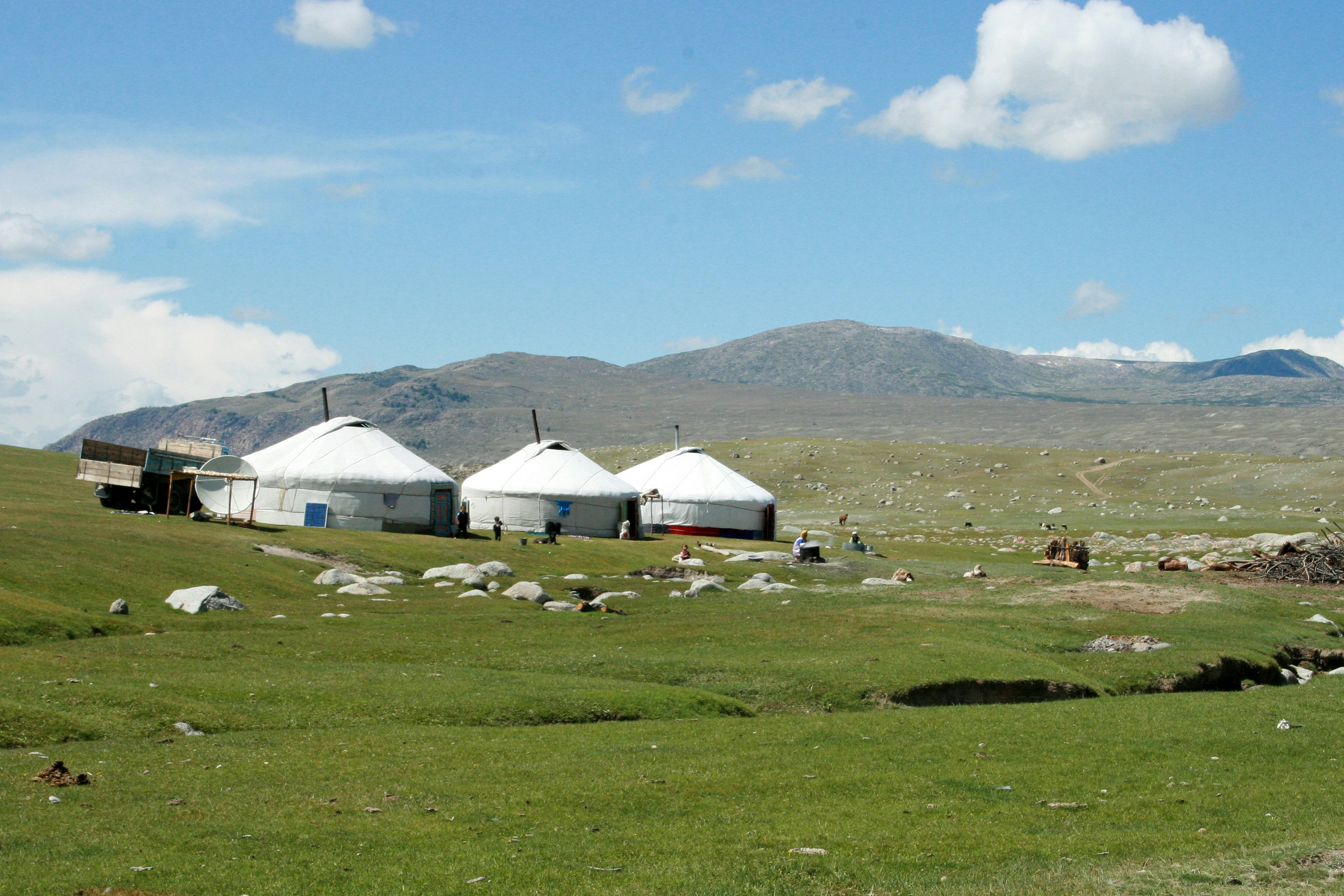
- The ger — portable civilisation: The Mongolian ger (called yurt by Turkic peoples) — a circular, lattice-framed portable dwelling covered with felt and canvas — is the most sophisticated nomadic dwelling ever developed. Its assembly takes 30 minutes; its felt walls provide insulation against −40°C winters; its circular form distributes heat from the central stove efficiently; and its interior orientation (the northern side for guests of honour, the left side for women, the right for men, the south for the door always facing the same direction) encodes an entire cosmological system in domestic space. Approximately 30% of Mongolians still live in gers.
- Naadam — three games of the 'men of three skills': Naadam (the July national festival, dating in its current form to 1921 but rooted in ancient Mongolian tradition) celebrates the 'three games of men' — wrestling (Mongolian sumo, in which contestants wear a zodog top with an open chest and shuudag shorts, competing in elimination bouts), archery (men and women shooting at targets from 75 m and 60 m respectively), and horse racing (children aged 5–13 racing horses over 15–30 km courses across the steppe, the horses more celebrated than the riders). The combination of genuine athletic tradition, extraordinary costumes, and the steppe landscape makes Naadam one of Asia's finest cultural festivals.
Nature & Key Destinations
- The Gobi Desert: The Flaming Cliffs (Bayanzag) of terracotta sandstone where the first dinosaur eggs were found, the Khongoryn Els singing sand dunes, the Yolyn Am ice canyon (a narrow gorge in the Gobi Altai where ice persists through summer), the Bactrian camel trek across the saxaul desert, and the extraordinary night sky of a desert with zero light pollution — the Gobi offers one of the world's most varied and least visited desert experiences.
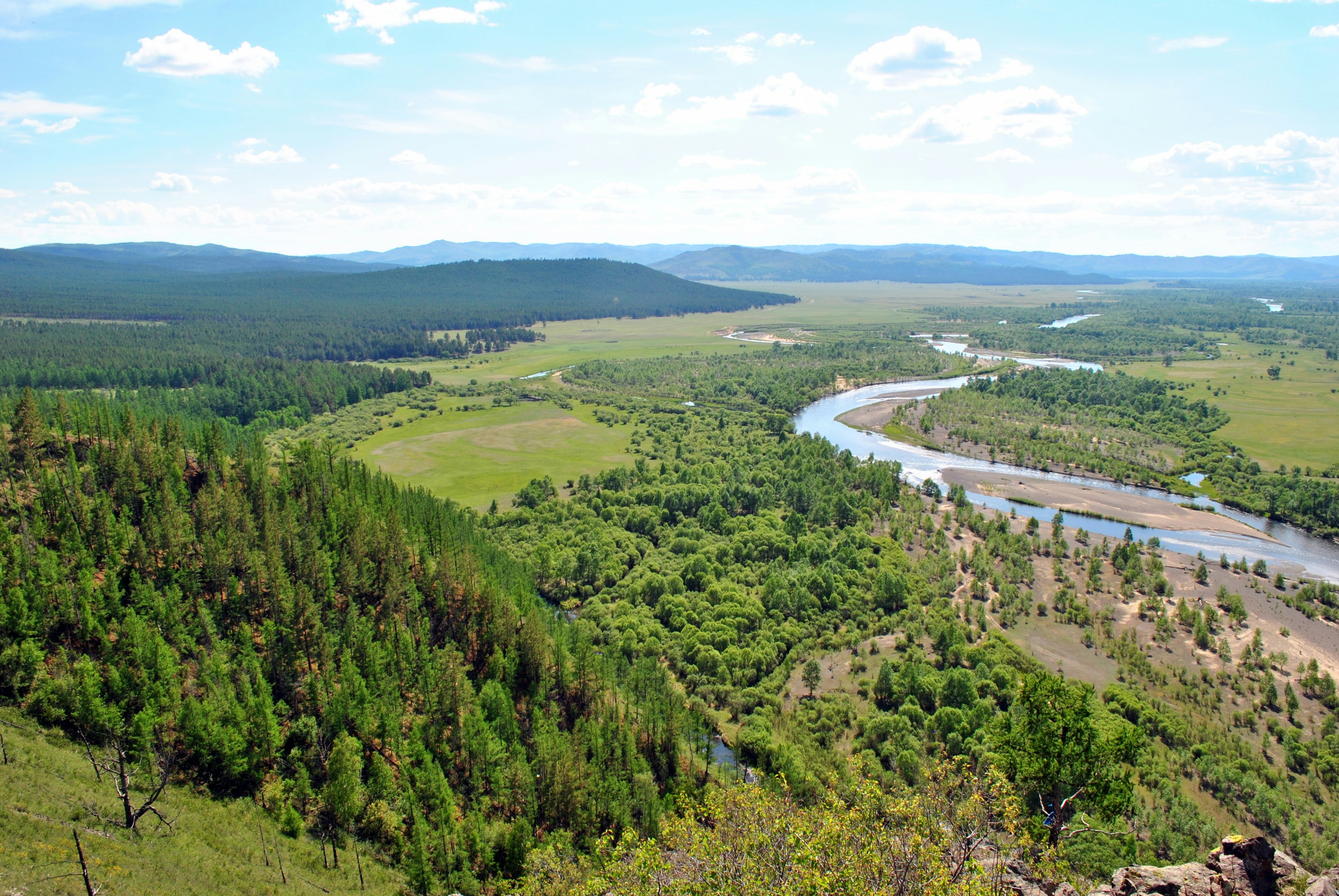
- The steppe & ger camps: Orkhon Valley (UNESCO World Heritage — the ancient heartland of the Mongol, Türk, and Xiongnu empires, the ruined capital of Karakorum, the Erdene Zuu monastery built from Karakorum's stones, and the Orkhon waterfall in a landscape of green valleys and eagle-topped cliffs), experienced through multi-day horse treks staying in family ger camps across the summer jailoo.
- Eagle hunting in the Altai: The Kazakh eagle hunters (burkitshi) of the Bayan-Ölgii province in western Mongolia — who train golden eagles to hunt foxes and rabbits on horseback across the Altai Mountain winter landscape — are Mongolia's most photographed cultural tradition. The Golden Eagle Festival (October) at Ölgii brings together hundreds of eagle hunters in a competition of extraordinary visual drama.
- Khövsgöl Lake & the northern forests: Khövsgöl Lake — the 'Blue Pearl of Mongolia', the world's second most voluminous freshwater lake by some measures, its shores covered in taiga forest — and the reindeer-herding Tsaatan (Dukha) people of the surrounding mountains (one of the world's last reindeer-herding cultures, living in teepee-like dwellings above the treeline with their herds of 600 reindeer) are Mongolia's finest northern destination.
Cuisine
- The white foods & the red foods: Mongolian nomadic cuisine is organised around two categories — tsagaan idee (white foods: dairy products, the summer diet of fermented and dried milk products including aaruul dried curds, öröm clotted cream, tarag yoghurt, and airag fermented mare's milk) and ulaan idee (red foods: meat, the winter diet of mutton, horse, and goat). The combination of these two categories across the seasons constitutes the entirety of traditional nomadic nutrition.
- Khorkhog & boodog: Khorkhog — mutton pieces and vegetables cooked in a sealed metal container with hot stones placed among the meat, the pressure and heat producing extraordinarily tender, smoky-flavoured results — is Mongolia's most celebrated festive cooking method. Boodog (a whole goat or marmot cooked from the inside by hot stones placed in its gutted body cavity) is the most dramatic — the skin is singed with a blowtorch, the meat slow-cooked by the internal stones, and the result eaten communally.
- Airag & Mongolian drinks: Airag (fermented mare's milk, slightly fizzy and mildly alcoholic, produced by churning fresh mare's milk in a leather bag strapped to the side of the ger, agitated hundreds of times daily) is Mongolia's national drink, offered to every visitor as the supreme act of nomadic hospitality. Its sharp, slightly sour, yeasty taste is an acquired one that most visitors find challenging on first encounter and nostalgic forever after.
Traditions & Culture
- Shamanism & the old religion: Shamanism (Tengrism — the worship of Tengri, the Eternal Blue Sky, and the spirits of the natural world mediated by böö male and udgan female shamans) is the pre-Buddhist spiritual foundation of Mongolian culture, dating back thousands of years before Genghis Khan (himself a practising shamanist who also granted religious tolerance to all faiths in his empire). Despite 70 years of Soviet suppression and the dominance of Tibetan Buddhism, shamanism has revived strongly since 1990 and is practised alongside Buddhism across much of rural Mongolia.
- Mongolian throat singing — Khöömii: Khöömii (Mongolian throat singing) — the technique by which a single performer simultaneously produces a fundamental pitch and one or more harmonic overtones, creating the effect of multiple voices from a single throat — is one of the world's most extraordinary vocal traditions, UNESCO-listed as Intangible Cultural Heritage. Originating in imitation of natural sounds (wind, water, animals) on the steppe, it has developed into a sophisticated art form with multiple regional styles. The sound — simultaneously human and inhuman, intimate and cosmic — is uniquely Mongolian.
Climate
- Extreme continental — among the world's harshest: Mongolia has one of the world's most extreme continental climates — Ulaanbaatar is the coldest national capital on Earth, reaching −40°C in January. Summers are short, warm, and brilliant (20–30°C in July, the season for Naadam and ger camp tourism). The Gobi is hot in summer (35–40°C) and very cold in winter (−20°C to −30°C). The entire country is best visited June–September; the Golden Eagle Festival is in October (already very cold in the Altai). Dzud (severe winter) years occur periodically and kill millions of livestock.