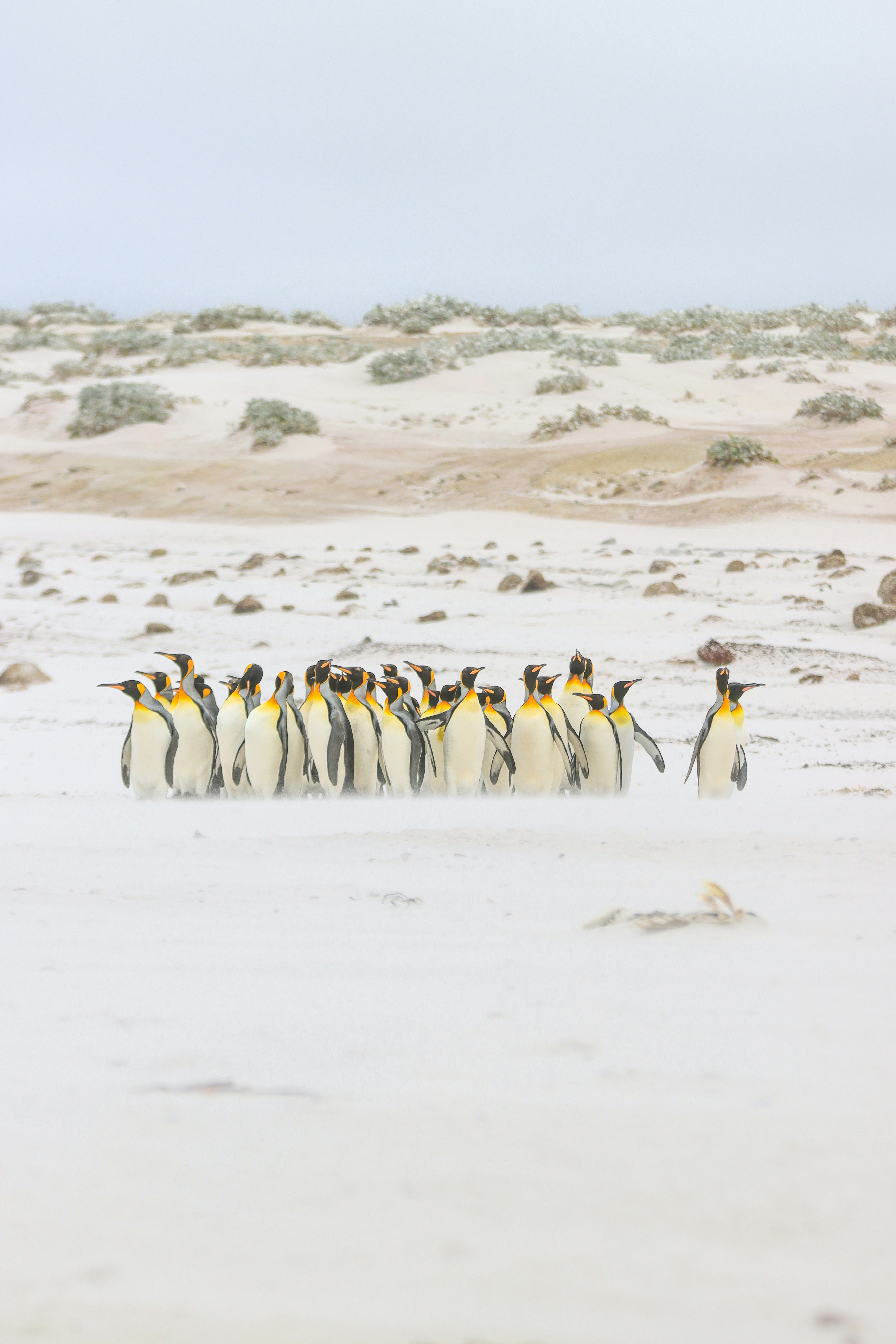
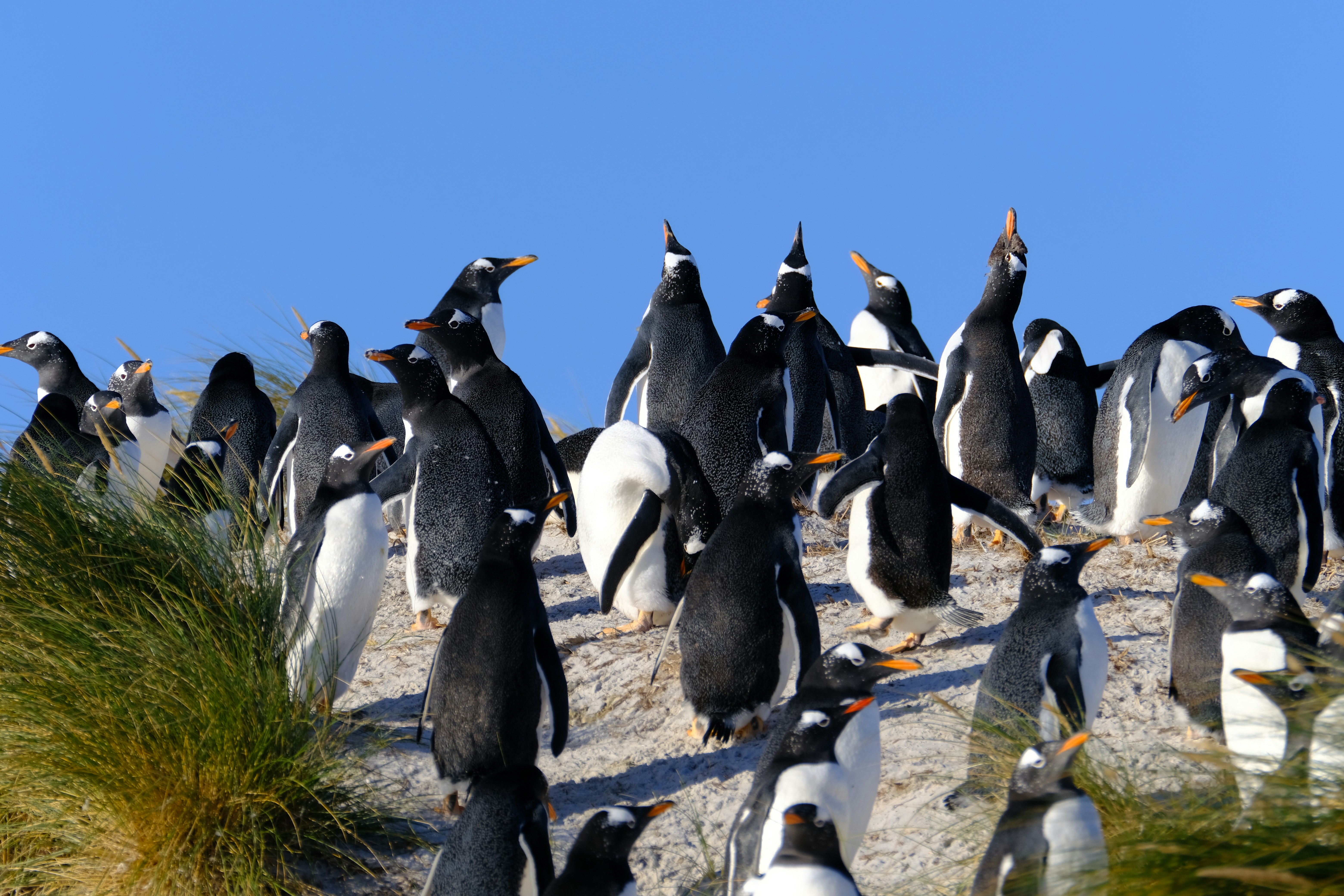
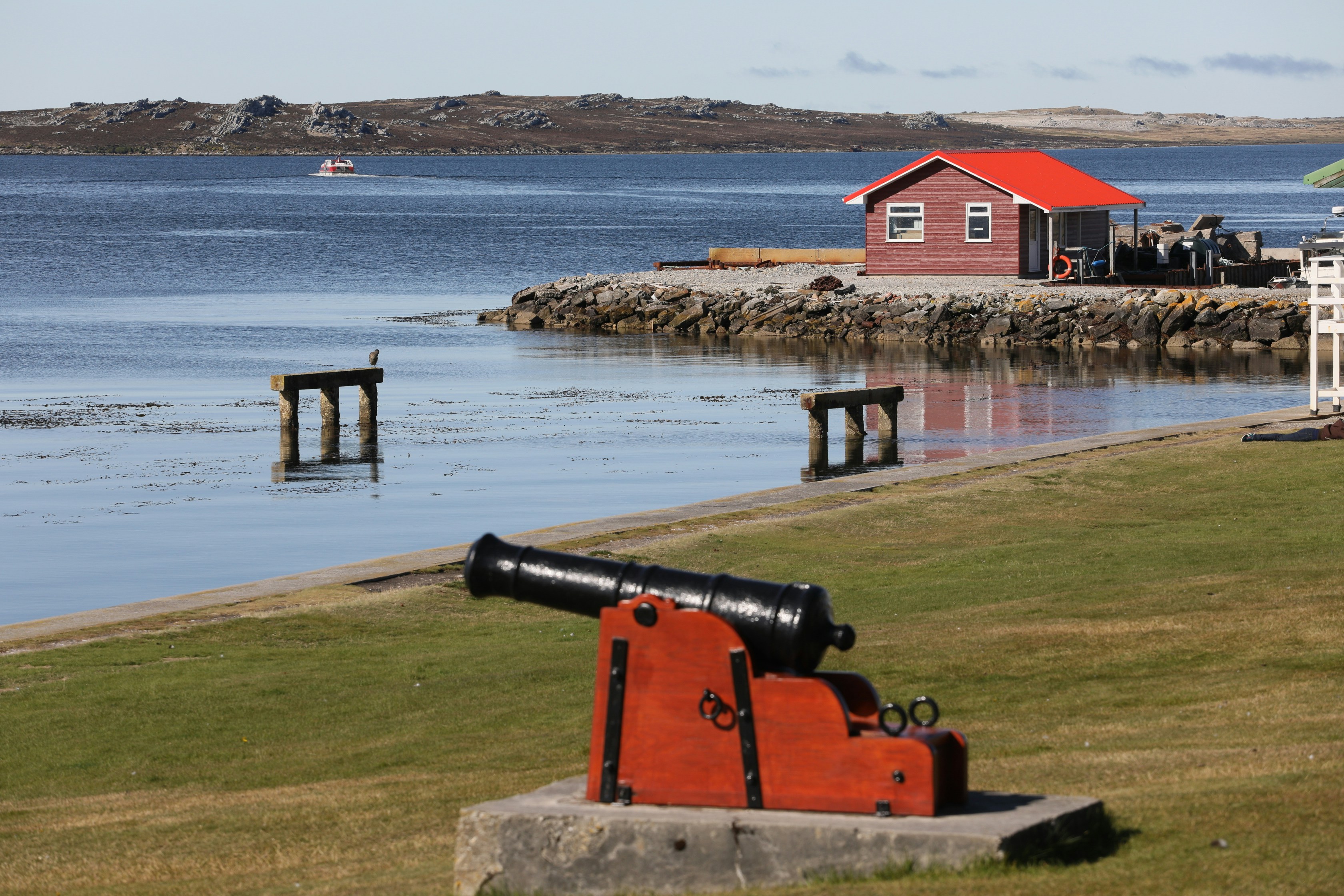
The Falkland Islands (Islas Malvinas) are an archipelago of two main islands and approximately 700 smaller ones in the South Atlantic Ocean, 480 km east of southern Patagonia. A British Overseas Territory since 1833 (with sovereignty disputed by Argentina), the islands became internationally known during the 1982 Falklands War, in which British forces repelled an Argentine invasion. Today, the islands are home to approximately 3,400 people, a thriving fishing and sheep-farming economy, and some of the most accessible and spectacular wildlife in the southern hemisphere.
Capital: Stanley (Port Stanley)
Population: ~3,400 — one of the world's smallest permanent populations
Area: 12,173 km²
Currency: Falkland Islands Pound (FKP) — at parity with GBP
Language: English
Status: British Overseas Territory; sovereignty disputed by Argentina
Fascinating Facts
- More penguins than people — by a factor of 300: The Falkland Islands have approximately 1 million penguins — five species (Magellanic, Gentoo, King, Rockhopper, and Macaroni) — for 3,400 people. The ratio of penguins to humans is roughly 300:1, making it the most penguin-dense inhabited territory on Earth.
- The 1982 war changed everything: The ten-week Falklands War of April–June 1982 — in which Argentine forces occupied the islands and were expelled by a British naval task force — resulted in 907 deaths and transformed the political fortunes of both Margaret Thatcher and Argentina's military junta.
- Self-sufficient and prosperous: The Falkland Islands have a higher GDP per capita than many European countries — driven by fishing licences (the Falklands EEZ is one of the world's richest squid fisheries) and growing tourism. In a 2013 referendum, 99.8% of residents voted to remain British.
- Extraordinary wildlife density: The Falklands support enormous colonies of black-browed albatross, southern elephant seals, South American sea lions, and orcas that hunt seals in the surf. Wildlife encounters here are among the most intimate and accessible anywhere on Earth.
Nature & Key Destinations
- Sea Lion Island: The finest wildlife destination in the Falklands — southern elephant seals, Magellanic and Gentoo penguins, killer whales hunting near shore, and black-browed albatross colonies, all within walking distance of a small lodge.
- Volunteer Point: The largest King Penguin colony in the Falklands — accessible by 4WD across open camp (farmland), with hundreds of magnificent King Penguins alongside Gentoos and Magellanic penguins.
- Stanley: The world's southernmost capital — brightly painted corrugated-iron houses, the 1892 SS Great Britain salvaged wreck in the harbour, war memorials, and the most southerly Anglican cathedral in the world.
- West Falkland: The wilder, less visited island — dramatic mountain ridges, white sand beaches with no footprints, and farms where Falkland Islanders (Kelpers) maintain the sheep-farming traditions of their 19th-century settler ancestors.
Cuisine
- Lamb & mutton: Sheep outnumber people approximately 167:1 in the Falklands — lamb and mutton are the staple protein, roasted, stewed, or turned into the classic Falkland dish of lamb stew. The quality is exceptional — grass-fed on clean Patagonian pasture.
- Smoked mullet & toothfish: Falkland smoked mullet is a local delicacy. Patagonian toothfish (marketed internationally as Chilean sea bass) from Falklands waters is considered among the world's finest eating fish.
- Diddle-dee berries: A low-growing native berry found across the camp — similar to cranberries, used in jams and crumbles. Picking diddle-dee berries is a Falklands tradition as old as the settlement itself.
Traditions & Culture
- Falklands identity: Falkland Islanders (called Kelpers, after the kelp forests offshore) have a strong, distinct identity — proud of their British heritage, their self-reliance, and their connection to the land. The community is tight-knit, and visiting the islands feels like entering a village where everyone knows everyone.
- Liberation Day (14 June): The anniversary of the Argentine surrender in 1982 — the most important day in the Falklands calendar, marked with ceremonies, remembrance, and community celebration. The war memorial in Stanley is the emotional centre of island identity.
Climate
- Subantarctic: Cool, windy, and unpredictable year-round — average summer temperatures of 10–13°C; winters of 2–4°C. Wind is the dominant feature of the Falklands climate — gusts of 60+ mph are common. Best for wildlife: October–March (austral spring and summer).