Australia is simultaneously a continent, a country, and an island — the sixth largest nation on Earth, covering nearly 7.7 million km² between the Indian and Pacific Oceans. It is one of the world's most biodiverse countries, home to animals found nowhere else on Earth, the world's largest coral reef system, the world's oldest living culture (Aboriginal Australians have inhabited the continent for at least 65,000 years), and five of the world's ten most liveable cities. Its vast interior — the arid Red Centre of the Outback — contrasts with lush tropical rainforests in Queensland, temperate wine regions in the south, and 35,000 km of coastline.
Capital: Canberra (largest city: Sydney)
Population: ~26 million — on a continent the size of Europe
Area: 7,692,024 km² — the sixth largest country in the world
Currency: Australian Dollar (AUD)
Language: English (de facto official); approximately 250 Indigenous languages recognised
Religion: No official religion; predominantly Christian with the fastest-growing 'no religion' category in the developed world
Fascinating Facts
- The world's oldest living culture: Aboriginal Australians have continuously inhabited the continent for at least 65,000 years — the oldest known continuous human culture on Earth. Their Dreamtime cosmology, songlines (navigational routes encoded in song), and rock art traditions represent a civilisation of extraordinary depth and antiquity.
- More venomous species than anywhere on Earth: Australia is home to 21 of the world's 25 most venomous snakes, the world's most venomous fish (stonefish), the world's most venomous octopus (blue-ringed), the world's most venomous jellyfish (box jellyfish), and the platypus — a venomous, egg-laying mammal. Evolution proceeded differently here.
- The Great Barrier Reef is visible from space: The Great Barrier Reef — stretching 2,300 km along the Queensland coast — is the world's largest living structure and the only biological entity visible from space. It contains 3,000 individual reef systems, 900 islands, and more biodiversity than the entire Amazon rainforest.
- Uluru changes colour: Uluru (Ayers Rock) — a massive sandstone monolith rising 348 m from the flat Outback, sacred to the Anangu Aboriginal people — changes colour throughout the day from ochre to deep red to purple at sunset, due to the varying angle of the light on its iron-rich surface.
Nature & Key Destinations
- The Great Barrier Reef: The world's largest coral reef system off the Queensland coast — snorkelling and diving among 1,500 species of fish, 4,000 types of mollusc, and 240 species of birds at Cairns, the Whitsunday Islands, and Lady Elliot Island.
- Uluru & the Red Centre: The sacred sandstone monolith of the Anangu people at the heart of the continent — best experienced at dawn and dusk from the dedicated viewing areas, with guided cultural walks and the extraordinary Kata Tjuta (the Olgas) domes nearby.
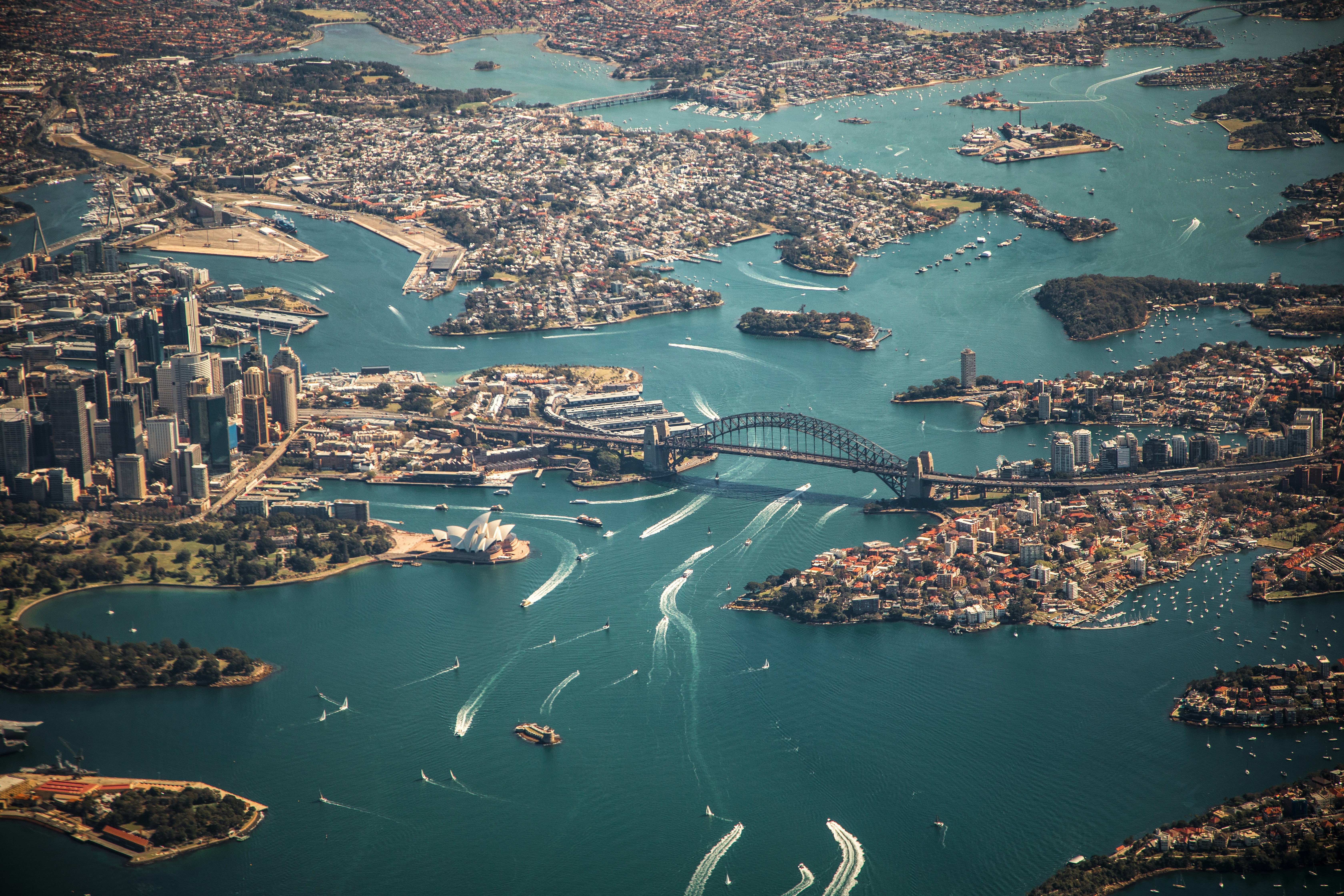
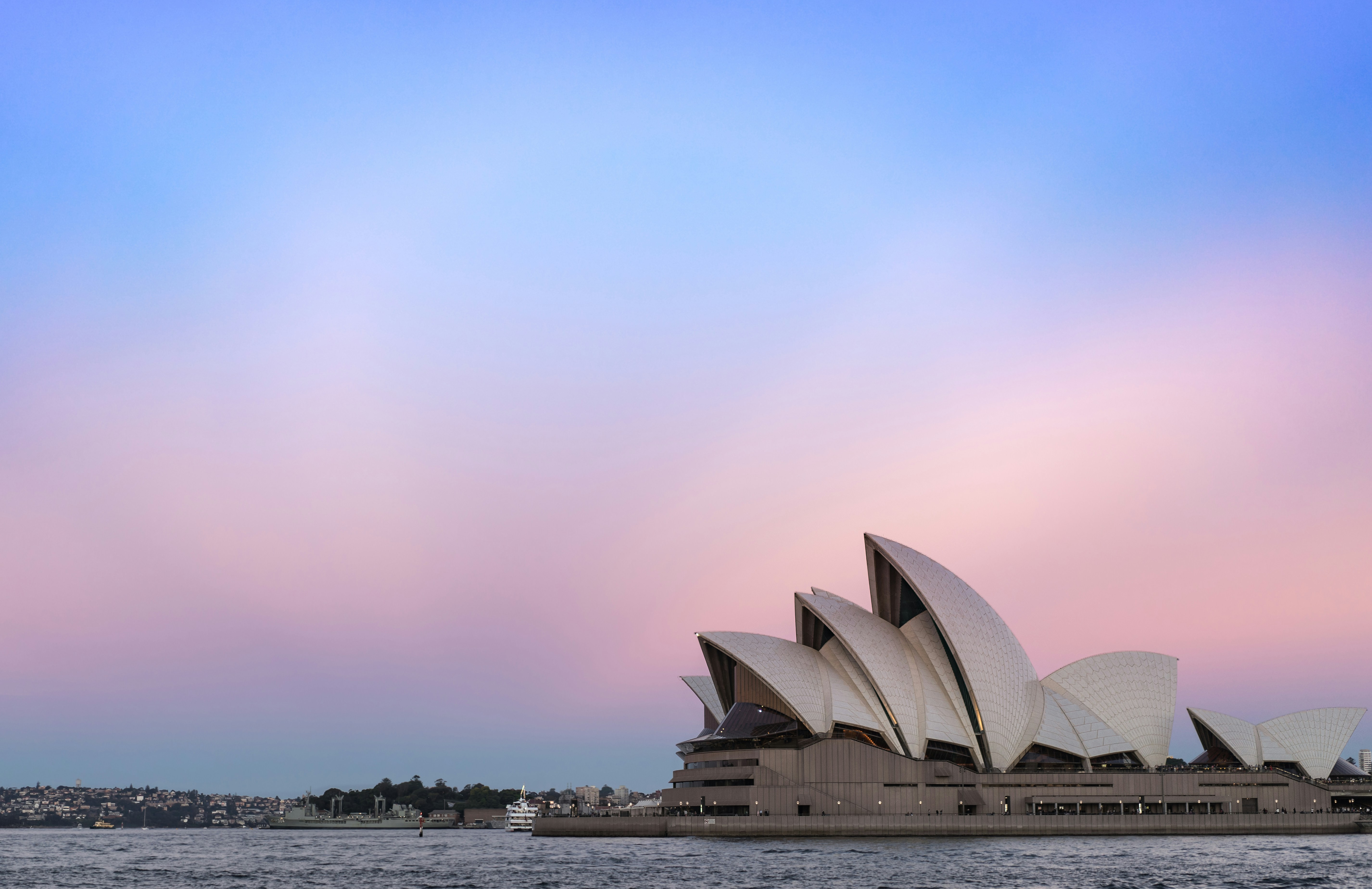
- Sydney: The Sydney Opera House (UNESCO World Heritage) and Harbour Bridge, Bondi Beach, the Blue Mountains' Three Sisters, and a dining and cultural scene of world-class quality. The most visited city in the southern hemisphere.
- The Daintree Rainforest & Tasmania: The Daintree in Queensland is the world's oldest tropical rainforest (180 million years), where it meets the reef at Cape Tribulation. Tasmania offers pristine wilderness — Cradle Mountain, the Freycinet Peninsula, and one of the world's cleanest environments.
Cuisine
- Modern Australian cuisine: Australia has one of the world's most exciting contemporary food cultures — Modern Australian (Mod Oz) cuisine blends European technique with Asian influences and native Australian ingredients: kangaroo, barramundi, Moreton Bay bugs, quandongs, wattleseed, and finger limes. Sydney and Melbourne consistently rank among the world's top dining cities.
- Vegemite, meat pies & the BBQ: Vegemite — a dark, intensely savoury yeast extract spread — is Australia's most divisive food export, beloved by Australians and horrifying to most others. The meat pie (shortcrust pastry filled with minced beef and gravy) is the national snack. The weekend backyard barbecue — prawns, snags (sausages), and steaks — is the defining Australian social ritual.
- Wine & coffee culture: Australia's wine regions — the Barossa Valley (Shiraz), Clare Valley (Riesling), Yarra Valley, and Margaret River — produce some of the New World's finest wines. Melbourne has arguably the best coffee culture in the world, with a flat white tradition and specialty espresso bars on every corner.
Traditions & Culture
- Aboriginal culture & reconciliation: Australia's ongoing process of recognising and reconciling with its Aboriginal and Torres Strait Islander heritage — the world's oldest continuous cultures — is central to contemporary Australian identity. The dot painting tradition, didgeridoo music, and Dreamtime stories are increasingly celebrated as Australia's most profound cultural treasures.
- Sport as religion: Australia is one of the world's great sporting nations — consistently punching above its weight in cricket, swimming, rugby union, rugby league, and the AFL (Australian Rules Football), a uniquely Australian sport with roots in the 19th century that remains the most-attended domestic sport in the world per capita.
Climate
- Vast and varied: Australia's size produces dramatically different climates — tropical north (Darwin: 30–35°C year-round, wet season October–April), arid centre (Uluru: extreme heat in summer, cold nights in winter), temperate south (Sydney/Melbourne: 10–25°C, four seasons), and Mediterranean west (Perth: dry, sunny summers). Best time depends entirely on the region.