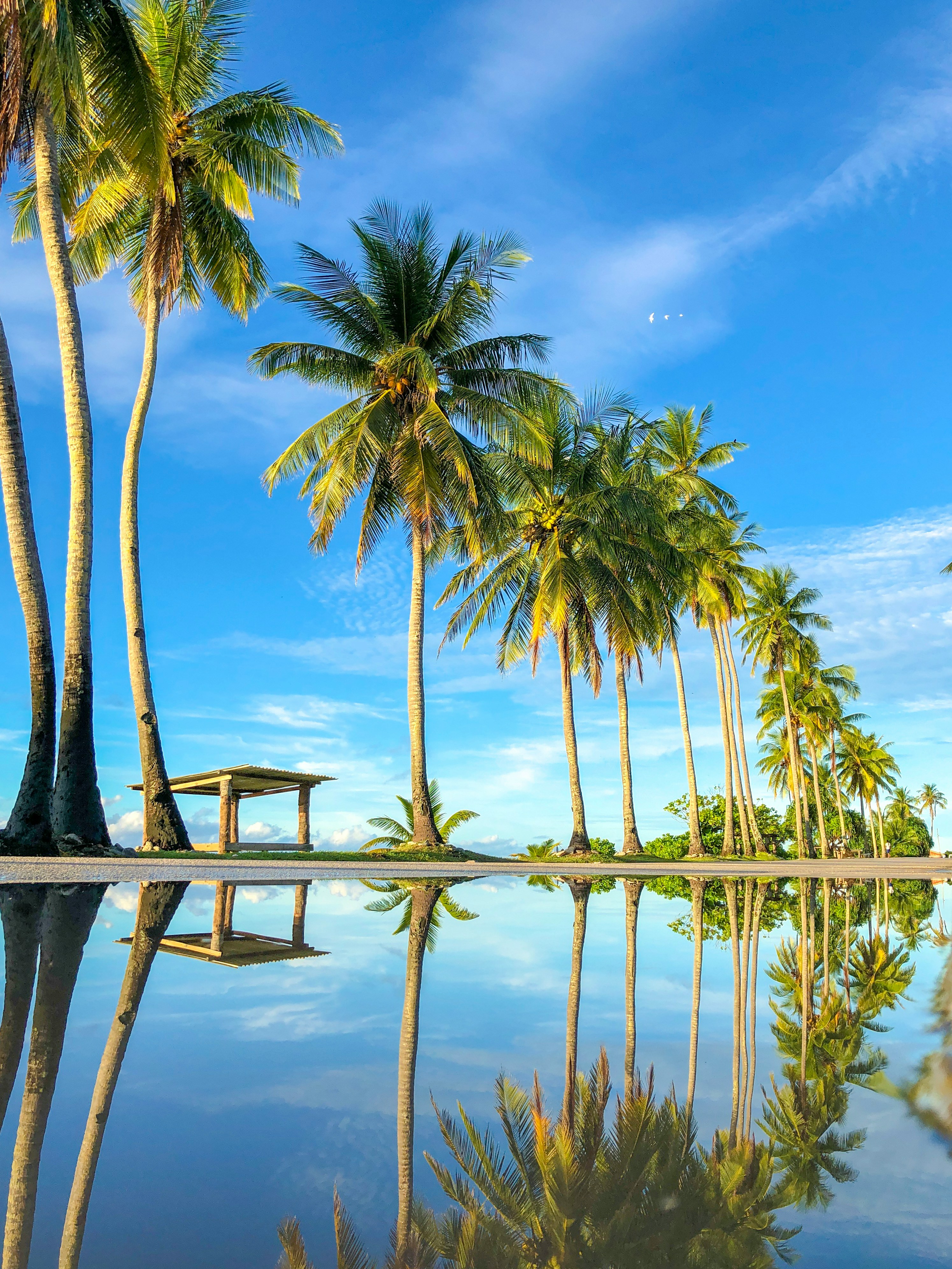
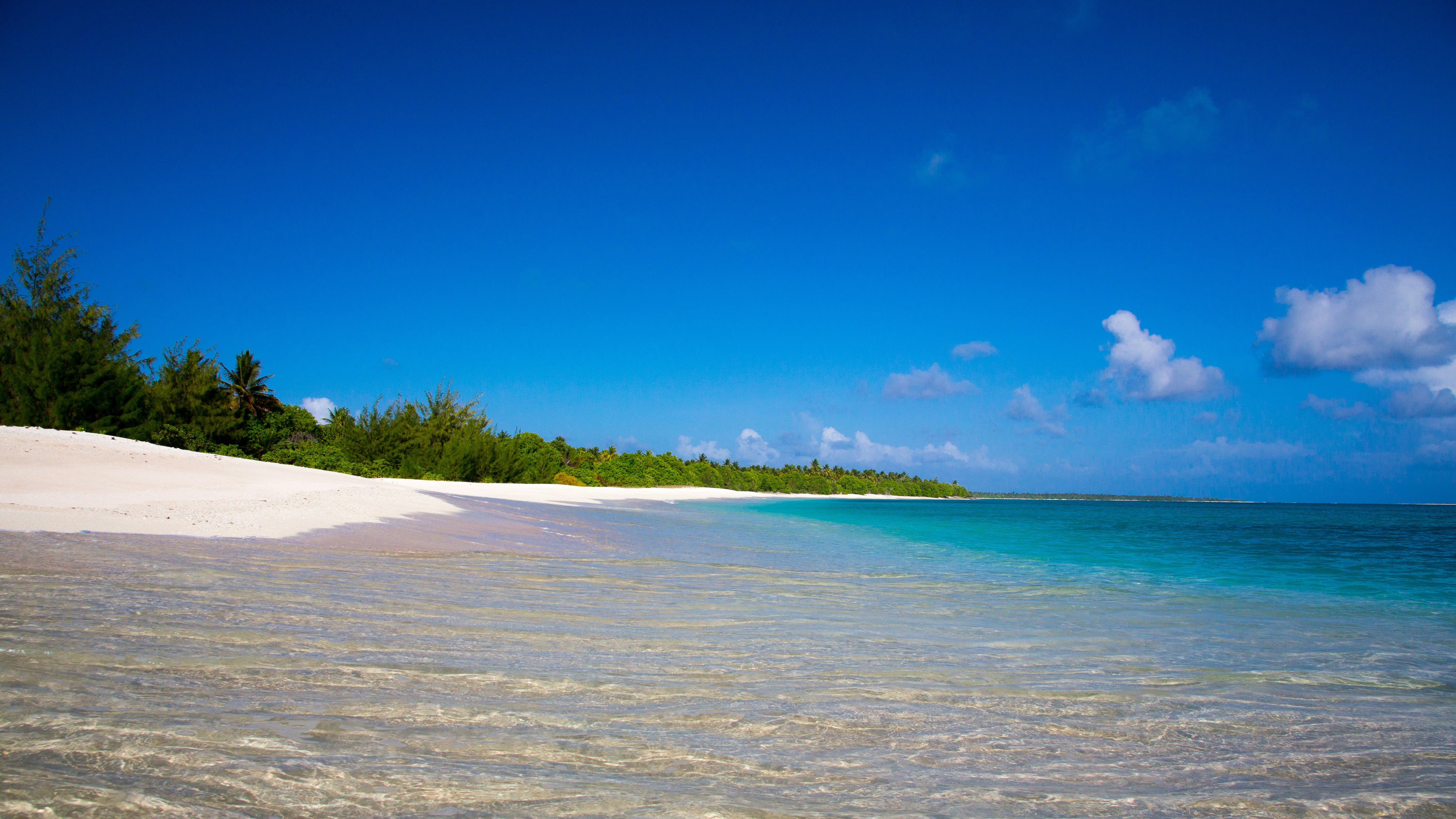
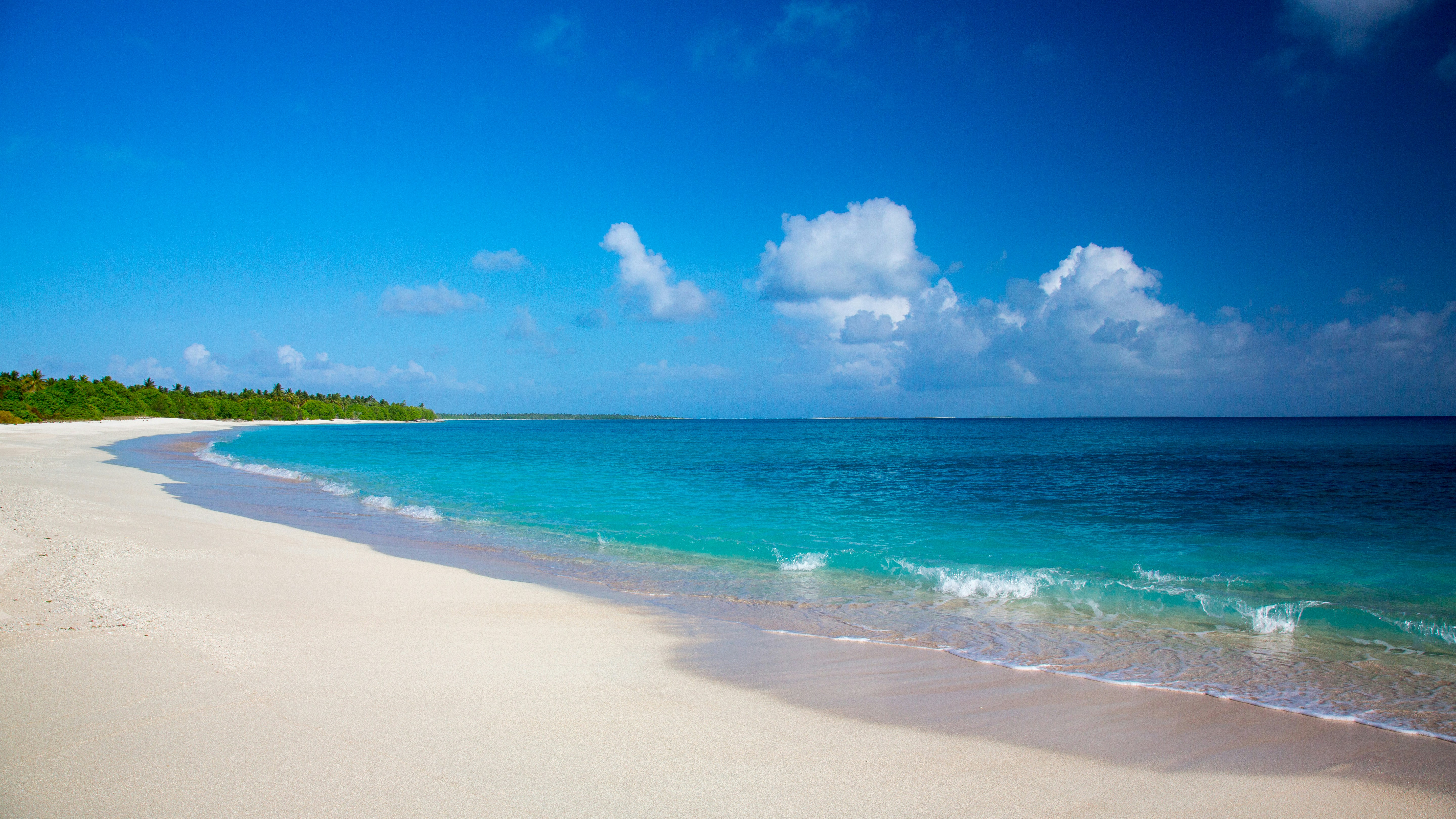
The Marshall Islands is an island nation of 29 atolls and 5 single islands in the central Pacific Ocean — scattered across 2 million km² of ocean between Hawaii and Australia, with a total land area of just 181 km². The Marshallese people are among the Pacific's greatest traditional navigators, using stick charts to read wave patterns and navigate between atolls without instruments. The nation carries the dark legacy of 67 US nuclear tests conducted at Bikini and Enewetak atolls between 1946 and 1958, including the Castle Bravo hydrogen bomb — the largest US nuclear detonation in history — and now faces an equally existential threat from rising seas that could submerge the entire nation within decades.
Capital: Majuro
Population: ~42,000
Area: 181 km² of land across 2 million km² of ocean
Currency: US Dollar (USD)
Languages: Marshallese and English — both official
Independence: 1986 from US trusteeship; maintains a Compact of Free Association with the United States
Fascinating Facts
- 67 nuclear tests — and the survivors: Between 1946 and 1958, the United States conducted 67 nuclear and thermonuclear tests at Bikini and Enewetak atolls, exposing Marshall Islanders to catastrophic radiation. The 1954 Castle Bravo hydrogen bomb — 1,000 times more powerful than Hiroshima — contaminated the crew of a Japanese fishing vessel and Marshall Islanders downwind. Bikini Atoll is still radioactive.
- Stick chart navigation: Marshallese navigators developed a unique technique for ocean navigation — reading the patterns of ocean swells and their refraction around islands, encoded in stick charts made from pandanus wood and cowrie shells. The technique allowed navigation across hundreds of kilometres of open ocean without any instruments.
- Kwajalein — the world's largest atoll: Kwajalein Atoll has the world's largest lagoon — 2,174 km², large enough to contain the entire island of Maui. It is now home to the US Army's Ronald Reagan Ballistic Missile Defense Test Site and is largely inaccessible to visitors.
- Bikini Atoll — UNESCO World Heritage: Bikini Atoll — the site of the 1946–1958 nuclear tests — is a UNESCO World Heritage Site, designated for its outstanding testimony to the nuclear age. Its lagoon contains the wrecks of 90 ships deliberately sunk for the tests, including the USS Saratoga, now considered one of the world's finest wreck dives.
Nature & Key Destinations
- Bikini Atoll wreck diving: The UNESCO-listed lagoon contains the wrecks of the USS Saratoga (aircraft carrier, 40,000 tonnes), the Nagato (Japanese flagship from which Admiral Yamamoto commanded Pearl Harbor), and dozens of support vessels — the world's most historically significant and dramatic wreck diving destination.
- Majuro Atoll: The capital atoll — a thin strip of land barely 100 m wide in places, with the lagoon on one side and the ocean on the other. The local market, the Alele Museum of Marshallese history and navigation, and the lagoon's excellent snorkelling are the main attractions.
- Arno Atoll: Just 45 minutes by boat from Majuro — a traditional Marshallese community with pristine coral, excellent fishing, and the most authentic traditional culture accessible from the capital. Arno's calm lagoon is a world-class bonefish and giant trevally destination.
- Mili & the outer atolls: The outer Marshall Islands remain among the most remote and undeveloped places in the Pacific — WWII Japanese fortifications, pristine reefs untouched by commercial fishing, and communities living largely as their ancestors did on pandanus, breadfruit, and the sea.
Cuisine
- Marshallese traditional food: The traditional diet is built on the resources of the atoll — breadfruit (baked, boiled, or fermented into a paste called bwiro that can be stored for years), pandanus fruit (eaten fresh or dried into a sweet cake), coconut, and the remarkable variety of Pacific reef fish available from the lagoon.
- Reef fish & turtle: Fresh reef fish — grilled over coconut husks or baked in an earth oven — is the foundation of daily eating. Sea turtle was traditionally a prestige food reserved for chiefs; it is now protected but remains culturally significant. Giant clam and octopus from the lagoon are everyday staples.
- Coconut in all forms: The coconut palm is the staff of life in the Marshall Islands — drinking coconut for hydration, coconut cream for cooking, copra (dried coconut flesh) as the traditional cash export, and toddy (fermented coconut sap) as the traditional social drink.
Traditions & Culture
- Nuclear legacy & resilience: The nuclear testing legacy — displacement, radiation sickness, birth defects, and contaminated land — is the defining trauma of Marshallese national identity. The annual Nuclear Victims Remembrance Day (1 March, the anniversary of Castle Bravo) is a day of mourning, political advocacy, and cultural resilience.
- Stick chart tradition & navigation: The rebbelib and mattang stick charts — encoded maps of ocean swell patterns used for trans-oceanic navigation — are among the most remarkable intellectual achievements of any Pacific culture. Although no longer used for navigation, they are treasured as cultural objects and taught in schools as an expression of Marshallese genius.
Climate
- Tropical oceanic: Warm year-round (27–30°C), moderated by trade winds. The northern atolls are drier; the southern atolls receive more rain. Wet season May–November. Drought is a periodic threat on the northern atolls. Typhoon risk is relatively low compared to western Pacific islands, but ocean swells regularly overwash low-lying land.