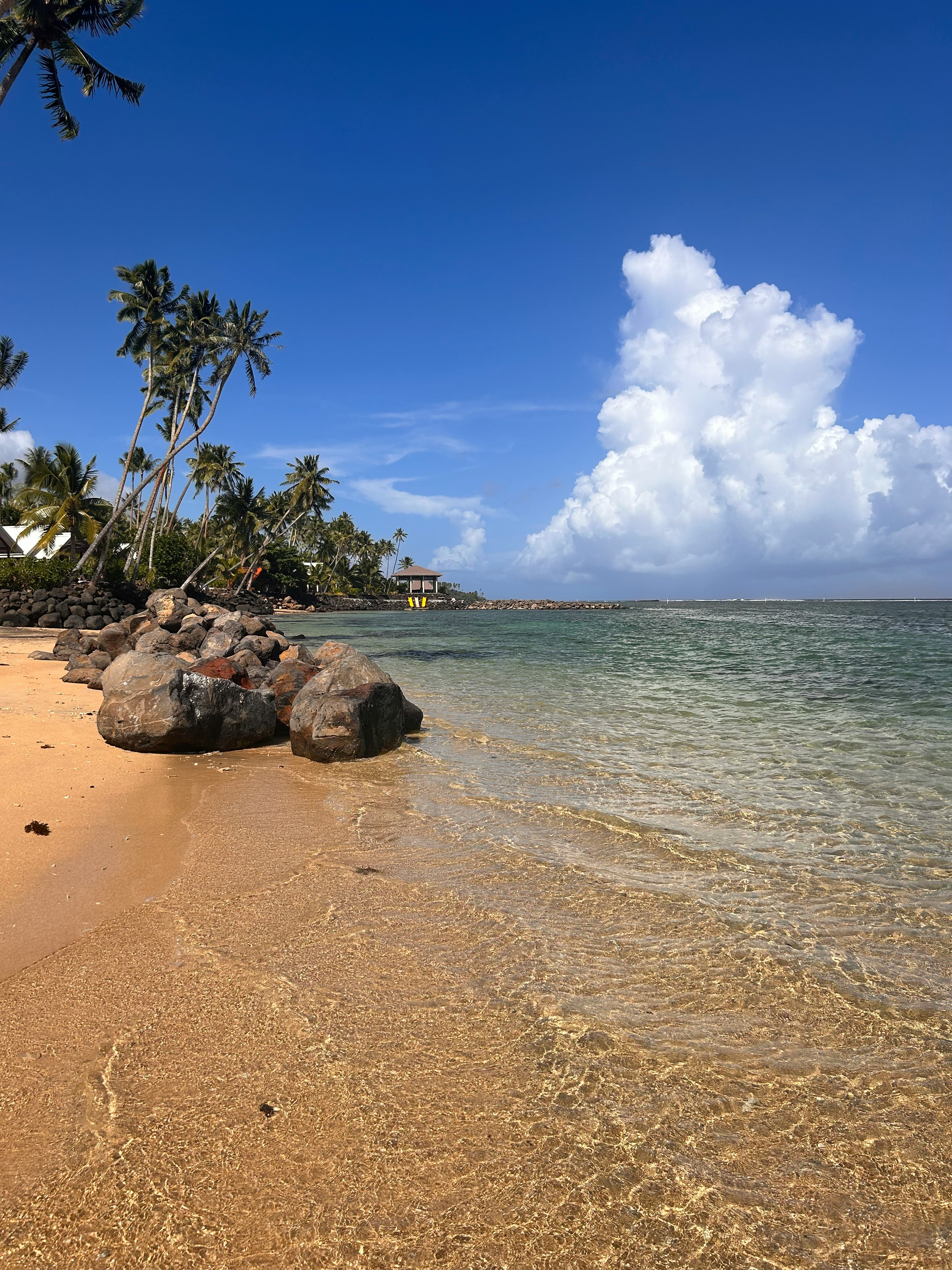
American Samoa is an unincorporated territory of the United States in the South Pacific Ocean — a group of five volcanic islands and two coral atolls lying 3,500 km southwest of Hawaii and directly east of the independent nation of Samoa. It is the only US territory located south of the Equator and one of the most remote. Despite its American status, American Samoa has maintained a remarkably traditional Polynesian culture — the fa'asamoa (Samoan way) of communal village life, chiefly titles (matai), and deep Christian faith governs daily life in ways that distinguish it sharply from the continental United States.
Capital: Pago Pago
Population: ~55,000 (another ~200,000 Samoans live in the continental US)
Area: 199 km²
Currency: US Dollar (USD)
Languages: Samoan and English — both official
Status: Unincorporated territory of the United States; residents are US nationals but not citizens by birth
Fascinating Facts
- The only US territory south of the Equator: American Samoa sits at approximately 14°S latitude — the only US territory in the southern hemisphere. This geographic fact shapes everything from its time zone (UTC-11, among the last places on Earth to begin each calendar day) to its climate and biodiversity.
- The fa'asamoa — ancient culture intact: Unlike most Pacific territories, American Samoa has maintained the fa'asamoa (Samoan way) with remarkable tenacity — communal land ownership, the matai chiefly system, the fono (village council), and traditional fale (open-sided thatched houses) remain active institutions governing everyday life.
- Pago Pago — one of the finest natural harbours: Pago Pago Harbour — formed inside the flooded crater of an ancient volcano, almost entirely encircled by dramatic green peaks — is one of the finest natural deep-water harbours in the South Pacific. It has been a strategic US naval base since 1899.
- The last place on Earth to end each day: American Samoa uses UTC-11 — one of the most westerly time zones in the world, meaning it is among the very last inhabited places on Earth to experience each calendar day. This was dramatically illustrated in 2011 when neighbouring Samoa jumped the international date line, leaving American Samoa a day behind.
Nature & Key Destinations
- National Park of American Samoa: One of the most remote national parks in the US system — protecting 4,000 acres of tropical rainforest, volcanic peaks, and coral reef across three islands. Flying foxes (large fruit bats, the only native land mammals), rare birds, and pristine reef snorkelling in waters of exceptional clarity.
- Pago Pago Harbour: The dramatic harbour ringed by jungle peaks — the Rainmaker Mountain (Mount Pioa, 523 m) feeds a near-permanent cloud that gives the harbour its lush character. The fish market and local market on the waterfront are the social heart of the territory.
- Ofu Island: Part of the Manu'a island group — Ofu's coral reef is considered one of the healthiest and most biodiverse in the entire American Pacific, with extraordinary coral cover and giant clams. Accessible only by small plane from Pago Pago.
- Traditional villages: The fono-governed villages of Tutuila island maintain traditional fale architecture, umu (earth oven) cooking, and Sunday church culture of extraordinary formality and beauty — white-clad congregations singing four-part harmonies heard across the Pacific.
Cuisine
- Umu & palusami: Traditional Samoan cooking centres on the umu — an earth oven of hot stones over which taro, breadfruit, fish, and pork are wrapped in banana leaves and slow-cooked. Palusami — young taro leaves baked in coconut cream — is the most celebrated Samoan dish, rich and deeply flavoured.
- Oka & fresh seafood: Oka is the Samoan version of ceviche — raw fish (usually tuna) cured in lime juice and coconut cream with onion and chilli. The abundant yellowfin tuna and mahi-mahi of the South Pacific are the foundation of everyday Samoan seafood cooking.
- Koko Samoa: A thick, intensely flavoured drinking chocolate made from roasted and ground cacao beans — drunk hot with coconut cream and sugar at breakfast. Koko Samoa is distinct from Western hot chocolate and has a bitter, complex flavour unique to the Polynesian tradition.
Traditions & Culture
- Fa'asamoa & the matai system: The matai chiefly system — in which extended family groups (aiga) are governed by elected chiefs who hold hereditary titles — remains the organising principle of Samoan society. Land is communally owned; individual ownership is almost unknown. The fa'asamoa shapes everything from architecture to family obligation.
- Slit drum & siapo: Traditional Samoan arts include siapo (tapa cloth made from beaten bark, decorated with geometric patterns) and the paepae (ceremonial platform). Sunday church services — with elaborate hats, white dress, and magnificent choral singing — are the most visible expression of the culture's Christian-Polynesian fusion.
Climate
- Tropical: Hot and humid year-round (26–31°C). The wet season November–April brings heavy rain — Pago Pago is one of the wettest capitals in the Pacific (5,000 mm/year). The dry season May–October is the best time to visit. Cyclone risk December–March.