Tonga is an archipelago kingdom of 169 islands in the South Pacific Ocean — the only Pacific nation to have retained its monarchy throughout the colonial era, never surrendering sovereignty to a European power. The Kingdom of Tonga consists of four main island groups: Tongatapu (where the capital Nuku'alofa sits), Ha'apai, Vava'u, and the remote Niua islands far to the north. It is best known internationally for its humpback whale encounters (July–October in Vava'u and Ha'apai), the ancient royal burial mounds of Tongatapu, and the Ha'apai Group's extraordinary combination of deserted beaches, pristine reefs, and near-complete absence of other visitors.
Capital: Nuku'alofa (Tongatapu)
Population: ~100,000 on the islands; ~200,000 Tongans living abroad
Area: 747 km²
Currency: Tongan Paʻanga (TOP)
Languages: Tongan and English — both official
Independence: Always independent; became a constitutional monarchy in 1875; formal British protectorate 1900–1970; joined the UN in 1999
Fascinating Facts
- Never colonised: Tonga is the only Pacific island nation to have maintained continuous sovereignty throughout the colonial era. The Tongan monarchy skilfully negotiated a British protectorate arrangement (1900–1970) that preserved formal independence while providing protection. No European power ever annexed Tongan territory.
- Swimming with humpback whales: Between July and October, humpback whales migrate to Tongan waters to breed and give birth. Vava'u and Ha'apai offer one of the world's most accessible and carefully regulated experiences of swimming with wild humpback whales — in water of extraordinary clarity, just metres from mothers and newborn calves.
- The Ha'amonga 'a Maui trilithon: A massive coral limestone trilithon on Tongatapu — two upright stones each weighing approximately 40 tonnes, capped by a horizontal lintel — erected around 1200 AD by the 11th Tu'i Tonga king. Its precise purpose is debated; some scholars argue it functioned as a solar calendar. It is the most significant pre-European monument in all of Polynesia.
- Captain Cook called it the Friendly Islands: James Cook visited Tonga three times (1773, 1774, and 1777) and named the archipelago the Friendly Islands for the warm welcome he received. He was entirely unaware that during his 1777 visit his hosts had seriously considered killing him — but could not agree on a plan in time.
Nature & Key Destinations
- Vava'u Group: A labyrinth of 50+ islands and sheltered waterways in northern Tonga — the humpback whale capital of the Pacific (July–October), world-class sailing, sea kayaking through limestone sea arches, and the most developed visitor infrastructure outside Tongatapu.
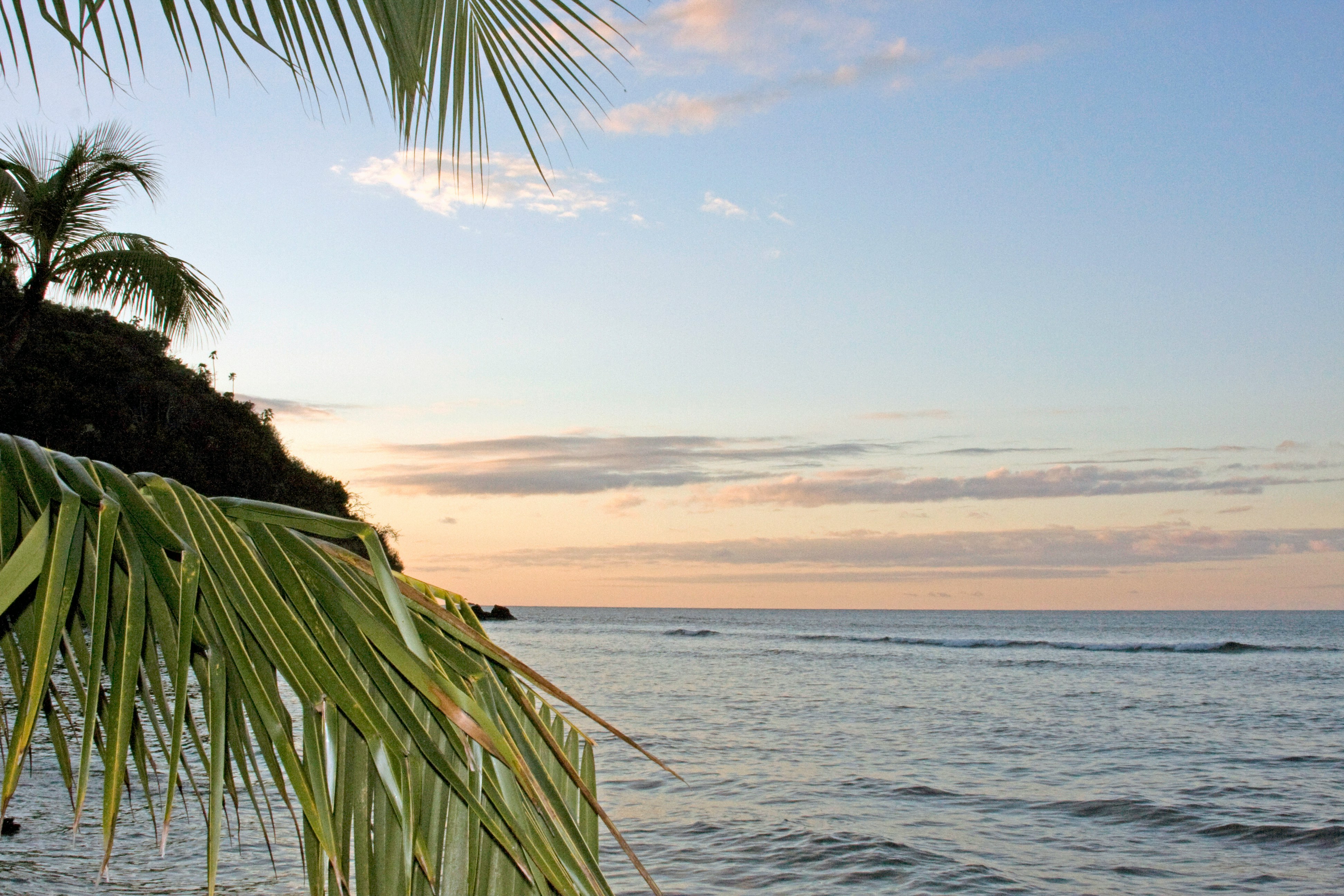
- Ha'apai Group: The most unspoiled island group in Tonga — flat, low-lying islands of extraordinary white sand and turquoise water, almost no visitors, some of the Pacific's healthiest coral reefs, and the place where HMS Bounty loaded breadfruit before the famous mutiny.
- Royal Tombs & Ha'amonga 'a Maui: The ancient royal burial mounds (langi) of Tongatapu — massive coral limestone platforms where Tu'i Tonga kings were interred — and the Ha'amonga 'a Maui trilithon are the most significant archaeological sites in Polynesia outside Easter Island.
- Flying foxes at Kolovai: The Tongan flying fox colony at Kolovai on Tongatapu — hundreds of large fruit bats hanging from the trees of the royal estate, protected as sacred animals by ancient tradition — takes to the air at dusk in a spectacular, chattering cloud.
Cuisine
- 'Umu & lu pulu: The 'umu earth oven feast — taro, yam, breadfruit, and pork slow-cooked on hot stones wrapped in banana leaves — is the centrepiece of every Tongan celebration. Lu pulu is the most beloved Tongan dish: corned beef and onion wrapped in taro leaves and baked in coconut cream, the defining comfort food of the islands.
- Ota ika & fresh seafood: Ota ika — raw fish cured in fresh coconut cream and lime with onion and chilli — is the Tongan ceviche, made daily with tuna or mahi-mahi caught that morning. Lobster, giant clam, and crayfish from Tonga's pristine reefs are the luxury seafood of special occasions.
- Kava & otai: Kava — a mildly sedative drink ground from the root of the pepper plant — is consumed at every formal and informal gathering, from royal ceremonies to village evenings. Otai is Tonga's refreshing fruit drink — watermelon or mango blended with coconut milk and sugar, served cold.
Traditions & Culture
- The monarchy & social hierarchy: Tonga maintains a formal monarchy with the king at the apex of a rigorously observed social hierarchy. Respect for rank — in dress, language, seating, and ceremony — permeates every aspect of Tongan life. The royal family is genuinely revered, and the coronation of King Tupou VI in 2015 was a ceremony of extraordinary formality and colour.
- Lakalaka — UNESCO-listed dance: The lakalaka — a Tongan group dance performed by large numbers of men and women in formal dress, with subtle hand gestures encoding poetry and genealogical history — is UNESCO-listed as an Intangible Cultural Heritage. A full lakalaka performance is one of the most dignified and moving cultural expressions in all of Polynesia.
Climate
- Tropical South Pacific: Warm year-round (23–29°C). The dry season May–October is ideal — lower humidity, reliable sunshine, and the peak of the humpback whale season. The wet season November–April brings heavier rain and cyclone risk. Vava'u and Ha'apai are slightly warmer than Tongatapu year-round.