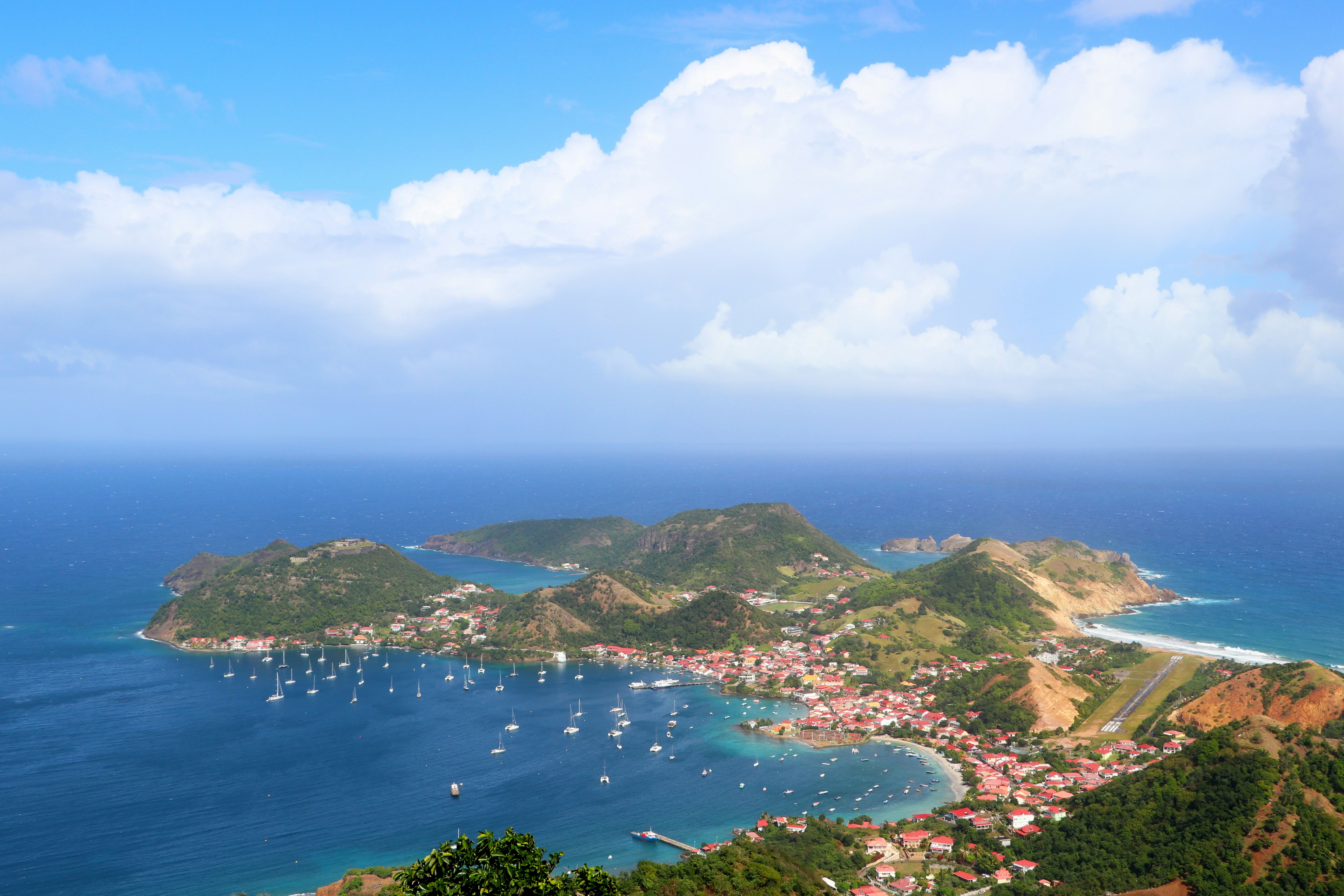
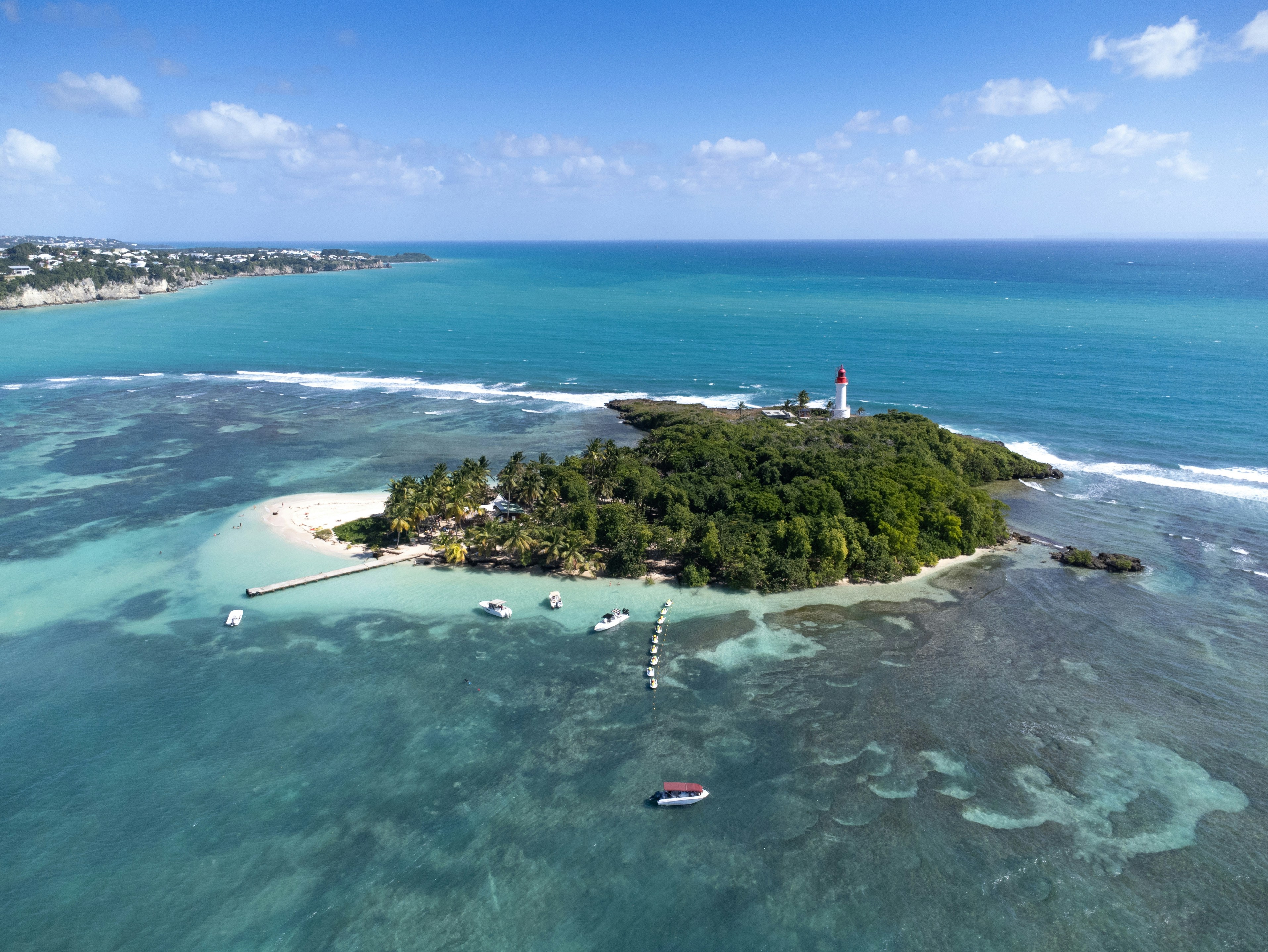
Guadeloupe is an overseas region and department of France in the Eastern Caribbean — as much a part of the French Republic as Lyon or Bordeaux, using the euro and electing deputies to the French parliament. It consists of two main islands joined by a narrow channel: Basse-Terre (mountainous, volcanic, with the still-active La Soufrière) and Grande-Terre (flatter, more developed, with the finest beaches). The outer islands — Les Saintes, Marie-Galante, and La Désirade — offer an even more authentic and unhurried experience. Guadeloupe combines French sophistication with Caribbean rhythm in a way found nowhere else in the region.
Capital: Basse-Terre (administrative); Pointe-à-Pitre (economic centre)
Population: ~395,000
Area: 1,628 km²
Currency: Euro (EUR)
Languages: French (official); Antillean Creole (Gwadloupéyen) widely spoken
Status: Overseas region and department of France; part of the EU
Fascinating Facts
- An active volcano above a city: La Soufrière (1,467 m) on Basse-Terre is the highest active volcano in the Lesser Antilles — it erupted in 1976, forcing the evacuation of 70,000 people. It continues to emit sulphurous gases and is carefully monitored. Hiking to the crater on a clear day is one of the Caribbean's most dramatic experiences.
- Christopher Columbus named it: Columbus arrived in Guadeloupe in 1493 on his second voyage and named it after the monastery of Santa María de Guadalupe in Spain. The Caribs who lived here, the Kalinago, resisted European colonisation longer than almost any other Caribbean people.
- Jacques Cousteau's favourite dive: The waters around the Îles des Saintes — particularly the Cousteau Reserve off Basse-Terre — were described by Jacques Cousteau as among the ten best dive sites in the world. The reserve is one of the most biodiverse marine areas in the French Caribbean.
- Sugarcane and rum heritage: Guadeloupe produces rhum agricole — rum made from fresh sugarcane juice rather than molasses, with an appellation d'origine contrôlée (AOC). The result is a more complex, terroir-driven spirit than industrial rum, with flavours as varied as the cane fields of the island.
Nature & Key Destinations
- La Soufrière & Basse-Terre rainforest: The volcanic heart of Guadeloupe — the Parc National de la Guadeloupe, with its hiking trails to the crater, the Chutes du Carbet waterfalls (the tallest in the Caribbean), and the Grand Étang crater lake.
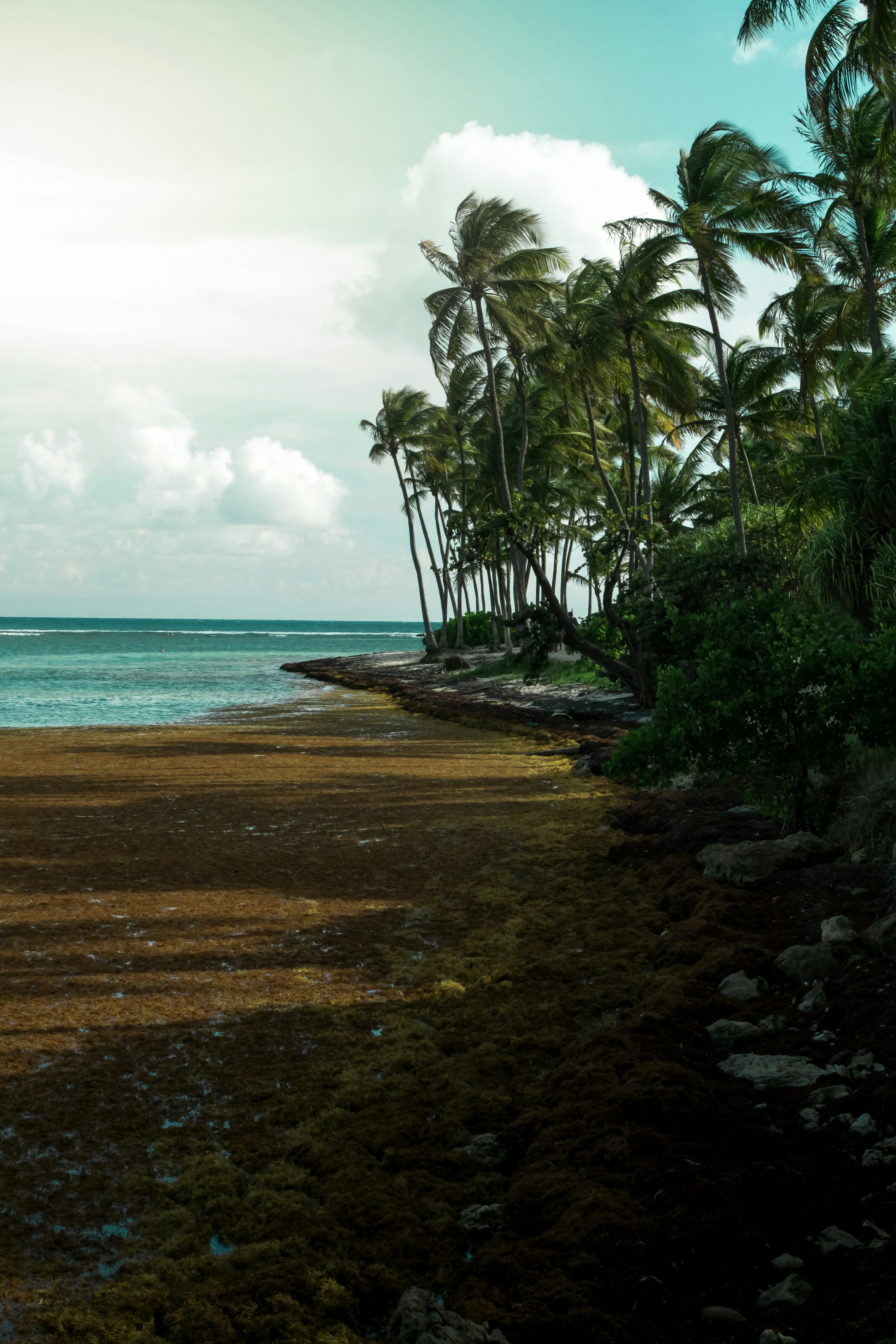
- Grande-Terre beaches: The finest beaches in the French Antilles — Saint-Anne, Saint-François, and the Grande Anse de Gros-Morne offer powder-white sand and calm turquoise water on the island's southern coast.
- Îles des Saintes (Les Saintes): A cluster of tiny islands 15 km south of Basse-Terre — the Bourg des Saintes is one of the most charming villages in the French Caribbean, with the Cousteau Marine Reserve for diving and snorkelling.
- Marie-Galante: The 'Big Pancake' — a flat, circular island of sugarcane fields, windmills, rum distilleries, and unspoiled beaches. Slower, more authentic, and less visited than the main islands.
Cuisine
- Colombo & blaff: Colombo — a curry brought by Indian indentured labourers, made with pork, goat, or chicken with colombo spice paste — is the signature dish of Guadeloupe. Blaff is a delicate court-bouillon of fresh white fish poached in spiced acidulated water — the most elegant expression of Creole seafood cooking.
- Accras & boudin créole: Accras de morue (salt cod fritters, crispy and light) are the ubiquitous Guadeloupean appetiser, served at every table with a ti' punch. Boudin créole — spiced black pudding with chilli and allspice — is the island's beloved street food.
- Ti' punch & rhum agricole: The ti' punch (literally 'little punch') — rhum agricole, lime, and cane sugar syrup — is Guadeloupe's ritual aperitif, mixed to each person's own specification at every rum bar. The rhum agricoles of Damoiseau, Reimonenq, and Longueteau are among the finest in the Caribbean.
Traditions & Culture
- Carnival: Guadeloupe's carnival runs from Epiphany to Ash Wednesday — the Dimanche Gras and Mardi Gras parades in Pointe-à-Pitre are spectacular, featuring the distinctive Guadeloupean mas'a fè (iron mask) and Vaval (the carnival king) burning at midnight on Ash Wednesday.
- Gwo ka music: The Gwo ka — a family of hand drums with roots in the music of enslaved Africans — is UNESCO-listed as the musical soul of Guadeloupe. The léwoz ceremony, where drummers and dancers improvise together through the night, is one of the most powerful musical experiences in the Caribbean.
Climate
- Tropical Caribbean: Warm year-round (25–30°C). Basse-Terre's mountains are cooler and much wetter. Grande-Terre is sunnier and drier. Dry season December–May is best for beaches. Hurricane season June–November — Guadeloupe has been hit by major storms. Trade winds keep the coast comfortable year-round.