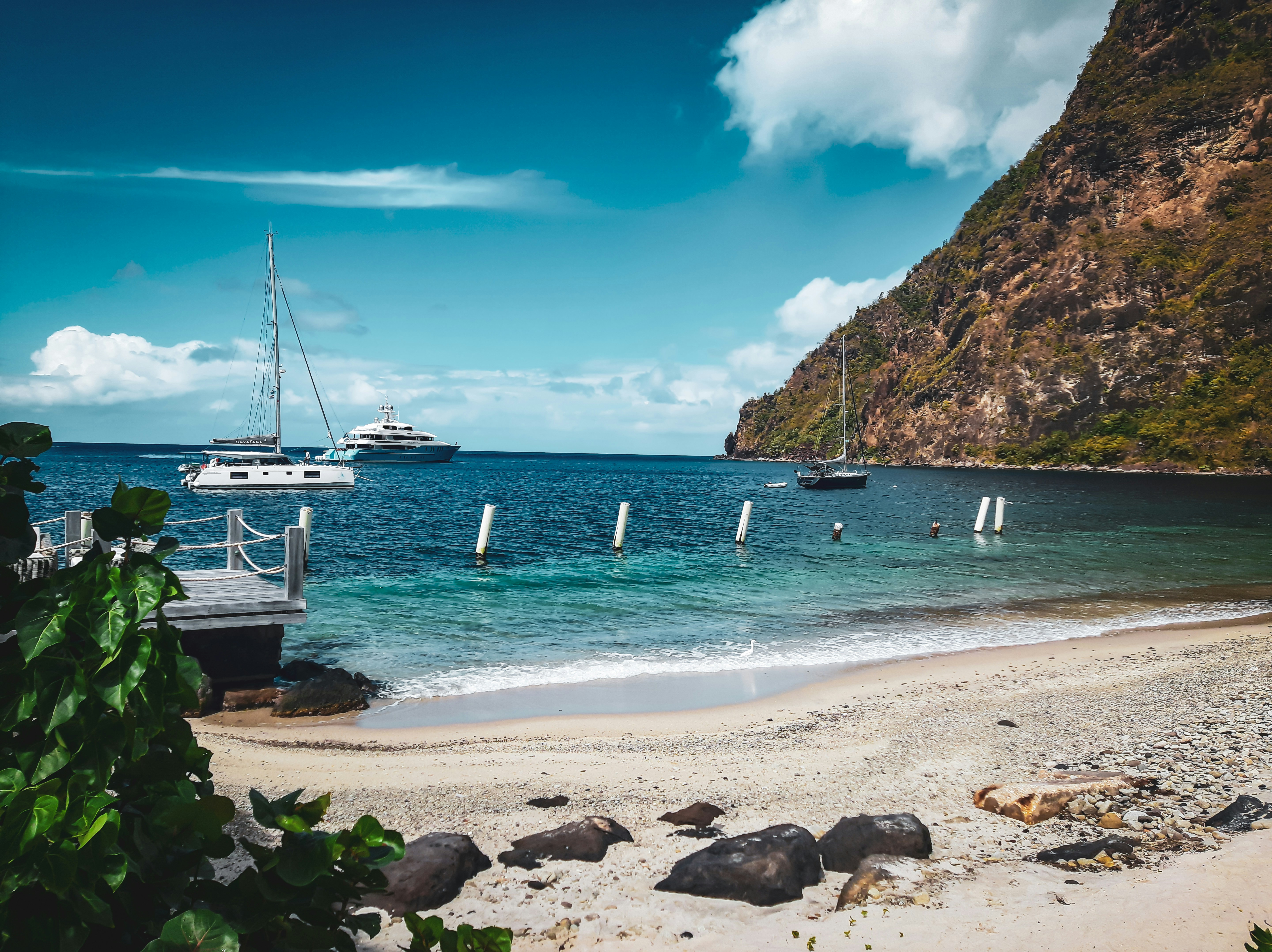
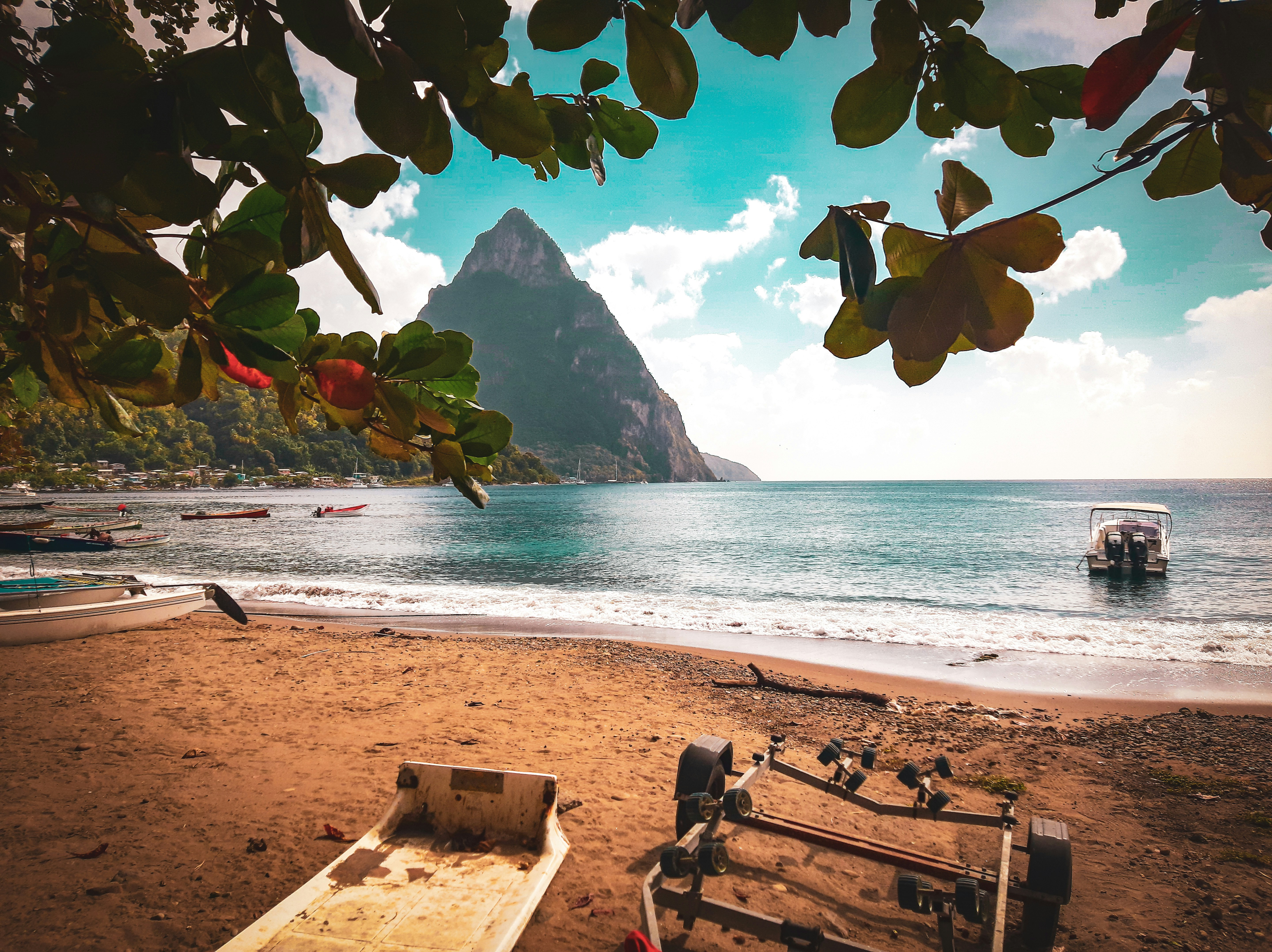
Saint Lucia is a volcanic island in the Eastern Caribbean Windward Islands — 616 km² of mountains, rainforest, sulphurous hot springs, and beaches of both black and white sand. It is widely considered the most scenically dramatic island in the Caribbean, dominated by the Pitons — two ancient volcanic spires, Gros Piton (798 m) and Petit Piton (743 m), rising sheer from the sea near the town of Soufrière and recognised as a UNESCO World Heritage Site. Despite its small size, Saint Lucia has produced two Nobel Prize laureates — more per capita than any other country on Earth — and a cultural depth rooted in its French and British colonial history and its vibrant Creole heritage.
Capital: Castries
Population: ~185,000
Area: 616 km²
Currency: Eastern Caribbean Dollar (XCD)
Language: English (official); Antillean Creole (Kwéyòl) widely spoken
Independence: 1979 from Britain; member of the Commonwealth
Fascinating Facts
- More Nobel laureates per capita than any country: Saint Lucia has produced two Nobel Prize winners — Sir Arthur Lewis (Economics, 1979) and Derek Walcott (Literature, 1992) — from a population of barely 185,000. Per capita, that is the highest Nobel Prize rate of any country in the world, by a considerable margin.
- The drive-in volcano: Sulphur Springs near Soufrière bills itself as the world's only 'drive-in volcano' — a collapsed volcanic crater where visitors can park beside bubbling sulphurous mud pools, steaming vents, and pools of boiling water. The entire Soufrière area sits above a highly active geothermal system.
- Changed hands 14 times: Saint Lucia changed hands between Britain and France 14 times between 1660 and 1814 — more than any other Caribbean island. The result is a Creole culture uniquely blended of French and English influences: English is the official language, but Kwéyòl (French Creole) is the mother tongue of most Saint Lucians.
- The Pitons — rising from the sea: Gros Piton and Petit Piton are the eroded cores of ancient volcanic plugs — solidified lava that remained after the softer rock around it eroded away over millions of years. Their sheer slopes rise directly from the Caribbean Sea, creating one of the most recognisable and spectacular natural silhouettes in the world.
Nature & Key Destinations
- The Pitons & Soufrière: The UNESCO World Heritage Piton Management Area — the twin peaks, the drive-in volcano, the Toraille waterfall, Diamond Botanical Gardens, and the thermal mineral baths. The most concentrated collection of natural wonders in the Eastern Caribbean.
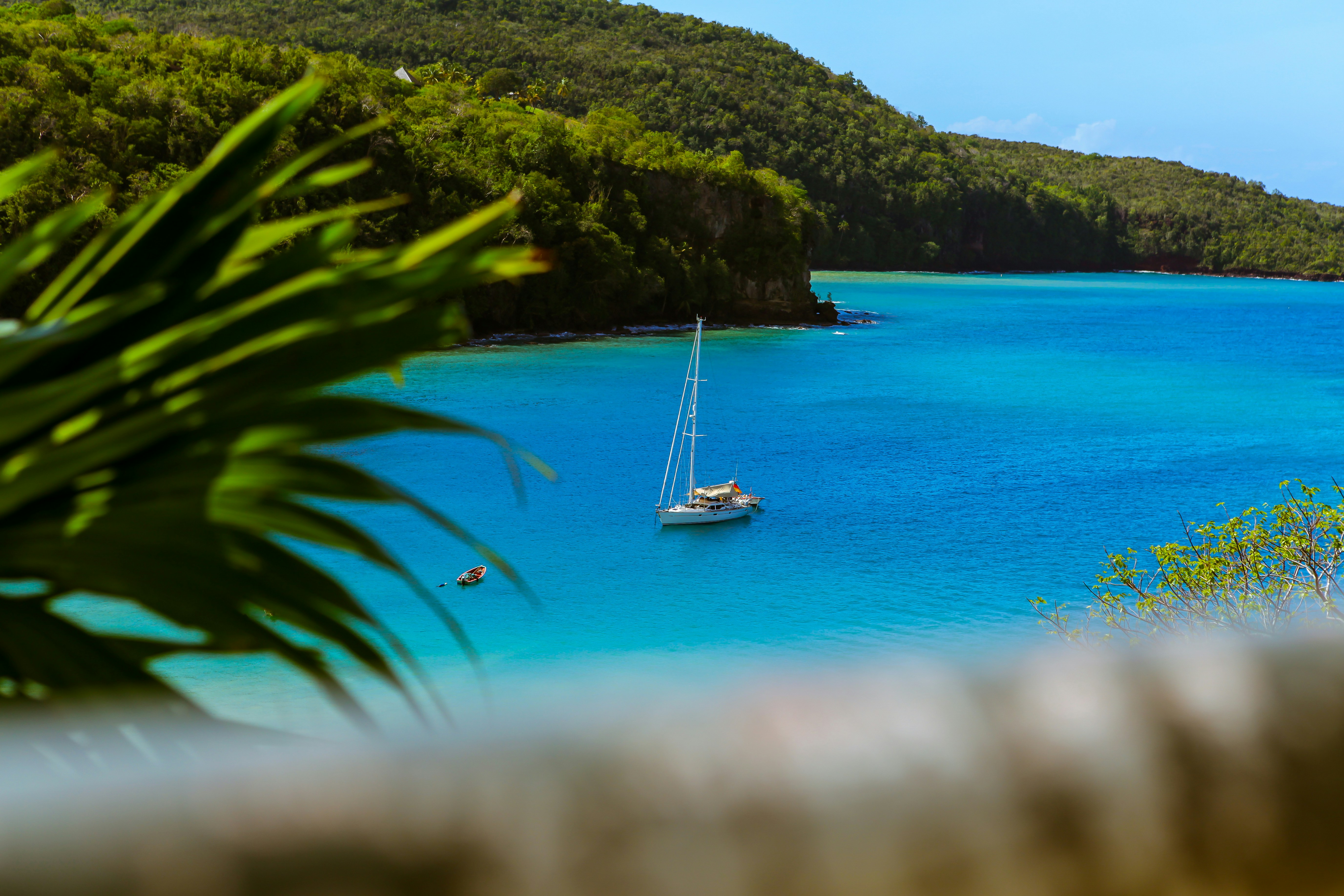
- Marigot Bay: A deeply sheltered hurricane hole surrounded by palm-fringed hillsides — described by James Michener as the most beautiful bay in the Caribbean. Used as a filming location for Dr Doolittle (1967) and a favourite anchorage of yacht charterers.
- Anse Chastanet & Jade Mountain: The finest dive site on the island (the Anse Chastanet reef begins just offshore in waist-deep water) and the most architecturally dramatic hotel in the Caribbean — Jade Mountain's open 'sanctuary' rooms frame the Pitons like a living painting.
- Rainforest interior: The Edmund Forest Reserve — cloud forest hiking to the summit of Gros Piton (stunning views), zip-lining through the forest canopy, and waterfall swimming in the island's lush volcanic interior.
Cuisine
- Green fig and saltfish: Saint Lucia's national dish — boiled green bananas (called 'figs' locally) with salted cod sautéed with onions, peppers, and herbs. Simple, satisfying, and eaten at breakfast across the island. The dish reflects the African and European heritage at the heart of Saint Lucian food.
- Creole fish & bouyon: Freshly caught red snapper or mahi-mahi cooked Creole-style — stewed in tomato, onion, thyme, and Scotch bonnet — is the definitive Saint Lucian lunch. Bouyon (a thick soup of ground provisions, dumplings, and meat) is the island's great Sunday comfort dish.
- Rum punch & Piton beer: Saint Lucian rum punch — with local rum, fresh lime, syrup, and grated nutmeg — is served at every beach bar. Piton beer, brewed locally since 1991, is the island's lager — named after the iconic peaks and drunk with great patriotic pleasure.
Traditions & Culture
- Saint Lucia Jazz & Arts Festival: Held each May, the Saint Lucia Jazz Festival is one of the Caribbean's premier cultural events — international jazz, R&B, and soca artists performing against the backdrop of the Pitons at the Pigeon Island National Landmark. Established in 1992, it draws visitors from across the hemisphere.
- Jounen Kwéyòl (Creole Day): Celebrated on the last Sunday of October — a national day of Creole culture, with traditional food, music, dress, and dance celebrated in villages across the island. Saint Lucia's Kwéyòl language and culture are a source of deep national pride.
Climate
- Tropical Caribbean: Warm year-round (26–30°C). The dry season January–April is the peak tourist season — lower humidity and reliable sunshine. The wet season May–November brings lush green vegetation and afternoon rain. The north (Castries) is drier than the south (Soufrière). Hurricane season peaks August–October.