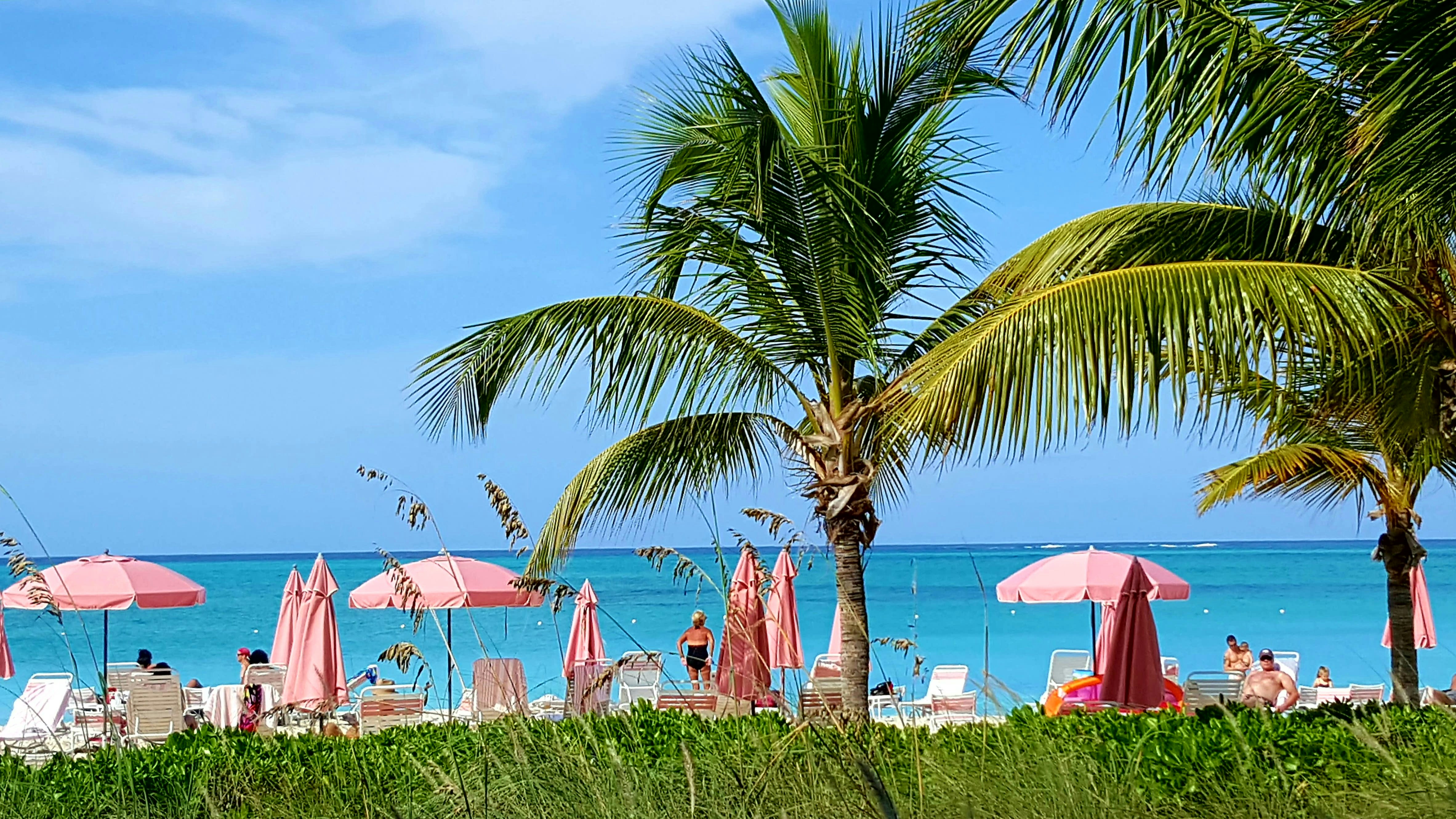
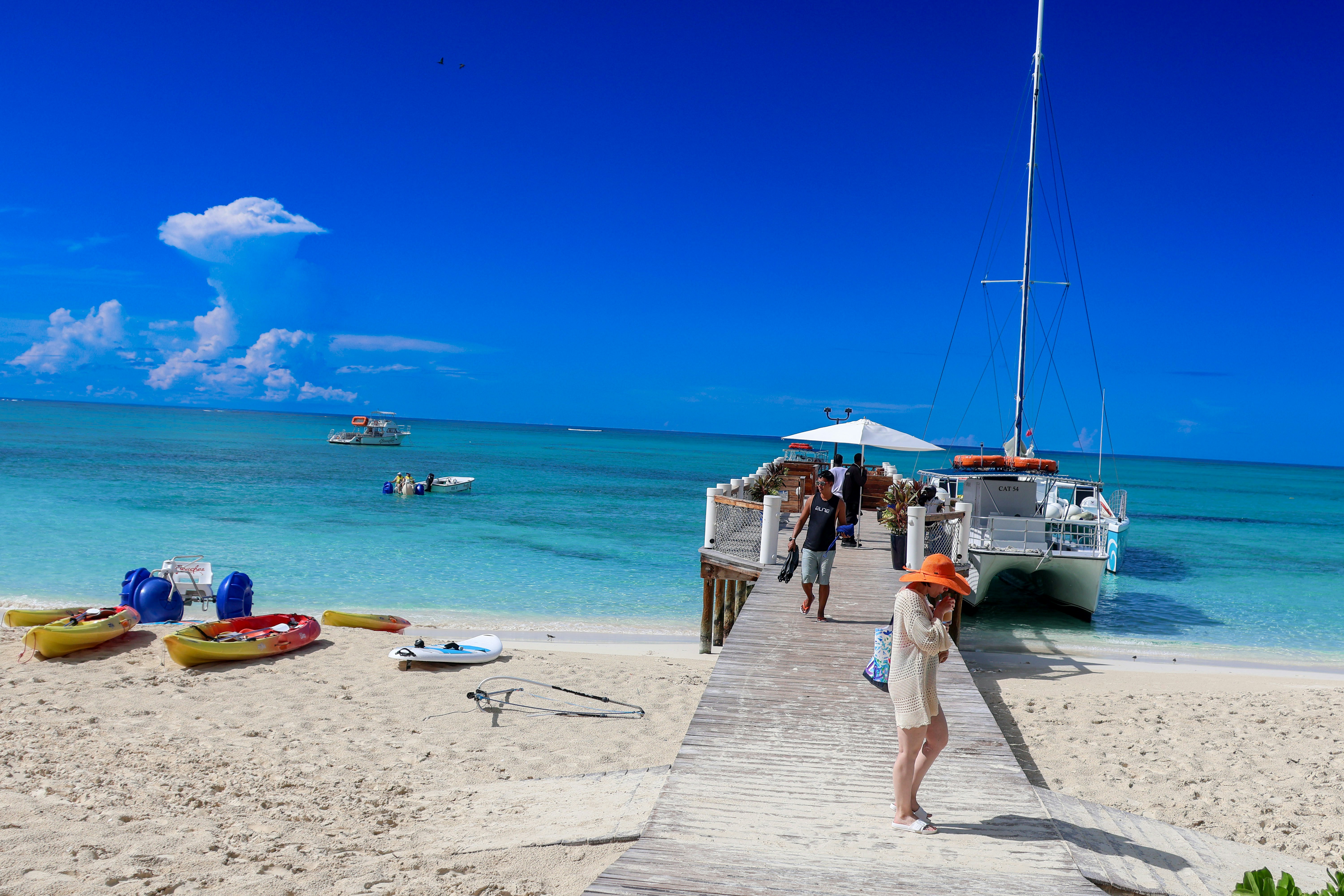
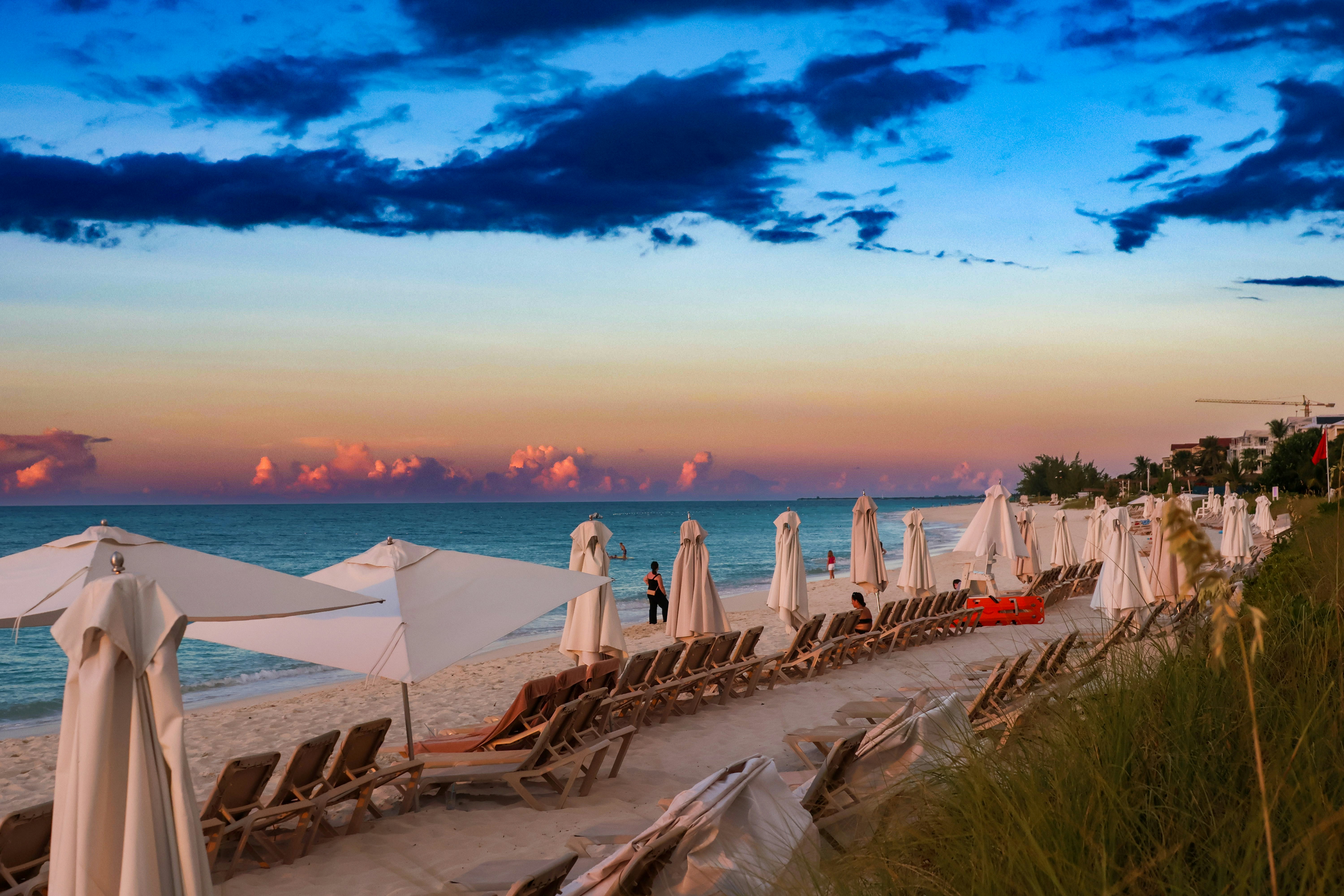
The Turks and Caicos Islands are a British Overseas Territory in the Atlantic Ocean, southeast of the Bahamas — eight main islands and numerous cays sitting atop a shallow limestone bank that produces water of an almost supernatural turquoise. The territory is home to approximately 45,000 people and receives over a million visitors annually, drawn primarily to Providenciales (Provo) and its Grace Bay Beach — one of the most consistently top-ranked beaches in the world. The islands combine world-class diving on dramatic wall dives, excellent snorkelling, and a humpback whale migration corridor with a relaxed, upscale atmosphere and some of the most sophisticated resort infrastructure in the Caribbean.
Capital: Cockburn Town (Grand Turk)
Population: ~45,000
Area: 948 km²
Currency: US Dollar (USD)
Language: English
Status: British Overseas Territory
Fascinating Facts
- Grace Bay — the world's best beach: Grace Bay on Providenciales — a 19 km arc of powder-white sand with water of an extraordinary turquoise clarity — has been ranked the world's best beach by TripAdvisor Travellers' Choice awards more times than any other beach on Earth.
- The Wall — a vertical drop into the deep: The Turks and Caicos sit on the edge of the Columbus Passage — a deep ocean channel where the sea floor drops from 20 m to over 2,100 m in a near-vertical wall. The wall dives of Grand Turk and Salt Cay are among the most dramatic in the Caribbean.
- John Glenn splashed down here: In 1962, astronaut John Glenn — the first American to orbit the Earth — splashed down in the waters off Grand Turk at the end of his Friendship 7 mission. The Grand Turk museum commemorates this moment of space history.
- Humpback whale highway: Between January and April, thousands of humpback whales migrate through the Turks Island Passage between North and South Caicos — one of the most significant humpback migration corridors in the Atlantic. Whale-watching and even swimming with whales is possible from Salt Cay.
Nature & Key Destinations
- Grace Bay Beach, Providenciales: The world's most consistently celebrated beach — calm, clear, shallow turquoise water, white powder sand, and a backdrop of tasteful low-rise resorts. The snorkelling on the barrier reef just offshore is accessible directly from the beach.
- Grand Turk: The quieter, more historical capital island — the Wall dive just 300 m offshore (one of the Caribbean's finest), the whale museum, salt ponds with flamingos, and a small colonial town of colonial-era salt raking buildings.
- Salt Cay: The most unspoiled island in the Turks and Caicos — just 70 residents, windmills and salt ponds from the 18th-century salt industry, excellent wall diving, and the best humpback whale encounters in the territory (January–April).
- North Caicos & Middle Caicos: The least visited and most naturally rich islands — flamingo ponds, the Crossing Place Trail along ancient Lucayan paths, cave systems with stalactites, and beaches of absolute solitude.
Cuisine
- Conch — in every form: Conch is the defining ingredient of Turks and Caicos cuisine — conch salad (raw, cured in lime with onion and pepper), cracked conch (breaded and fried), conch fritters, and conch chowder. The conch population of the Caicos Bank supports one of the largest sustainable conch fisheries in the world.
- Lobster & fresh fish: Caribbean spiny lobster (in season August–March), grilled grouper, snapper, and mahi-mahi — caught daily and served at the beach shacks and restaurants of Grace Bay and Blue Hills village, where the fishing community brings in the catch each morning.
- Rum punch & Turks Head beer: Turks Head Brewery on Grand Turk — the most southerly brewery in the British Overseas Territories — produces a range of Caribbean-style lagers and ales. The local rum punch, made with fresh local lime and aged rum, is the universal beach drink.
Traditions & Culture
- Salt raking heritage: The Turks and Caicos were built on salt — from the 17th to 19th centuries, salt raked from the salinas of Grand Turk, Salt Cay, and South Caicos was the primary industry, using enslaved and later freed African labour. The windmills, salt warehouses, and raking tools are the most tangible historical legacy of the islands.
- Junkanoo & ripsaw music: Turks and Caicos celebrates Junkanoo on Boxing Day and New Year's Day — costumed street parades with cowbells, goatskin drums, and brass. Ripsaw music — a folk tradition unique to the islands, played on a handsaw scraped with a nail — is the most distinctively Caicosian sound.
Climate
- Subtropical Atlantic: Warm and sunny year-round (26–31°C). The dry season November–May is peak season — lower humidity and clearest water. Summer (June–October) is hotter and more humid. Hurricane season June–November; the TCI is in the hurricane belt and has experienced significant storms. Trade winds provide relief year-round.