Haiti occupies the western third of Hispaniola — the island Columbus first colonised in 1492 — and carries one of the most significant and painful histories of any nation on Earth. In 1804, following the only successful slave revolution in history, Haiti became the first Black republic in the world — an event of profound global importance that terrified slaveholding societies across the Americas and inspired freedom movements for generations. Today Haiti remains the poorest country in the Western Hemisphere, battered by earthquakes, political instability, and international neglect. Yet its culture — Vodou spirituality, vivid naïf art, rara music, and an indomitable spirit — is one of the Caribbean's most extraordinary.
Capital: Port-au-Prince
Population: ~11.5 million
Area: 27,750 km²
Currency: Haitian Gourde (HTG)
Languages: French and Haitian Creole (Kreyòl) — both official; Kreyòl is the mother tongue of virtually the entire population
Religion: Roman Catholic and Protestant Christianity, both blended extensively with Vodou, which is practised by the majority of Haitians
Fascinating Facts
- The only successful slave revolution in history: The Haitian Revolution (1791–1804) — led by Toussaint Louverture, Jean-Jacques Dessalines, and Henri Christophe — was the only slave revolt in history to result in the founding of a new nation. Haiti's independence on 1 January 1804 sent shockwaves through every slaveholding society in the Americas.
- France extorted Haiti for 150 years: After independence, France demanded 150 million francs (later reduced to 90 million) in reparations — payment for the 'loss' of enslaved people and plantations. Haiti paid this debt, with interest, until 1947. Economists estimate this indemnity cost Haiti the equivalent of $21 billion in modern values and severely retarded its development.
- The Citadelle Laferrière: Built between 1805 and 1820 by King Henri Christophe on a 970 m mountain peak in northern Haiti — the largest fortress in the Americas, built by 20,000 labourers to defend against a feared French reconquest. A UNESCO World Heritage Site and one of the most extraordinary architectural achievements in the Caribbean.
- Vodou is a religion, not a horror film: Haitian Vodou — a synthesis of West African Yoruba and Fon spiritual traditions with Catholic elements — is a complex, sophisticated religion with a rich cosmology of lwa (spirits), ceremonial music, and healing practices. It has been grotesquely misrepresented by Western popular culture.
Nature & Key Destinations
- Citadelle Laferrière & Sans-Souci Palace: A UNESCO World Heritage Site in northern Haiti — the mountaintop fortress and the ruins of the baroque Sans-Souci Palace below it are among the most remarkable historical monuments in the entire Caribbean. The hike or horseback ride to the Citadelle is unforgettable.
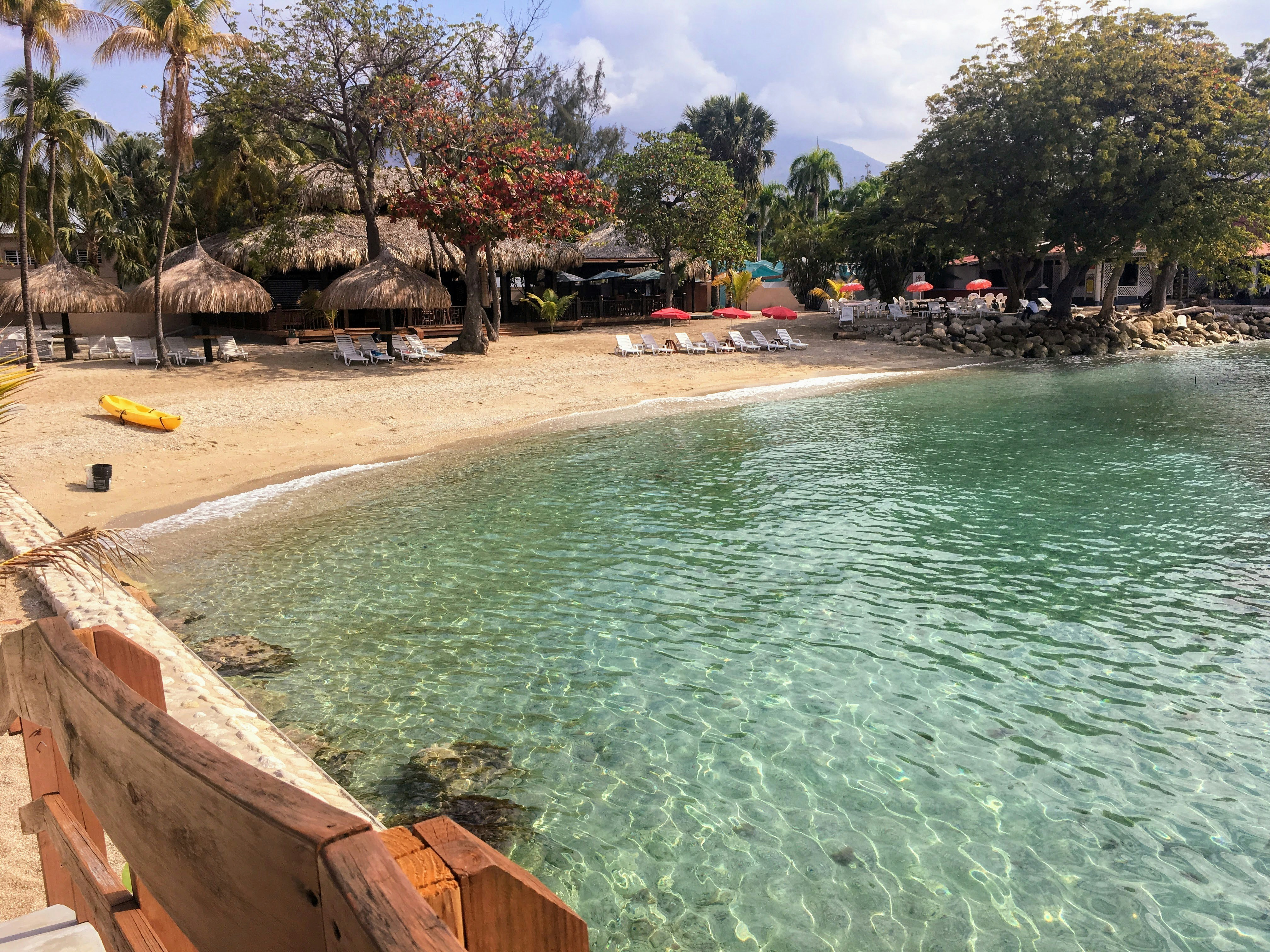
- Labadee: A spectacularly beautiful peninsula of forested mountains plunging into turquoise water on Haiti's north coast — leased to Royal Caribbean as a private resort destination. Haiti's finest beach scenery, albeit in a context disconnected from the country.
- Jacmel: A charming southern port town of French colonial architecture, famous for its papier-mâché carnival masks and as the centre of Haiti's vibrant arts scene. The Jacmel carnival is one of the Caribbean's most creative.
- Bassin Bleu: A series of three turquoise pools connected by waterfalls in the mountains above Jacmel — one of Haiti's most beautiful natural sites, reached by a hike through lush vegetation.
Cuisine
- Griot & diri ak djon djon: Griot — fried pork shoulder marinated in citrus and spices, crispy on the outside and tender within — is Haiti's most beloved dish, served with pikliz (fiery pickled cabbage and carrots). Diri ak djon djon (black mushroom rice, made from a local fungus found only in northern Haiti) is the most distinctively Haitian side dish.
- Soup joumou: A rich pumpkin and beef soup — served every 1 January (Independence Day) as a powerful symbol of freedom. Soup joumou was the food the enslaved were forbidden to eat; after independence it became the dish eaten to celebrate liberation. It is UNESCO-listed.
- Rhum Barbancourt: Haiti's celebrated rum — produced by the Barbancourt distillery since 1862 using a Cognac-style double distillation method. Rhum Barbancourt 15-year reserve is consistently ranked among the finest aged rums in the world, a point of considerable Haitian national pride.
Traditions & Culture
- Haitian art: Haiti has one of the most vibrant naïf art traditions in the world — the Haitian school of primitive painting, centred on the Centre d'Art founded in Port-au-Prince in 1944, produced internationally collected masters including Hector Hyppolite and Wilson Bigaud. The Cathédrale de la Sainte Trinité's murals are considered the greatest works of religious art in the Caribbean.
- Rara & carnival: Rara — the processional music of the Lenten season, played on bamboo vaccines (trumpets), metal horns, and drums — fills the roads of rural Haiti each spring in one of the most distinctive musical traditions in the Americas. Jacmel's carnival papier-mâché mask tradition is UNESCO-listed.
Climate
- Tropical: Hot year-round (25–35°C). Two rainy seasons: April–June and October–November. The north coast is wetter; the south and west drier. Deforestation has made Haiti more vulnerable to flooding during rains. Hurricane season June–November — Haiti is highly exposed and has suffered catastrophic storm damage.