The Democratic People's Republic of Korea (North Korea) is one of the world's most isolated and authoritarian states — a single-party state ruled by the Kim dynasty (Kim Il-sung 1948–1994, Kim Jong-il 1994–2011, Kim Jong-un 2011–present) in which all aspects of life are controlled by the state, foreign travel is prohibited for citizens, the internet is inaccessible, and an estimated 80,000–130,000 political prisoners are held in labour camps. It is also a country of genuine cultural heritage (the ancient Koguryo kingdom tombs are UNESCO World Heritage), extraordinary natural beauty (the Mount Paektu volcanic caldera, the Diamond Mountains), and a population whose daily life, aspirations, and humanity are largely hidden from the world. International tourism (from non-American Western countries) operated through state-approved agencies before effectively ceasing in 2020; its future is uncertain.
Capital: Pyongyang — a city of approximately 3 million, purpose-rebuilt after total destruction in the Korean War (1950–53)
Population: ~26 million
Area: 120,538 km²
Currency: North Korean Won (KPW); foreign visitors use euros or Chinese yuan
Language: Korean (official) — the same language as South Korea, though with distinct vocabulary and script conventions; South Korean loanwords are prohibited
History: Ancient Joseon kingdom; Japanese colonial rule 1910–1945; division at 38th parallel 1945; Korean War 1950–53; Kim dynasty rule 1948–present; nuclear state since 2006
Fascinating Facts
- The Arirang Mass Games: The Arirang Festival (Mass Games) — performed periodically in Pyongyang's Rungrado May Day Stadium (the world's largest stadium, capacity 114,000) — is the most extraordinary choreographic spectacle on Earth: up to 100,000 performers moving with pixel-perfect synchronisation to create a vast human mosaic, each person holding coloured cards to form images in the background while tens of thousands of gymnasts, dancers, and soldiers perform in the foreground. The scale, precision, and political content (depicting the glories of the Korean revolution and the Kim dynasty) make it unlike any other performance in the world.
- Juche — the state religion of self-reliance: Juche (roughly translatable as 'self-reliance' or 'self-determination') is the official state ideology of North Korea, developed by Kim Il-sung as a localisation of Marxism-Leninism that emphasises Korean national independence from all foreign powers. In practice, Juche functions as a quasi-religious system — Kim Il-sung is the 'Eternal President' (his death in 1994 did not end his presidency), his birthday (15 April) is the most important holiday of the year (called the Day of the Sun), and his portrait (alongside Kim Jong-il's) must be displayed in every home. The Juche Tower in Pyongyang (170 m, built in 1982) is the physical monument of the ideology.
- Mount Paektu — the sacred volcano: Mount Paektu (2,744 m, on the China–North Korea border) is the highest peak on the Korean Peninsula and the most sacred place in Korean culture — the volcanic caldera lake (Cheonji, Heaven Lake, 384 m deep, surrounded by sheer cliffs) is the mythological birthplace of the Korean nation (Tangun, the legendary founder, is said to have descended here) and the claimed birthplace of Kim Jong-il (though Soviet records suggest he was born in Russia). Paektu's volcanic landscape, its ice-blue caldera lake, and its extraordinary symbolic weight make it perhaps the most significant single place in Korean cultural consciousness.
- The Korean War armistice — technically still at war: The Korean War (1950–53) ended not with a peace treaty but with an armistice agreement — meaning North and South Korea are technically still at war, the conflict merely suspended. The Demilitarised Zone (DMZ) — a 4 km wide, 250 km long buffer strip that has been off-limits to humans for 70 years — has become one of the most biodiverse nature reserves in Asia, colonised by Amur leopard, Asiatic black bear, and red-crowned crane in the absence of human disturbance.
Nature & Key Destinations
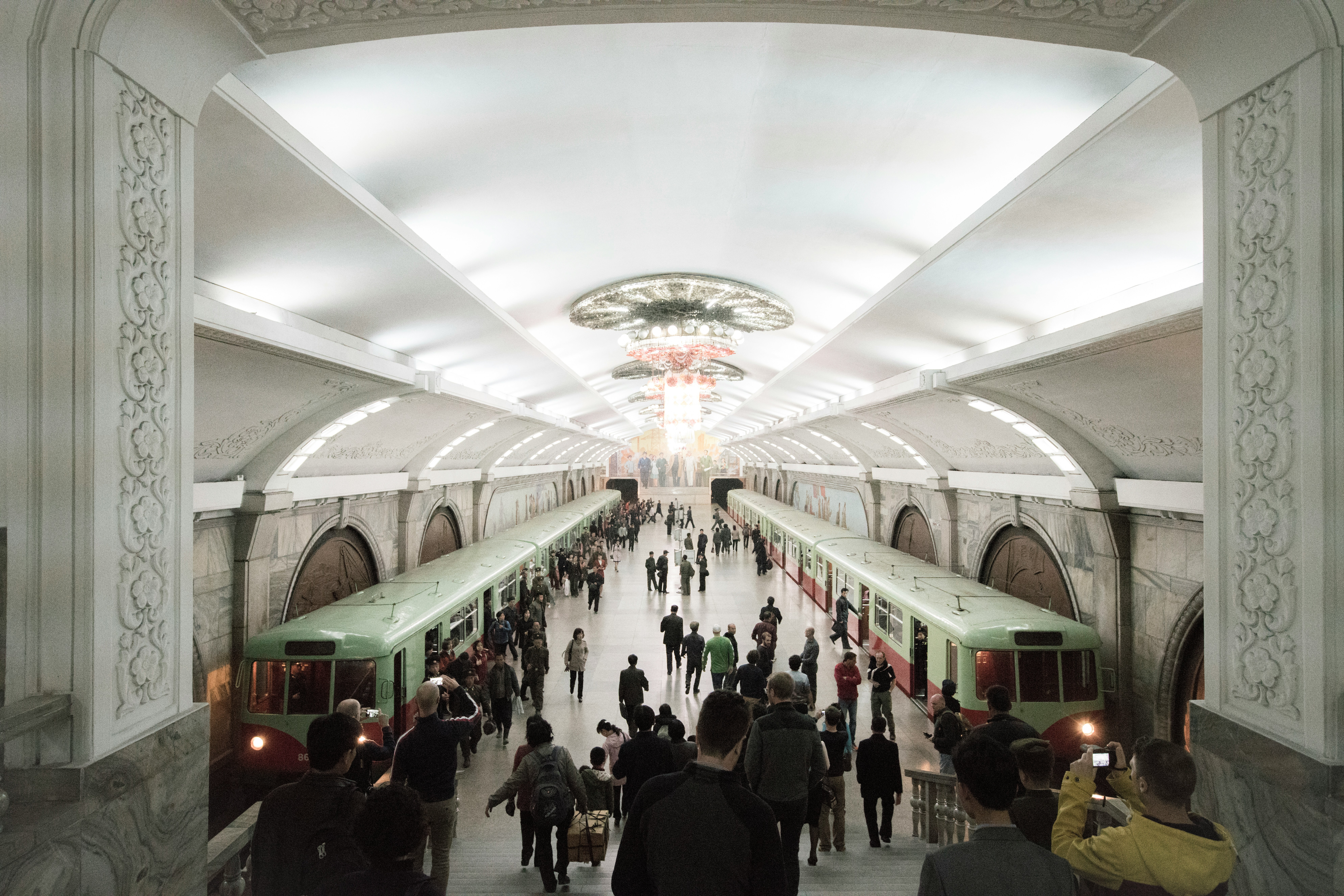
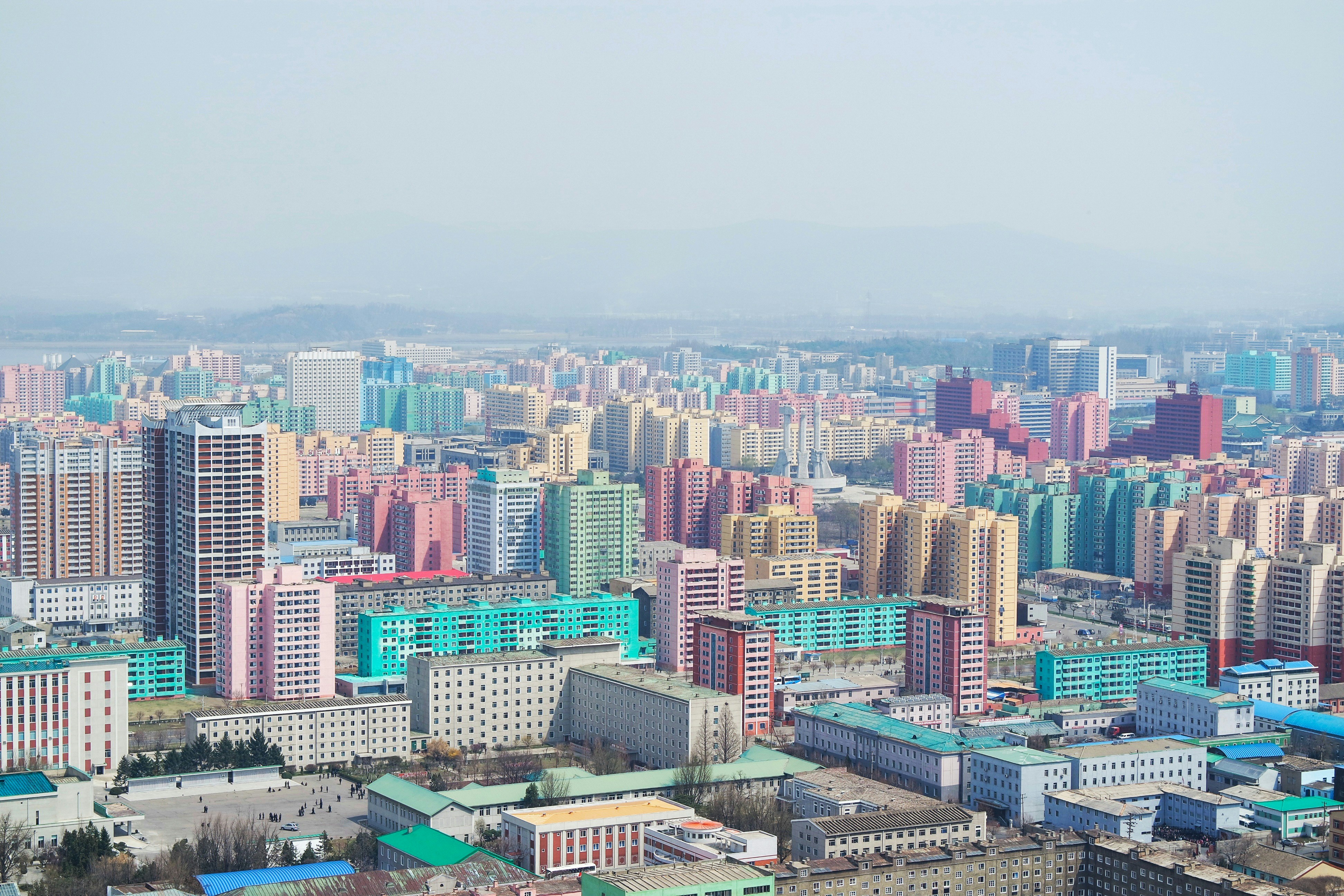
- Pyongyang: The North Korean capital's monumental architecture — the 170 m Juche Tower, the Arch of Triumph (slightly taller than Paris's original), the vast Kim Il-sung Square (where mass rallies are held), the Kumsusan Palace of the Sun (the mausoleum where Kim Il-sung and Kim Jong-il lie in state in glass sarcophagi), and the Ryugyong Hotel (a 330 m pyramid-shaped unfinished skyscraper under construction since 1987) — a cityscape of political symbolism unlike any other on Earth.
- The Koguryo tombs & Kaesong: The Koguryo kingdom tombs near Pyongyang (UNESCO World Heritage) — royal burial mounds of the ancient Koguryo kingdom (37 BC–668 AD) containing remarkable painted murals depicting warriors, hunting scenes, and cosmological imagery — and Kaesong (the ancient Koryo kingdom capital near the DMZ, a city of traditional courtyard houses and the tomb of the founder of the Koryo dynasty, now a UNESCO site).
- Mount Kumgang — the Diamond Mountains: The Kumgang (Diamond) Mountains on the eastern coast — a landscape of extraordinary beauty, their granite peaks and valleys considered the finest scenery on the Korean Peninsula, with waterfalls, temples, and rock formations celebrated in Korean poetry and painting for 2,000 years. A South Korean tourist resort operated here 1998–2008 before being suspended after an incident; the mountains remain one of North Korea's most spectacular natural destinations for DPRK-authorised visitors.
- Mount Paektu & the north: The volcanic caldera of Mount Paektu — the Heaven Lake surrounded by sheer black cliff walls rising 300–400 m, often shrouded in mist, accessible by road from the Chinese side as well as from within North Korea — and the Samjiyon area's forests and revolutionary monuments (the area is closely associated with the partisan warfare mythology of Kim Il-sung's anti-Japanese resistance).
Cuisine
- Naengmyeon — the cold noodle of Pyongyang: Pyongyang naengmyeon (cold buckwheat noodles in a clear, iced beef and dongchimi radish broth, garnished with sliced meat, half a boiled egg, and Asian pear) is North Korea's most celebrated dish and the single food item most associated with Pyongyang internationally — the Okryugwan restaurant in Pyongyang (a state restaurant that has operated since 1960) is famous throughout Korea for the definitive version. Naengmyeon restaurants have spread across South Korea and the Korean diaspora, each claiming continuity with the original Pyongyang tradition.
- Korean barbecue & everyday food: North Korean everyday food — largely a function of the country's chronic food insecurity — centres on rice (available to urban residents), corn (the staple of rural and lower-income populations), kimchi (fermented cabbage, universal and essential), doenjang (fermented soybean paste soup), and the seasonal vegetables of the Korean peninsula. Dog meat (boshintang soup) is more widely eaten in North Korea than in the South and is not considered culturally problematic.
- State restaurants & tourist dining: The North Korean dining experience for foreign visitors is managed by the state — Pyongyang's showcase restaurants (Okryugwan for naengmyeon, the Diplomatic Club, the Koryo Hotel restaurants) offer Korean cuisine of genuine quality in settings of monumental Socialist grandeur. Soju (Korean rice spirit) and Taedonggang beer (brewed since 2000 in a brewery purchased from England, widely praised by visitors as one of Asia's better lagers) are the drinks of choice.
Traditions & Culture
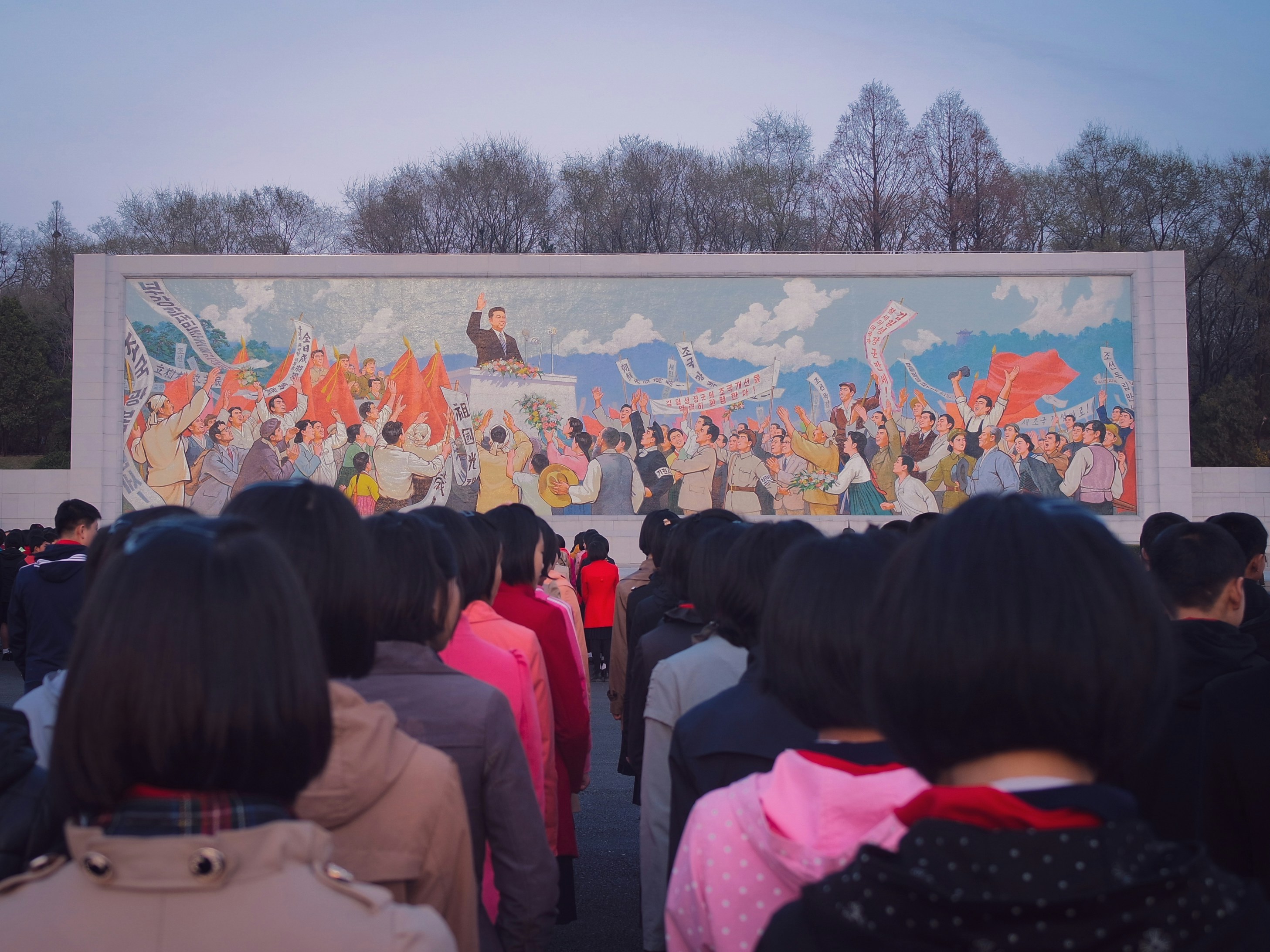
- The personality cult — the most complete in history: The cult of the Kim family is the most elaborate and complete personality cult in recorded history — Kim Il-sung's image appears on every building, every classroom, every home, and every lapel badge worn by every North Korean citizen (the Kim badge, worn over the heart, is mandatory for all adults). The 'Ten Principles for the Establishment of the One-ideology System' govern every aspect of North Korean life and thought. The Kim family's mythologisation — sacred birthplaces, miraculous abilities, 'on-the-spot guidance' at thousands of locations — creates a political theology without parallel.
- Korean culture preserved in amber: North Korea, in its isolation from the globalising currents that have transformed South Korean culture, has preserved aspects of traditional Korean culture (classical music forms, traditional dress, folk arts) that have largely disappeared in the South — while simultaneously transforming and distorting them through the prism of Juche ideology. Traditional Korean games (yutnori board game, ssireum wrestling), music (Arirang folk songs repurposed as revolutionary anthems), and the Korean script (Hangul, used without Chinese character admixture, unlike South Korea's mixed historical usage) survive in forms the South has moved away from.
Climate
- Continental, four seasons: North Korea has a continental climate with cold winters (−10 to −20°C in Pyongyang, December–February, with heavy snow in the mountains) and hot, humid summers (25–33°C, July–August, with monsoon rain June–August). Spring (April–May) and autumn (September–October) are the most pleasant seasons and the most common times for organised tourist visits. The east coast is milder than the interior. Mount Paektu is cold and often cloudy even in summer.