Brunei Darussalam (the 'Abode of Peace') is a tiny sultanate of 450,000 people on the northern coast of Borneo — one of the world's last absolute monarchies, ruled by Sultan Hassanal Bolkiah (the world's longest-reigning current monarch, on the throne since 1967) and enriched by oil and gas reserves that give it one of the highest per-capita incomes in Asia. It is also one of the most intact examples of primary tropical rainforest in Southeast Asia — the Ulu Temburong National Park, covering nearly 50% of the country's eastern district, is one of the most biodiverse and least disturbed rainforests in the world.
Capital: Bandar Seri Begawan
Population: ~450,000
Area: 5,765 km² — divided into two non-contiguous parts by the Malaysian state of Sarawak
Currency: Brunei Dollar (BND) — interchangeable at par with the Singapore Dollar
Language: Malay (official); English and Chinese (Mandarin) widely spoken
History: Brunei Sultanate founded c. 1400; at its peak controlled all of Borneo and parts of the Philippines; British protectorate 1888–1984; independence 1984; oil wealth since 1929
Fascinating Facts
- One of the world's last absolute monarchies: Sultan Hassanal Bolkiah — who has ruled Brunei since 1967, making him one of the world's longest-serving current heads of state — is an absolute monarch: the Sultan is simultaneously head of state, head of government, and head of the armed forces, with no elected parliament since 1962. The royal family's wealth (the Sultan's personal fortune was estimated at $20 billion at its peak, though oil revenues have moderated) was once expressed in the 1,788-room Istana Nurul Iman palace — the world's largest residential palace.
- The world's largest residential palace: The Istana Nurul Iman — the official residence of the Sultan of Brunei — is the world's largest residential palace: 1,788 rooms, 257 bathrooms, a banquet hall seating 4,000 guests, a mosque for 1,500 worshippers, and a garage for 110 cars, all within a single 200,000 m² structure. It is open to the public for three days each year during Hari Raya (the end of Ramadan).
- Oil wealth and the welfare state: Brunei's oil and gas reserves (discovered 1929) have funded one of the world's most generous welfare states — citizens pay no income tax, receive free healthcare, free education (to university level, including overseas), heavily subsidised housing and petrol, and the government employs approximately 60% of the Bruneian workforce. The flip side is near-total dependence on a single resource that will eventually run out.
- The proboscis monkey — Borneo's most extraordinary primate: The proboscis monkey (Nasalis larvatus), found only on the island of Borneo, is one of the world's most extraordinary animals — the male's enormous pendulous nose (up to 17 cm long) amplifies calls and is believed by females to be a mark of sexual fitness. Brunei's Ulu Temburong and Badas forests shelter some of Borneo's largest proboscis monkey populations, viewable from boats on the mangrove rivers at dawn and dusk.
Nature & Key Destinations
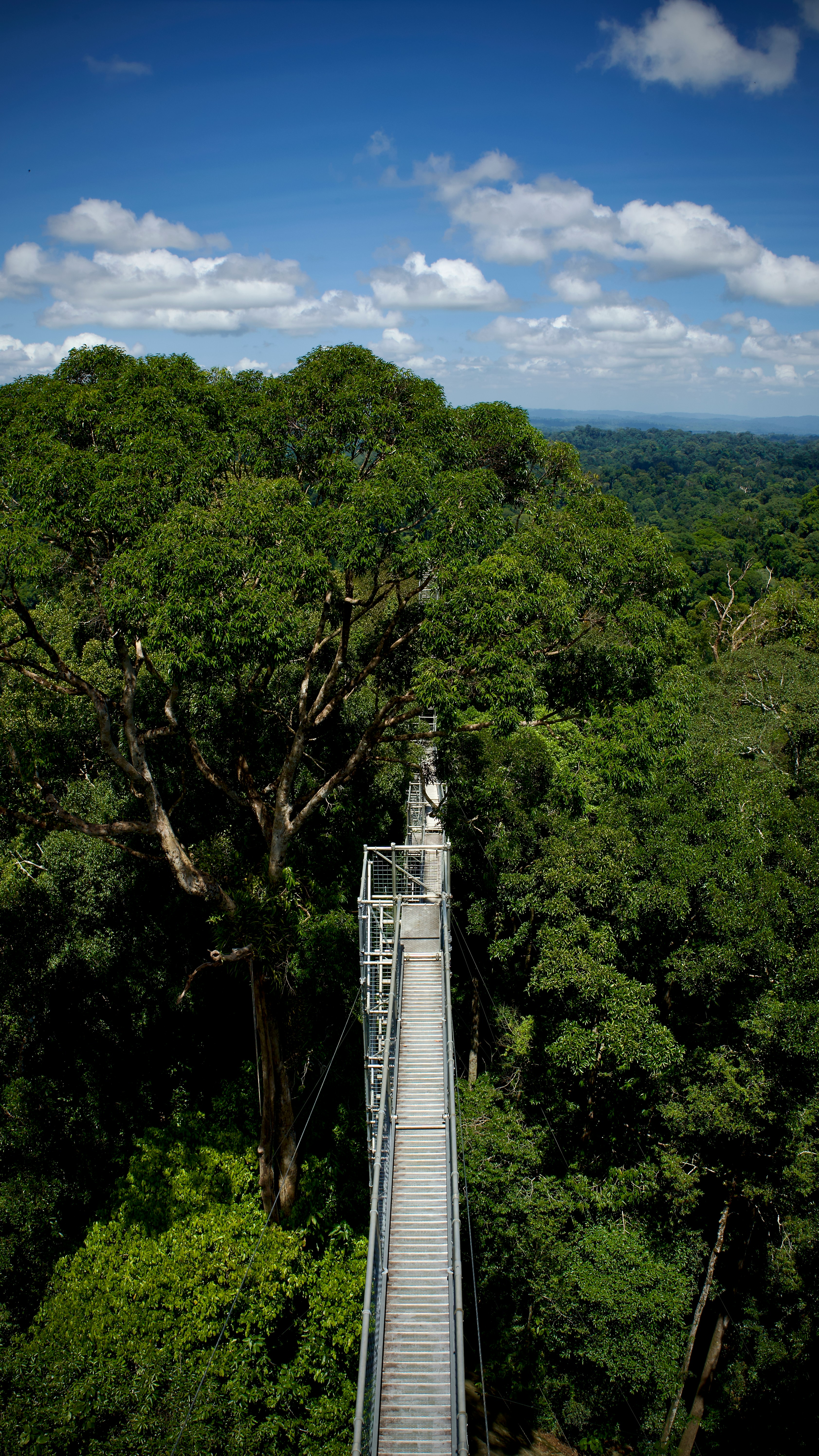
- Ulu Temburong National Park: The pristine rainforest heart of Brunei's eastern Temburong district — accessible only by speedboat through mangrove channels and longboat up jungle rivers — shelters primary dipterocarp forest of extraordinary biodiversity: gibbons, hornbills, flying lizards, clouded leopards, and the proboscis monkey. The canopy walkway at the Ulu Temburong research centre gives a rare eye-level view of the forest roof at 60 m.
- Omar Ali Saifuddien Mosque: The golden-domed Omar Ali Saifuddien Mosque (completed 1958) — its Italian marble exterior, golden dome, and minaret reflected in the artificial lagoon surrounding it — is considered the finest mosque in Southeast Asia and the defining symbol of Brunei. The adjacent ceremonial barge (built for the 1958 coronation, moored permanently in the lagoon) adds a surreal theatrical element to one of Asia's most photographed buildings.
- Kampong Ayer — the Venice of the East: The world's largest water village — approximately 30,000 people living in a network of houses, mosques, schools, clinics, and fire stations built on stilts above the Brunei River, connected by 36 km of wooden walkways and served by water taxis. Inhabited for over 1,000 years (Magellan's chronicler described it in 1521 as a city of 100,000 people), Kampong Ayer is one of the most remarkable urban forms in Southeast Asia.
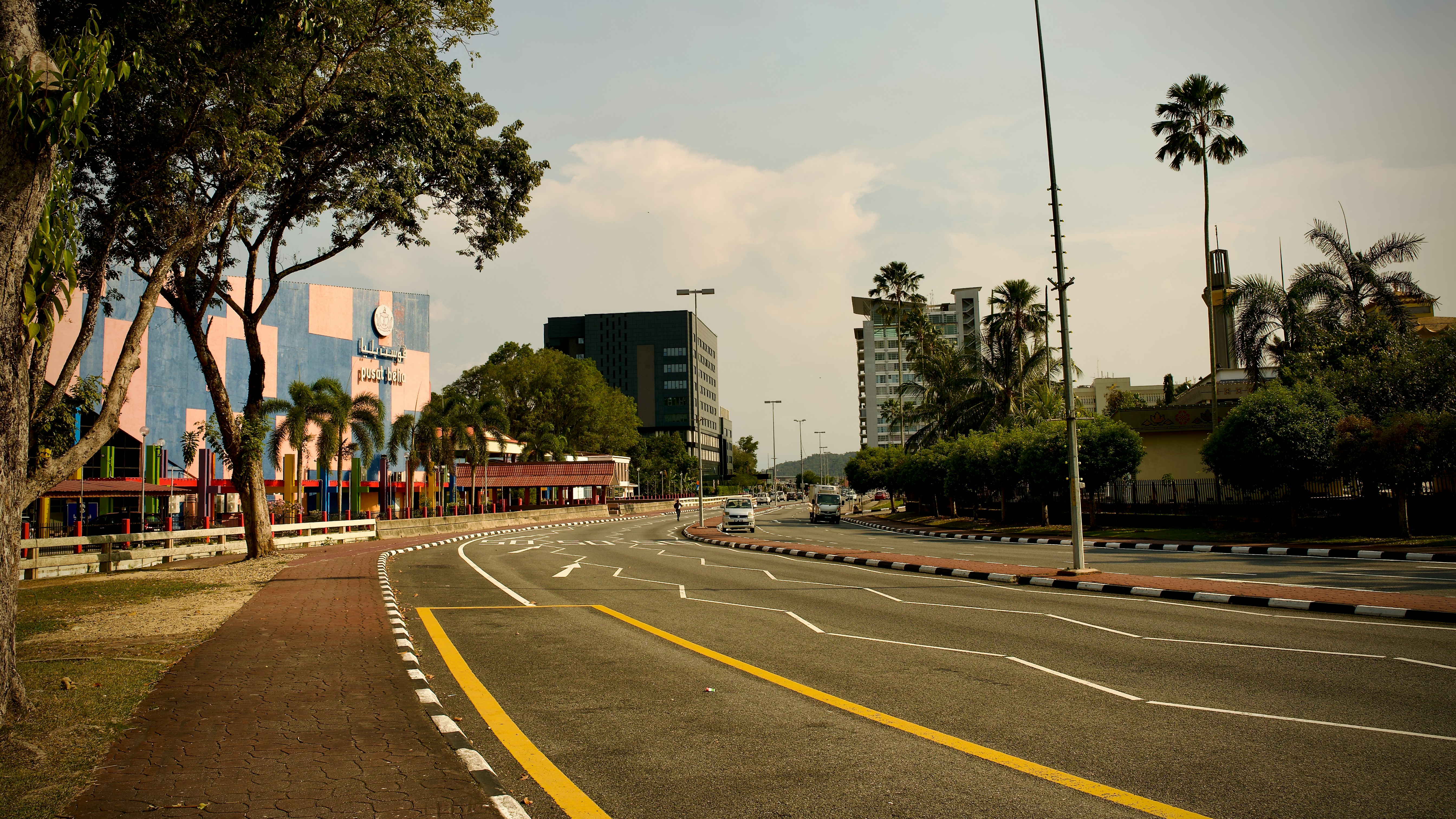
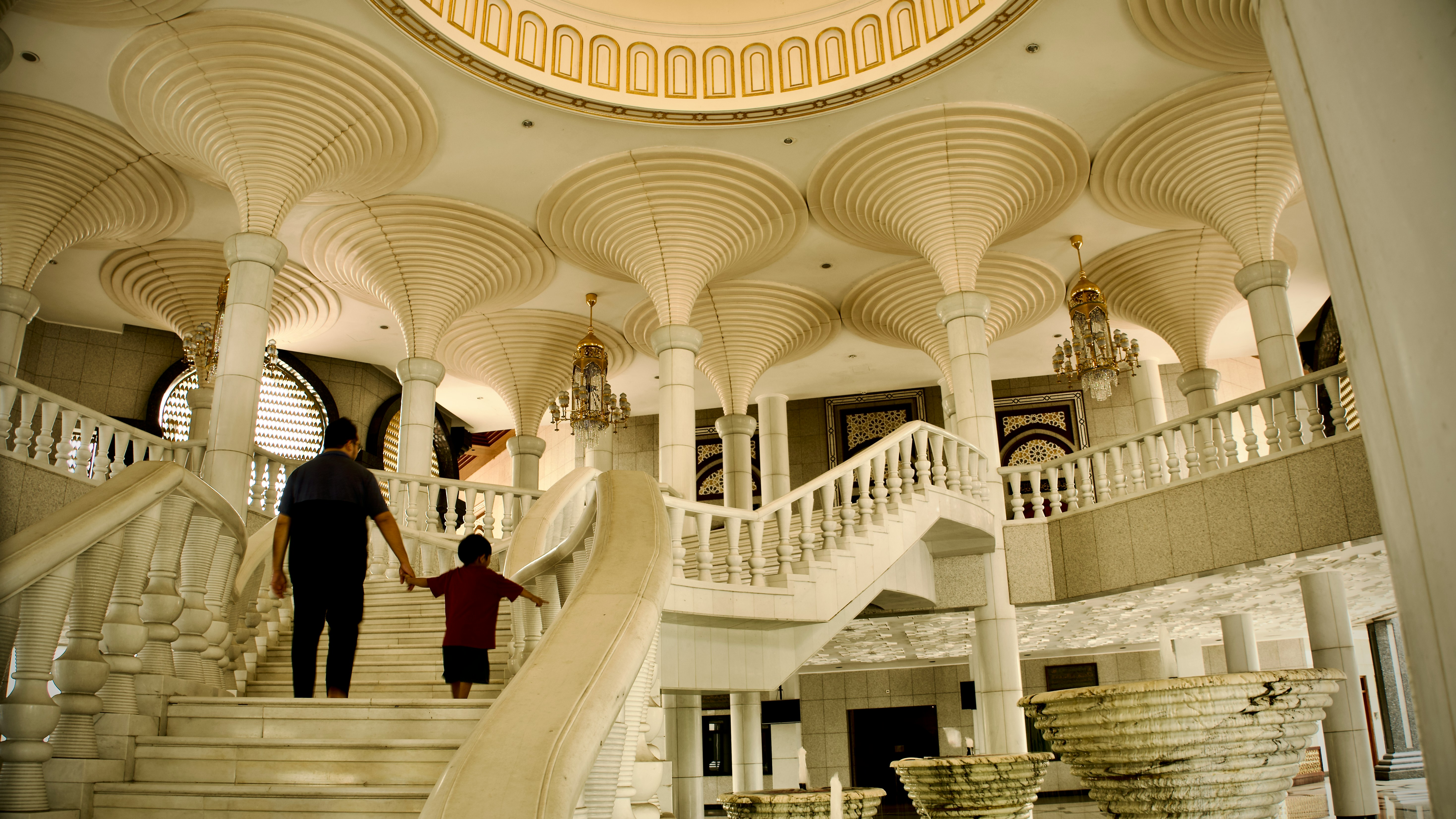
- Bandar Seri Begawan & the Royal Regalia Museum: The capital's Royal Regalia Museum (housing the golden coronation chariot, ceremonial weapons, and gifts to the Sultan from world leaders — the most extravagant royal collection in Southeast Asia), the Brunei Museum, the Jame'Asr Hassanil Bolkiah Mosque (the country's largest, with golden domes and minarets visible across the city), and the riverfront markets of the old quarter.
Cuisine
- Ambuyat — the national dish: Ambuyat — a sticky, glutinous paste made from sago palm starch, tasteless on its own but eaten by twirling it around a bamboo fork and dipping it into an array of intensely flavoured sauces (binjai, a sour fruit sambal; tempoyak, fermented durian; and various fish and prawn sambals) — is Brunei's national dish, an acquired taste that encodes the forest and river culture of Borneo in a single preparation.
- Nasi katok & Malay-Bruneian cooking: Nasi katok — a simple, enormously popular street meal of steamed rice, fried chicken, and sambal belacan (chilli-shrimp paste), sold wrapped in newspaper or brown paper at roadside stalls for approximately 50 cents — is Brunei's most universally eaten food, consumed at all hours by everyone from office workers to the royal family's staff. Bruneian cuisine blends Malay, Chinese, and indigenous Kadazan-Dusun influences.
- Seafood & river fish: Brunei's coastal and river seafood — udang galah (giant freshwater prawns from the Temburong River, grilled or steamed with ginger), the ikan bakar (grilled fish with turmeric and lemongrass) of the waterfront restaurants, and the Chinese-Bruneian seafood of Jalan Gadong — reflect the country's position between the South China Sea, the mangrove coast, and the jungle rivers.
Traditions & Culture
- Melayu Islam Beraja — the national ideology: Melayu Islam Beraja (MIB — Malay Islamic Monarchy) is Brunei's official state philosophy, enshrining the Malay language, Islamic values, and the absolute monarchy of the Sultan as the three inseparable pillars of Bruneian identity. Sharia law applies to Muslims (approximately 67% of the population) for personal and family matters; the 2019 introduction of criminal hudud penalties (including caning and death for certain offences) drew international criticism.
- The Sultan's birthday & Hari Raya: The Sultan's birthday (15 July) is Brunei's greatest annual spectacle — a polo match, a military parade, a fireworks display, and the evening illumination of the capital. Hari Raya Aidilfitri (the end of Ramadan) is the most socially significant event in the Bruneian calendar, when the Istana Nurul Iman palace opens its gates for three days and citizens queue to shake the Sultan's hand — a personal audience with the head of state available to any Bruneian.
Climate
- Equatorial rainforest, wet year-round: Brunei has a classic equatorial climate — hot and humid year-round (28–33°C), with heavy rainfall distributed across all months (2,500–3,800 mm annually). The northeast monsoon (November–February) brings the heaviest rains to the coast. There is no true dry season. The best time for Ulu Temburong is March–October (slightly drier, rivers more manageable). The heat and humidity are constant; lightweight, breathable clothing is essential year-round.