Lebanon is a small country of 10,452 km² on the eastern Mediterranean — one of the most culturally dense and historically layered nations on Earth, the homeland of the Phoenicians (who invented the alphabet used by most of the world's languages), the site of Roman temples of extraordinary scale, the source of the Biblical cedars that built the Temple of Solomon and the Egyptian fleet, and the host of Beirut — once called the Paris of the Middle East, a city of extraordinary intellectual and cultural vitality that has been destroyed and rebuilt multiple times. Lebanon's complex sectarian political system (eighteen officially recognised religious communities sharing power), its hosting of over a million Palestinian and Syrian refugees, and its chronic political dysfunction have produced a country of extraordinary resilience and heartbreaking underachievement.
Capital: Beirut — a city of approximately 2.4 million in the metropolitan area
Population: ~4 million Lebanese citizens (plus approximately 1.5 million Syrian and 500,000 Palestinian registered refugees)
Area: 10,452 km² — one of the smallest countries in Asia
Currency: Lebanese Pound (LBP) — severely devalued since the 2019 financial collapse; US Dollar the de facto currency
Language: Arabic (official); French and English widely spoken; Lebanese Arabic dialect is distinctive and widely understood across the Arab world
History: Phoenician civilisation 3000–300 BC; Hellenistic, Roman, Byzantine, Arab, Crusader, Ottoman rule; French Mandate 1920–1943; independence 1943; civil war 1975–1990; Hezbollah conflict 2006; financial collapse 2019; Beirut port explosion 2020
Fascinating Facts
- The Phoenicians invented the alphabet: The Phoenicians — the seafaring trading people of the Lebanese coast (centred on the cities of Tyre, Sidon, and Byblos) — developed the world's first widely used phonetic alphabet around 1050 BC, from which Greek, Latin, Arabic, Hebrew, and ultimately most of the world's alphabets are derived. The word 'alphabet' comes from the first two Phoenician letters (aleph, beth). Byblos (modern Jbeil) gave its name to the Bible (from the Greek Byblos, meaning 'book', because papyrus was traded through its port).
- Baalbek — Rome's greatest temple complex outside Italy: The temples of Baalbek in the Bekaa Valley — the Temple of Jupiter (the largest Roman temple ever built, its six remaining columns 22 m tall and 2.2 m in diameter, each stone weighing over 1,000 tonnes), the perfectly preserved Temple of Bacchus (larger than the Parthenon, its carved detail the finest of any Roman temple in the world), and the circular Temple of Venus — form the most spectacular Roman religious complex outside Italy. How the Romans moved stones weighing up to 1,000 tonnes remains incompletely explained.
- The cedar of Lebanon — civilisation's foundation: The Cedar of Lebanon (Cedrus libani) — once covering most of the Lebanese mountains in forests so vast that ancient civilisations came from thousands of kilometres away to harvest them — built the fleets of Egypt, the temples of Jerusalem, the palaces of Babylon, and the ships of the Phoenicians. Today only remnant groves survive in the Qadisha Valley and above Bcharre, protected as UNESCO World Heritage. The cedar appears on the Lebanese national flag.
- Beirut — the city that rebuilds: Beirut has been destroyed and rebuilt seven times in its history — most recently by the 15-year civil war (1975–1990), the Israeli bombing of 2006, and the catastrophic port explosion of 4 August 2020 (when 2,750 tonnes of ammonium nitrate detonated, killing over 200 people, injuring 6,000, and destroying large parts of the city). Each time, Beirut's restaurants opened within days, its nightclubs within weeks, and its intellectual culture resumed almost immediately — a resilience that is simultaneously inspiring and heartbreaking.
Nature & Key Destinations
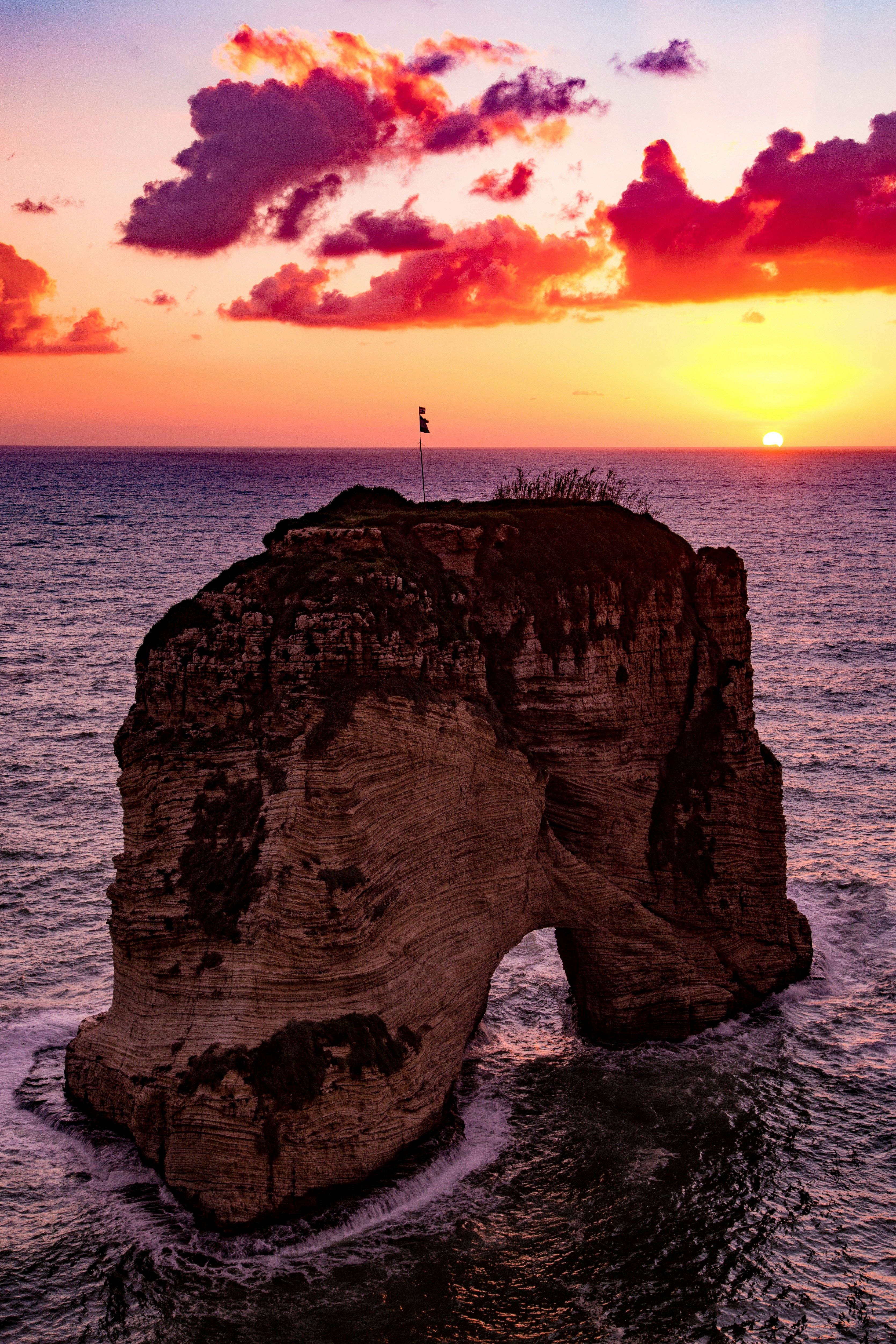
- Beirut: The National Museum of Beirut (extraordinary Phoenician, Hellenistic, and Roman artefacts from Lebanon's extraordinary archaeological history), the restored downtown Solidere district, the Corniche promenade at sunset, the Gemmayzeh and Mar Mikhael neighbourhoods (the cafe and gallery culture that survived every crisis), and the food culture of Hamra and Gemmayze — one of the finest dining cities in the Arab world, combining French culinary technique with Levantine ingredients.
- Baalbek & the Bekaa Valley: The Roman temple complex at Baalbek (a UNESCO World Heritage Site of the first rank), the Bekaa Valley's wine estates (Ksara, Musar, Massaya), and the town of Baalbek itself — a living Shia community surrounding and beneath one of the ancient world's greatest monuments, giving it a human context rare among major archaeological sites.
- Byblos, Sidon & Tyre: Byblos (Jbeil) — the world's oldest continuously inhabited city (occupied for at least 7,000 years), its Phoenician harbour, Crusader castle, and Roman amphitheatre stacked on top of each other in a single site — and the Phoenician city of Sidon with its sea castle, and the UNESCO-listed Tyre (one of the greatest Phoenician cities, now a southern Lebanese town with Roman hippodrome and necropolis still intact).
- The Lebanese mountains: The Qadisha (Holy) Valley (UNESCO) — a dramatic gorge in the northern mountains sheltering ancient Maronite Christian monasteries carved into cliff faces and the last significant Cedar of Lebanon groves above Bcharre — the Ehden nature reserve, the ski resorts of Faraya and Mzaar, and the wine route through the mountain villages of the Chouf district.
Cuisine
- The mezze — civilisation on a table: Lebanese mezze — the extended spread of small dishes that constitutes the Lebanese meal at its finest — is one of the world's great food experiences: hummus (smoother and more lemony than other versions), mutabbal (smoked aubergine with tahini), labneh (strained yoghurt with olive oil and za'atar), tabbouleh (the most herb-forward of all salads — predominantly flat-leaf parsley with only a little bulgar), kibbeh (the national dish, minced lamb and bulgar in a hundred preparations), fattoush, stuffed vine leaves, and a dozen others arriving simultaneously.
- Kibbeh, kafta & grills: Kibbeh — minced lamb mixed with bulgar wheat, onion, and allspice, shaped into oval shells stuffed with sautéed lamb, pine nuts, and cinnamon, then fried or baked — is Lebanon's national dish in its most celebrated form, though it appears in dozens of variations (raw as kibbeh nayyeh, poached in yoghurt as kibbeh bi laban, baked as a flat kibbeh). Kafta (minced lamb with parsley and spices on flat skewers, grilled over charcoal) and shish taouk (marinated chicken on skewers) complete the Lebanese grill culture.
- Arak & Lebanese wine: Lebanese arak — a clear anise-flavoured spirit distilled from grapes and anise seed, diluted with water and ice until it turns milky white (louche), drunk throughout the long mezze — is the defining drink of the Lebanese table, its ritual (the correct ratio of arak to water, the correct glass, the correct moment) as important as its flavour. Lebanese wine (Chateau Musar, in production since 1930 and making wine through 15 years of civil war, is the most celebrated; Ksara, Massaya, and Ixsir the most accessible) is among the finest in the Middle East.
Traditions & Culture
- Confessionalism & the Lebanese paradox: Lebanon's political system is based on confessionalism — the distribution of government positions among the country's eighteen officially recognised religious communities (Maronite Christian, Sunni Muslim, Shia Muslim, Greek Orthodox, Druze, and others) according to a formula based on the 1932 census. The President must be Maronite, the Prime Minister Sunni, the Speaker of Parliament Shia. This system was designed to prevent sectarian conflict but has instead institutionalised it, producing a political system of extraordinary paralysis and corruption alongside a society of remarkable individual creativity and resilience.
- Diaspora culture — Lebanon beyond Lebanon: The Lebanese diaspora — estimated at 8–14 million people worldwide (compared to 4 million inside Lebanon), concentrated in Brazil (over 7 million people of Lebanese origin), the United States, Australia, West Africa, and the Gulf — is one of the most successful and culturally productive in the world. Carlos Slim (for years the world's richest person), Shakira (Colombian-Lebanese), and numerous heads of state in Latin America are of Lebanese descent. The diaspora's remittances have sustained Lebanon through every crisis; its cultural influence spans continents.
Climate
- Mediterranean mountain — four distinct seasons: Lebanon has a classic Mediterranean climate on the coast (Beirut: mild winters 12–18°C, hot dry summers 30–35°C) with dramatic variation in the mountains — the ski resorts above 1,800 m receive heavy snow December–March and are pleasant in summer (20–25°C). The Bekaa Valley is drier and more extreme. The best time to visit is April–June (spring flowers in the mountains, perfect Beirut weather) and September–October (harvest season, mild temperatures, cultural festivals). The cedars are most atmospheric under winter snow.