Jordan is a small country of 11 million people in the heart of the Middle East — a Hashemite kingdom (ruled by the descendants of the Prophet Muhammad through the Sharif of Mecca lineage) that has maintained remarkable stability in a neighbourhood of extraordinary turbulence, hosting the world's largest refugee population relative to its size (over 750,000 registered Syrian refugees, plus Palestinian communities dating to 1948 and 1967). It contains some of the most extraordinary archaeological sites in the world — Petra (the Nabataean rock-carved city), Jerash (the finest Roman city in the Middle East outside Italy), and the desert castles of the Umayyad caliphs — combined with the Dead Sea, Wadi Rum's extraordinary desert landscape, and the Aqaba coral reefs.
Capital: Amman — built on seven (now over nineteen) hills, the ancient Philadelphia of the Decapolis
Population: ~11 million (including approximately 3 million Palestinian refugees and over 750,000 Syrian refugees)
Area: 89,342 km²
Currency: Jordanian Dinar (JOD) — one of the highest-valued currencies in the Arab world
Language: Arabic (official); English widely understood in tourism and business
History: Nabataean kingdom centred on Petra 4th century BC–106 AD; Roman, Byzantine, Umayyad, Crusader, Ottoman rule; Emirate of Transjordan 1921; Hashemite Kingdom since 1946
Fascinating Facts
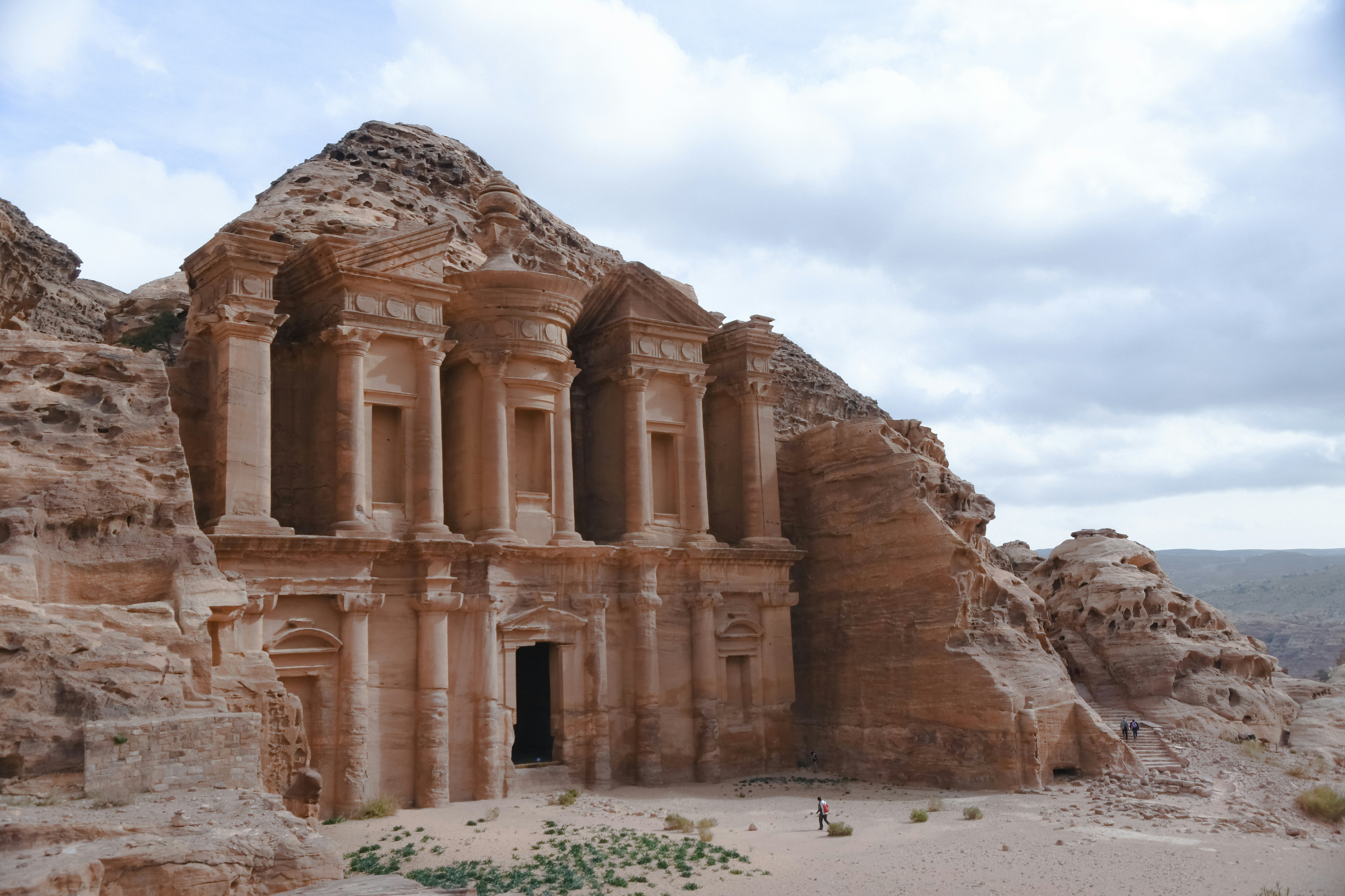
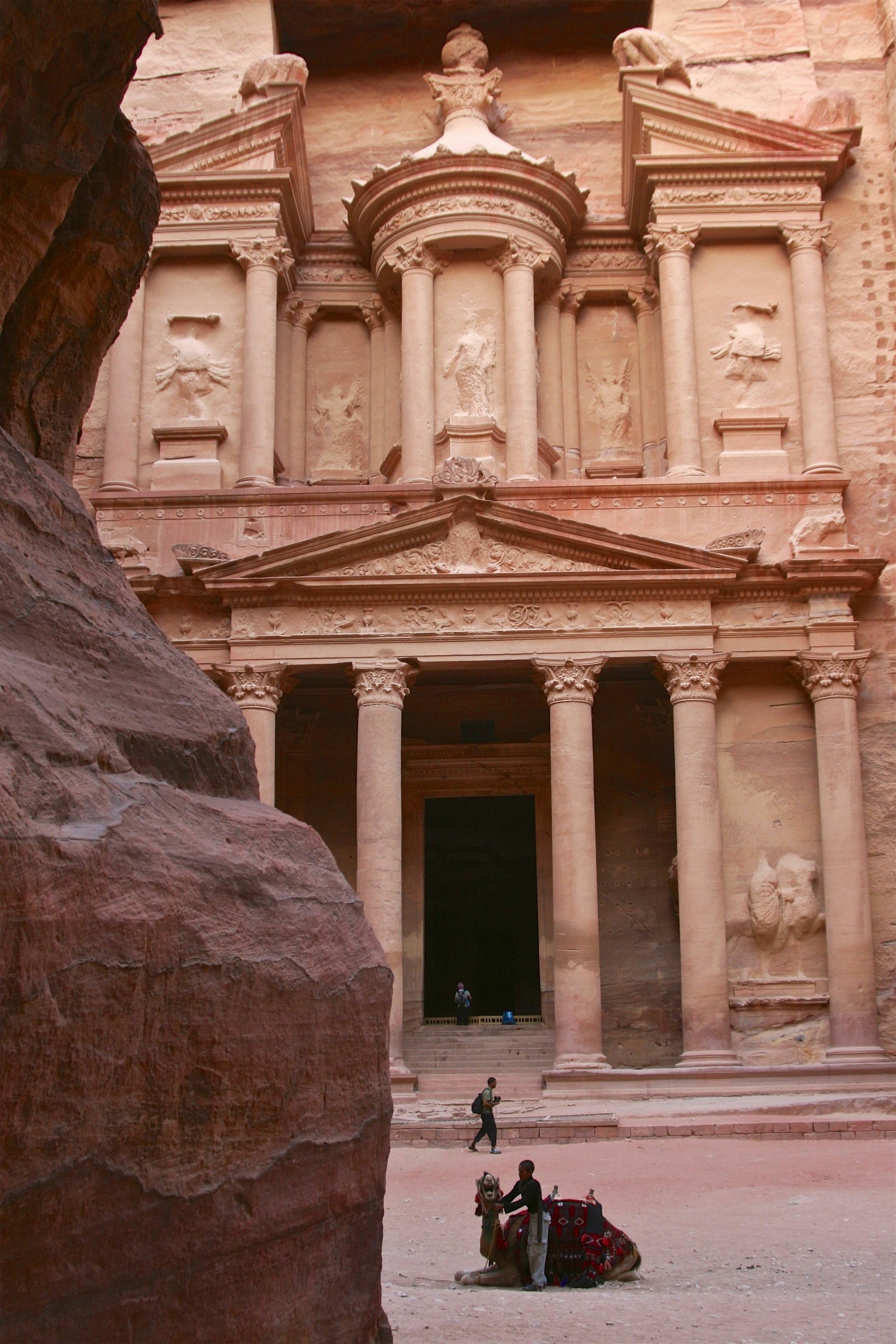
- Petra — carved from rose-red stone: Petra, the capital of the Nabataean kingdom (4th century BC–106 AD), was carved directly into the rose-red Nubian sandstone cliffs of the Wadi Musa canyon — the famous Treasury (Al-Khazneh), 40 m tall, its facade a masterwork of Hellenistic-influenced rock carving, is merely the entrance to a city of 800 monuments (tombs, temples, colonnaded streets, a Roman theatre seating 3,000, a Byzantine church with extraordinary mosaic floors) carved into the living rock across 264 km². A UNESCO World Heritage Site and one of the New Seven Wonders of the World.
- The Nabataeans — masters of water in the desert: The Nabataeans were one of the ancient world's most sophisticated peoples — nomadic Arab traders who created a hydraulic engineering system of extraordinary complexity at Petra (channels, cisterns, dams, and pipes carved into the sandstone to capture every drop of flash flood water) that sustained a city of 20,000 people in a desert with virtually no permanent water source. Their control of the frankincense and spice trade routes from Arabia to the Mediterranean made Petra one of the wealthiest cities in the ancient world.
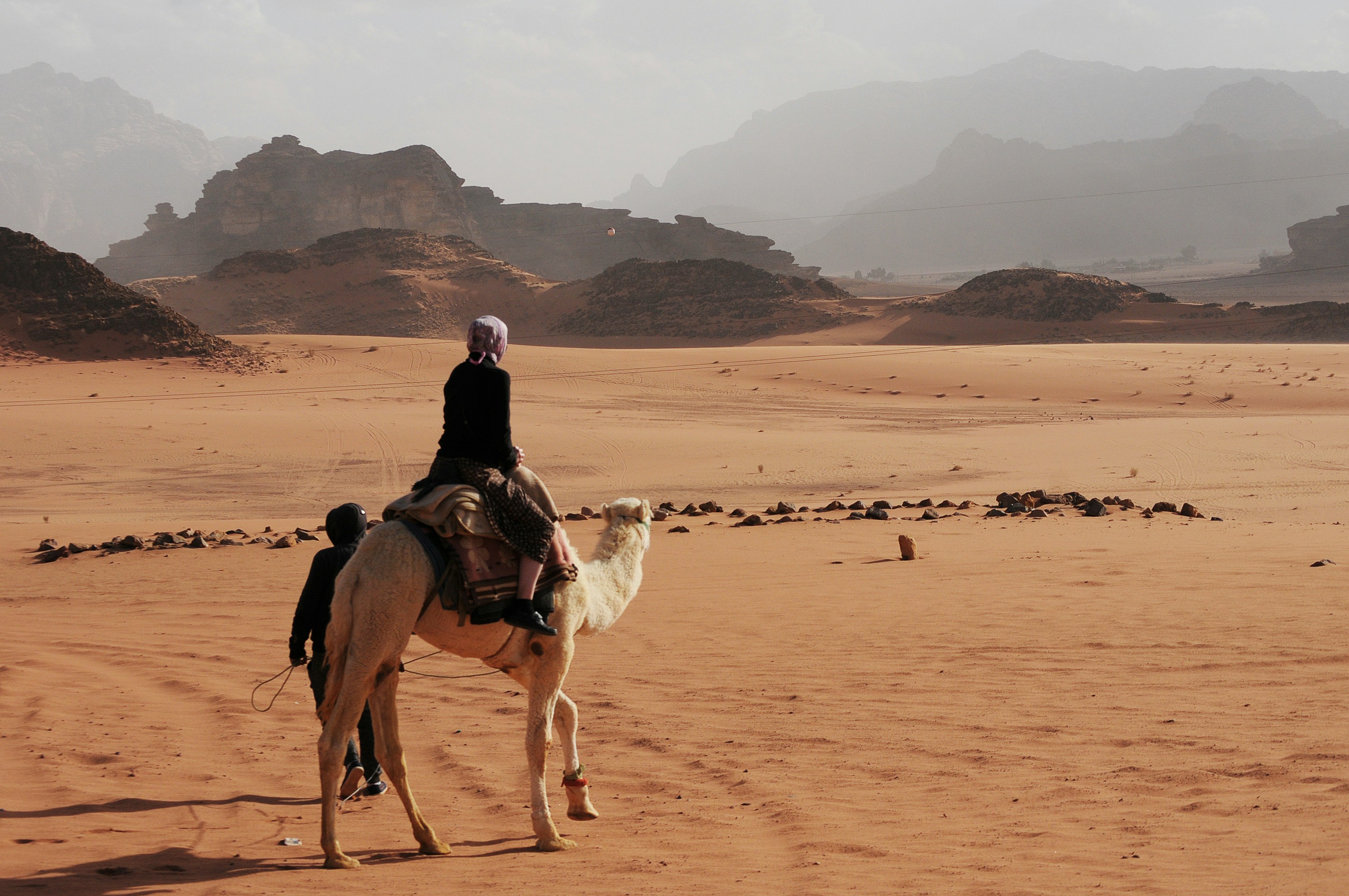
- Wadi Rum & Lawrence of Arabia: Wadi Rum — a valley of red and orange sandstone mountains, natural arches, and vast sand plains in southern Jordan — was the theatre of T.E. Lawrence's operations with the Arab Revolt against the Ottomans in 1917–18. Lawrence described it as 'vast, echoing and god-like' in Seven Pillars of Wisdom. The landscape, largely unchanged, is now a UNESCO World Heritage Site and the location of Martian and alien-planet filming for The Martian, Rogue One, and The Last Jedi.
- Jordan's water crisis — the world's second most water-poor: Jordan is the world's second most water-poor country (after Kuwait) — a desert nation receiving an average of 111 mm of rain per year, with a rapidly growing population, massive refugee influx, and a Jordan River reduced to a trickle by Israeli, Syrian, and Jordanian water extraction. The Dead Sea is dropping 1 metre per year as a result. Jordan's management of this crisis — including treated wastewater reuse for agriculture — is studied as a model of survival-level water governance.
Nature & Key Destinations
- Petra: The full Petra experience — entering through the 1.2 km Siq (a narrow canyon of towering sandstone walls) to emerge at the Treasury facade, then the Royal Tombs, the Colonnaded Street, the Great Temple, and the Monastery (Ad-Deir, a 45-minute climb rewarded by a facade even larger than the Treasury) — requires at least two full days. The Petra by Night experience (candles lining the Siq to the Treasury, Bedouin music) is the most magical sight in Jordan.
- Wadi Rum: Jordan's extraordinary desert — jeep tours, camel rides, and Bedouin camp overnight stays beneath a sky of extraordinary star density in one of the world's darkest areas. Rock climbing, scrambling to natural arches, and the extraordinary quality of dawn and sunset light on the red sandstone mountains make it one of the finest desert landscapes in the world.
- Jerash & the Roman north: Jerash (Gerasa) — the best-preserved Roman provincial city in the world outside Italy, its colonnaded Cardo Maximus, the oval Forum, the Temple of Artemis, two theatres, nymphaeum, and triumphal arch all intact — gives the most complete picture available of a living Roman city. The Jordan Archaeological Museum in Amman's Citadel (with the famous Ain Ghazal statues, 9,000-year-old plaster figures among the oldest human sculptures ever found) completes the picture.
- Dead Sea, Aqaba & the desert castles: Floating in the Dead Sea (−430 m, the world's lowest point, its salt concentration making sinking impossible) at a spa resort on the Jordanian shore, the ancient Umayyad desert castles (Qasr Amra with its extraordinary 8th-century frescoes of hunting, bathing women, and the zodiac — among the earliest surviving examples of secular Islamic art), and Aqaba's coral reefs (some of the world's most accessible, reached by wading from the beach).
Cuisine
- Mansaf — the Bedouin feast: Mansaf — Jordan's national dish and the supreme expression of Bedouin hospitality — is a whole lamb slow-cooked in jameed (a dried, fermented goat or sheep yoghurt reconstituted into a sharp, funky sauce) served over a mountain of rice and flatbread, garnished with pine nuts and almonds, and eaten communally standing around the platter. The pungent, sour intensity of jameed gives mansaf a flavour unlike any other dish in the Arab world; refusing it when offered by a Bedouin host is a social impossibility.
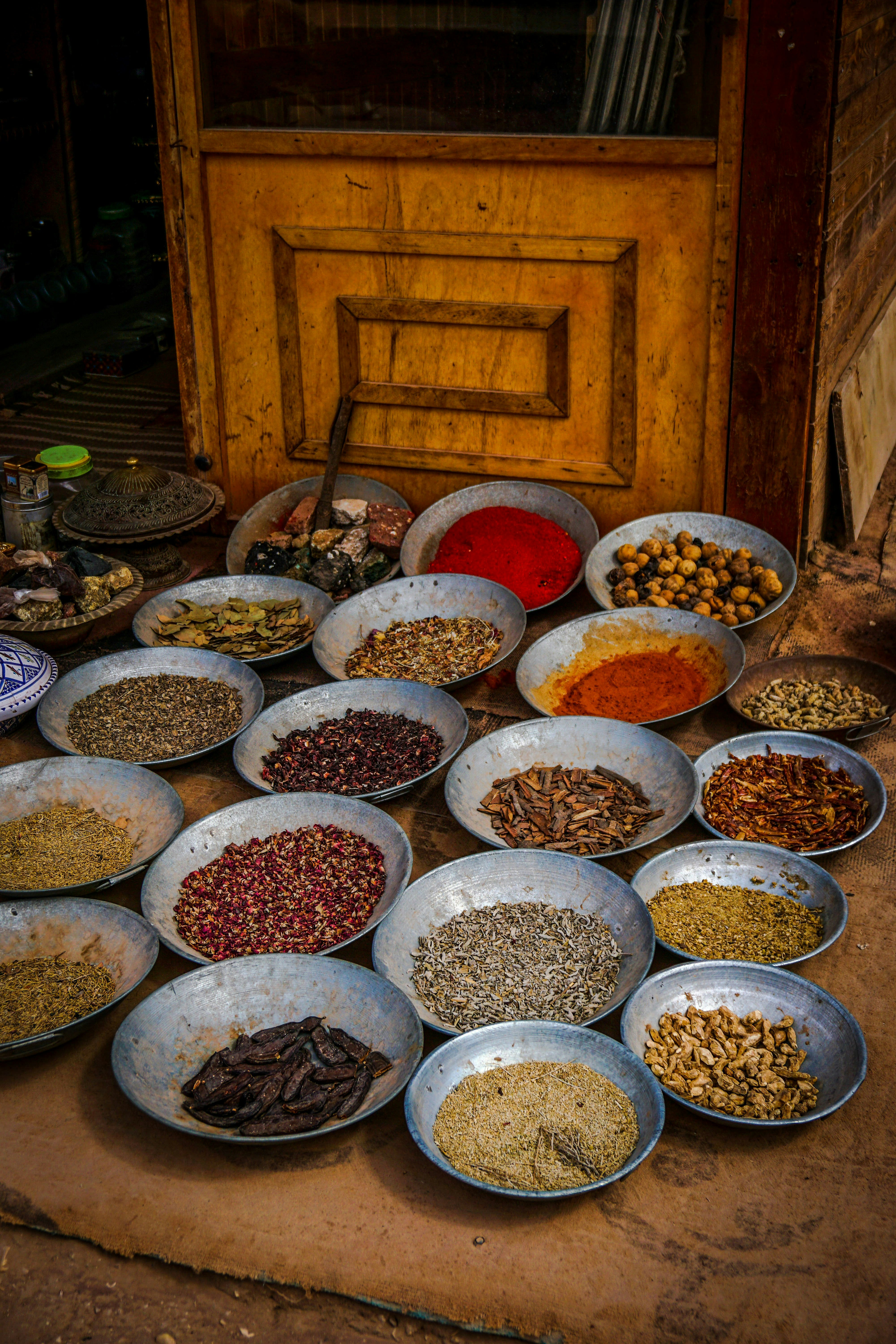
- Falafel, hummus & the Levantine table: Jordan shares the great Levantine food culture — the mezze table of hummus, mutabbal (smoked aubergine with tahini), fattoush (bread salad with sumac), warak dawali (stuffed vine leaves), and kibbeh (bulgar wheat and lamb fritters) preceded by fresh warm bread. The breakfast of Amman — fresh-baked ka'ak (sesame bread rings) eaten with za'atar and olive oil, falafel sandwiches from street carts, and sweet tea — is one of the finest urban breakfasts in the Middle East.
- Zarb & Bedouin cooking: Zarb — the Bedouin underground pit-roasting method in which lamb, chicken, and vegetables are layered in a wire cage, lowered into an earthen pit over hot coals, and sealed with sand for several hours — produces meat of extraordinary tenderness and smokiness. The Bedouin camp dinner in Wadi Rum, served after a zarb slow-cooked in the desert, beneath stars of implausible density, is Jordan's finest dining experience.
Traditions & Culture
- Hashemite identity & Bedouin tradition: Jordan's Hashemite royal family traces its lineage directly to the Prophet Muhammad through Ali ibn Abi Talib — a claim of sacred legitimacy that gives the monarchy a religious authority unique among Arab states. King Hussein (1952–1999) navigated the Arab-Israeli wars, the PLO conflict, and the Cold War with extraordinary diplomatic skill; his son Abdullah II has maintained Jordan's role as a stable moderate in a volatile region. The Bedouin tribal tradition — its values of generosity, honour, and the absolute obligation of hospitality — remains the cultural bedrock of Jordanian identity.
- The Baptism Site & religious heritage: Bethany Beyond the Jordan (Al-Maghtas) — the site where John the Baptist baptised Jesus, on the eastern bank of the Jordan River — is a UNESCO World Heritage Site of the highest religious significance for Christians worldwide, visited by Pope John Paul II (2000), Pope Benedict XVI (2009), and Pope Francis (2014). Jordan's extraordinary religious heritage (Madaba's Byzantine mosaics, Mount Nebo where Moses saw the Promised Land, the Wadi Rum where the Arab Revolt unfolded) makes it one of the world's great pilgrimage landscapes.
Climate
- Mediterranean north, desert south: Amman and the north have a Mediterranean climate — mild, wet winters (5–12°C, November–March, with occasional snow in Amman) and hot, dry summers (30–36°C). The Jordan Valley and Dead Sea are warmer. Wadi Rum and Petra are desert — extreme heat in summer (38–42°C) and cold nights in winter (near freezing). The best time for Petra and Wadi Rum is March–May and September–November. Aqaba on the Red Sea is warm year-round (best for diving October–May).