The Galápagos Islands are an archipelago of volcanic islands located in the Pacific Ocean, about 1,000 km off the coast of Ecuador. Known as a natural laboratory of evolution, these islands inspired Charles Darwin in developing his theory of natural selection and offer a unique ecosystem with numerous endemic species found nowhere else on the planet.
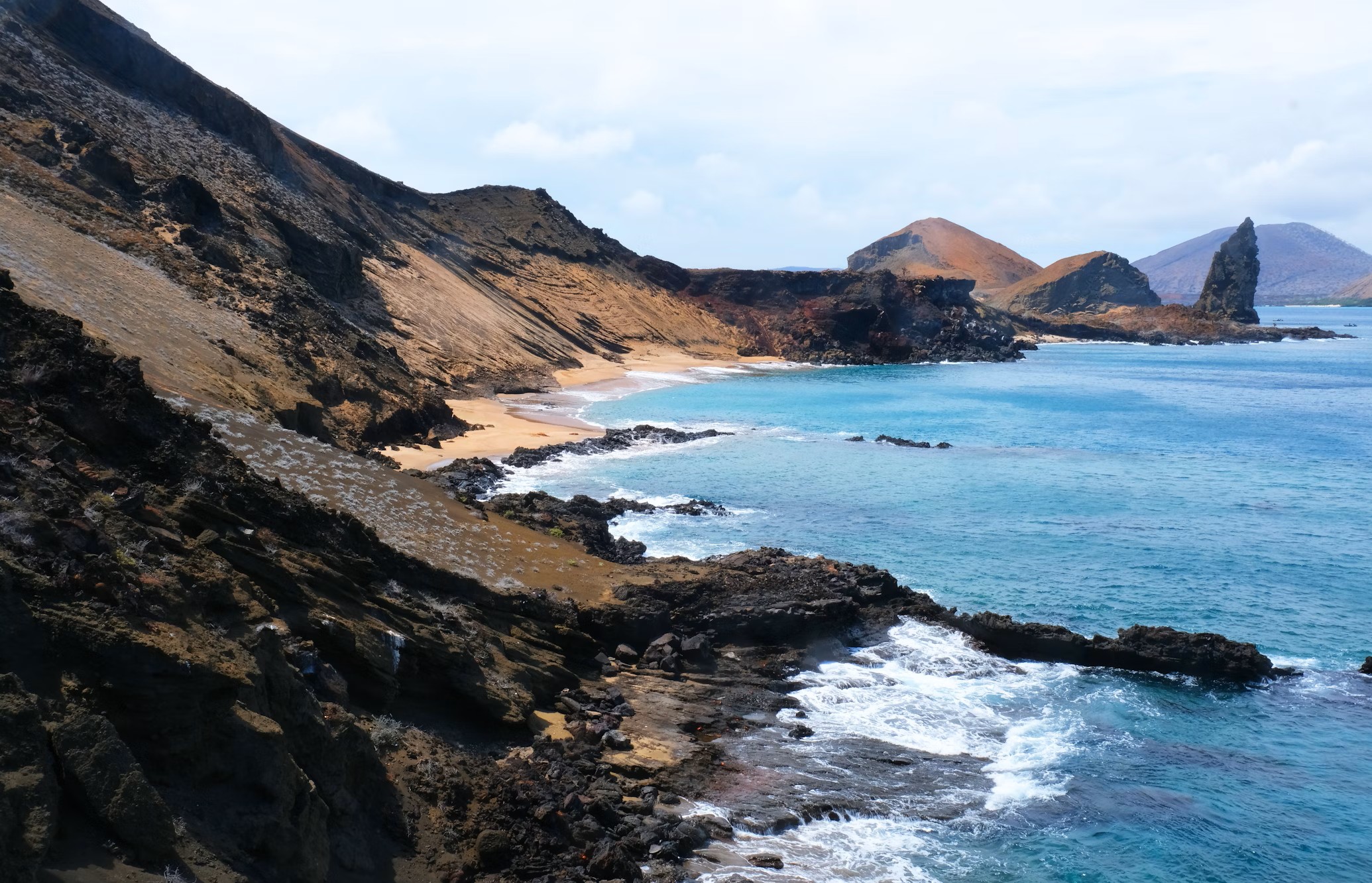
The Galápagos Islands were formed millions of years ago as a result of volcanic activity and consist of 13 large islands, 6 smaller islands, and numerous rocks and islets. The archipelago takes its name from the species of giant tortoises (in Spanish galápago) that inhabit the islands and are one of the symbols of this unique place.
The islands were declared a national park in 1959 and were included on the UNESCO World Heritage list in 1978 because of their exceptional biological value. They are home to an incredible diversity of plants and animals, many of which are endemic and found nowhere else on Earth.
The most remarkable representatives of the fauna include the Galápagos giant tortoises, which can live over 100 years and weigh up to 400 kg; the marine iguanas—the only species of iguanas in the world that can swim and dive in the ocean; and the various species of Darwin’s finches, which demonstrate striking adaptive radiation and inspired Darwin’s theory of evolution.
The Galápagos Islands offer diverse ecosystems—from dry coastal zones to humid mountain forests. Each island has its own unique characteristics, flora, and fauna, shaped by isolation and differing ecological conditions. For example, Fernandina Island is one of the youngest and most volcanically active, with a rugged landscape of black lava, while Santa Cruz Island is older and has more diverse vegetation.
Tourism is a major economic sector for the archipelago, but it is strictly regulated to protect the fragile ecosystem. Visitors can enjoy hiking trails, diving, snorkeling, and boat tours guided by certified guides. Puerto Ayora on Santa Cruz Island is the largest inhabited center and tourist hub, offering hotels, restaurants, and visitor centers.
Scientific research plays a key role in the conservation of the islands. The Charles Darwin Research Station, founded in 1964, is a leading center for biodiversity studies and conservation efforts. Scientists work on breeding and reintroduction programs for endangered species, monitoring invasive species, and educational initiatives.
Despite strict conservation measures, the Galápagos Islands face many challenges such as climate change, invasive species, illegal fishing, and growing population pressure. The government of Ecuador and international organizations are making significant efforts to balance economic development with the preservation of this priceless natural heritage.
The Galápagos Islands are more than a tourist destination—they are a living testimony to the astonishing processes of evolution and adaptation. They offer a unique opportunity to observe wildlife in its nearly untouched state and to better understand the history of life on our planet. Whether you are a passionate nature lover, photographer, diver, or simply seeking an unforgettable adventure, the Galápagos Islands represent one of the most remarkable and inspiring places on Earth.