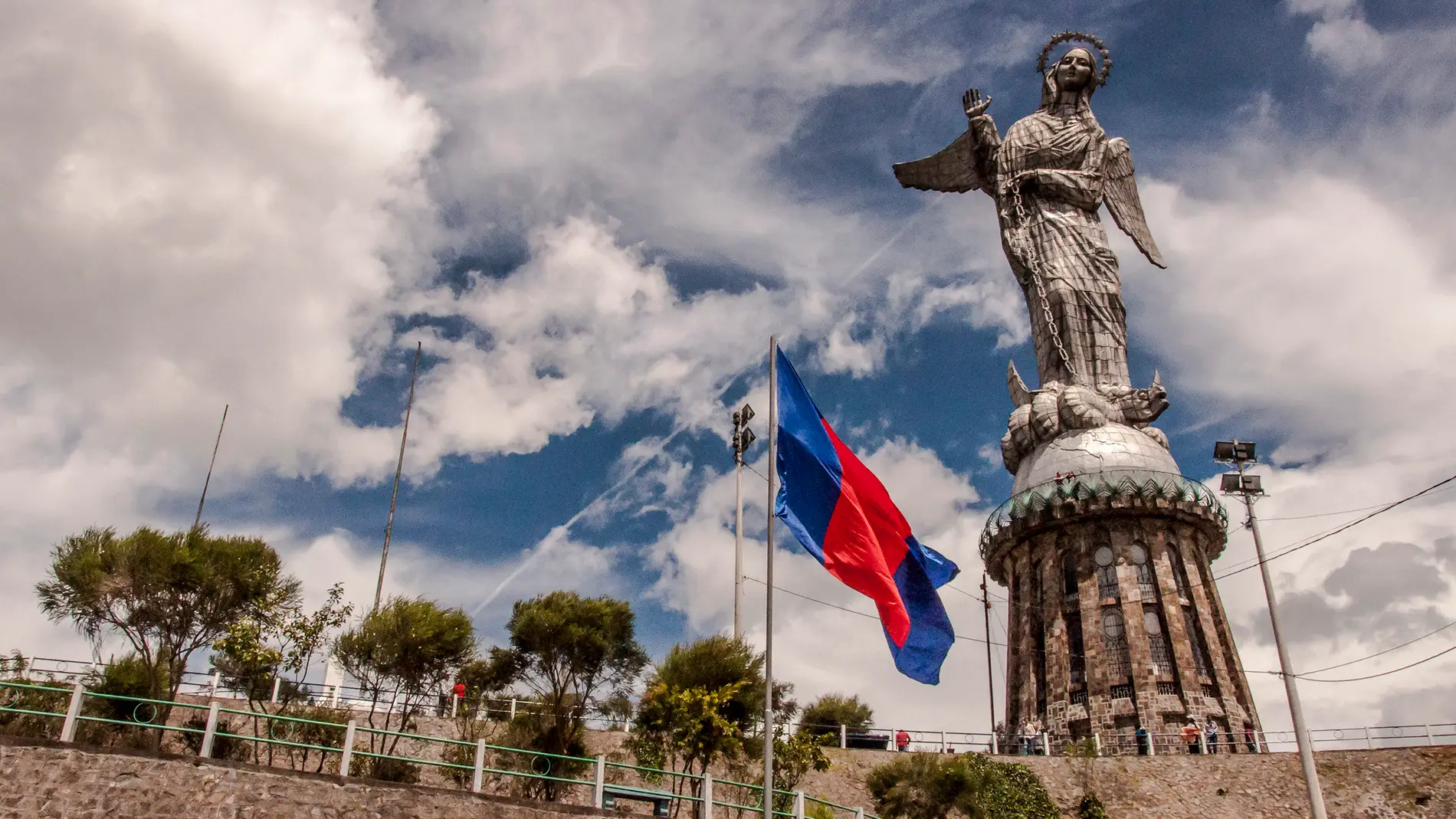

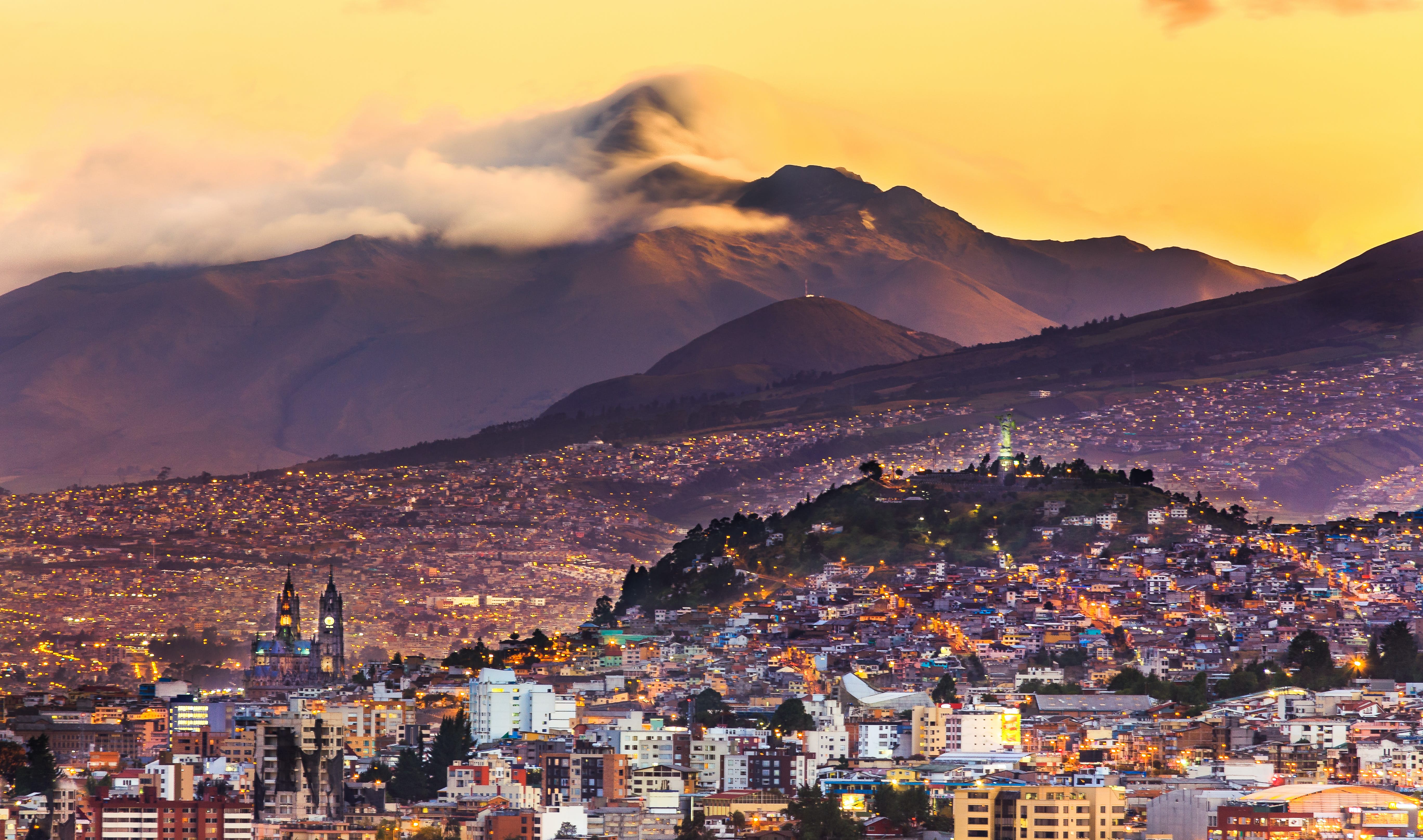
Quito is the capital of Ecuador. As of 2020, its population is around 2 million people. Quito is the second largest city in Ecuador after Guayaquil. Its historic center is one of the largest, least altered, and best-preserved historic centers in the Americas. In 1978, Quito was declared a UNESCO World Cultural Heritage Site. It was the first city in South America to be honored in this way.
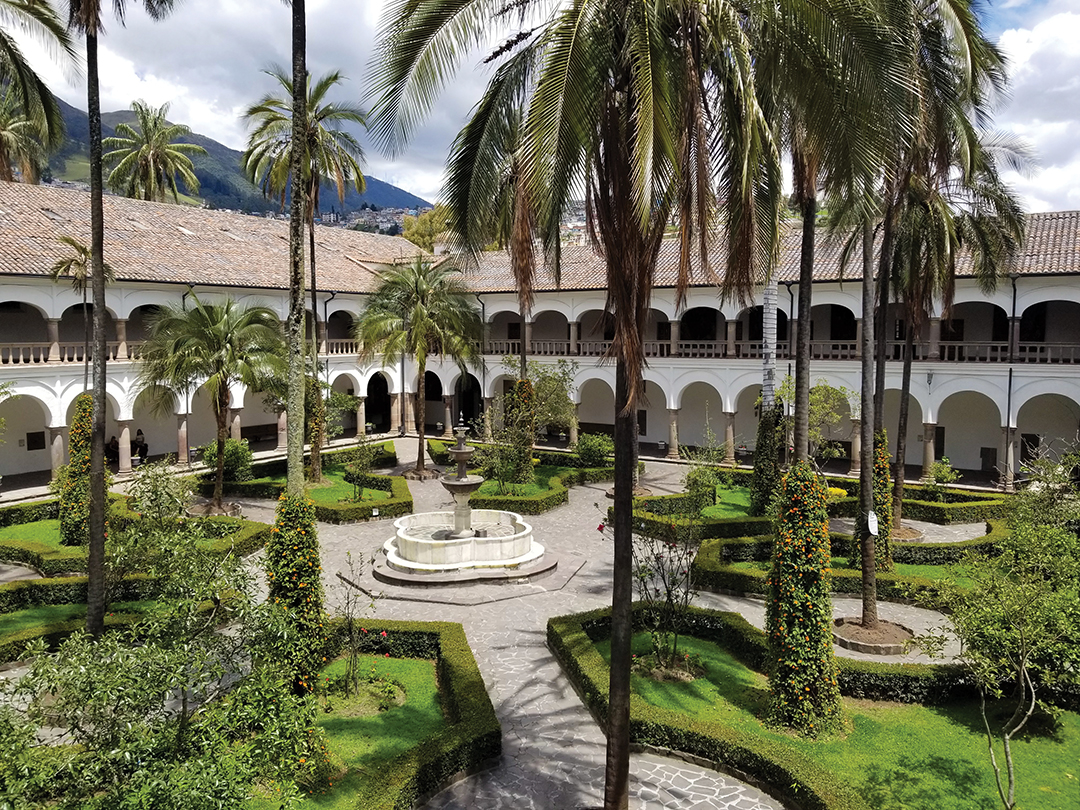
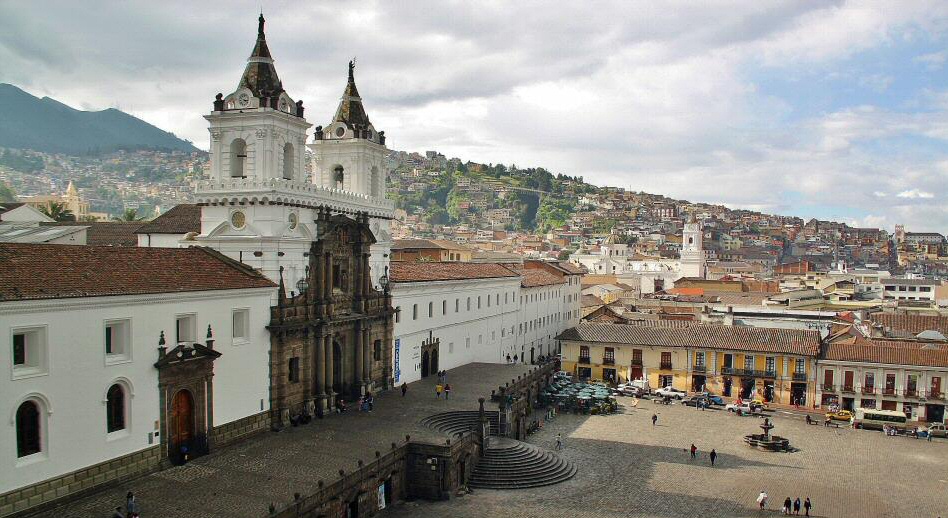
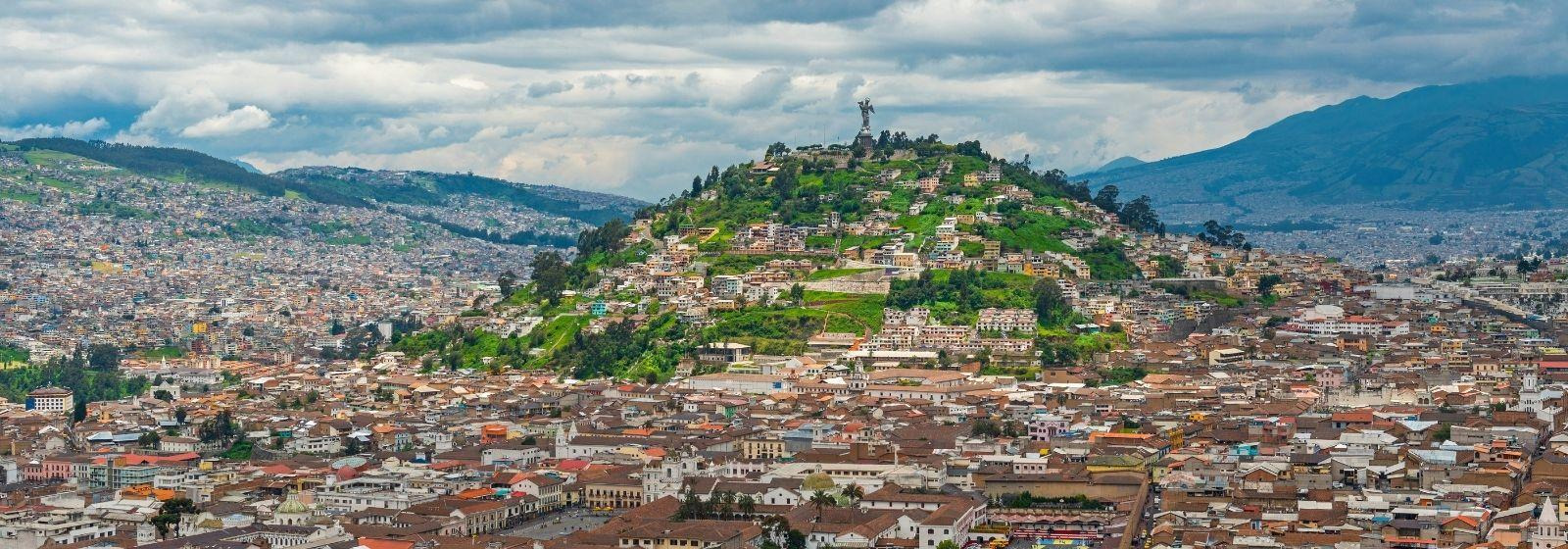
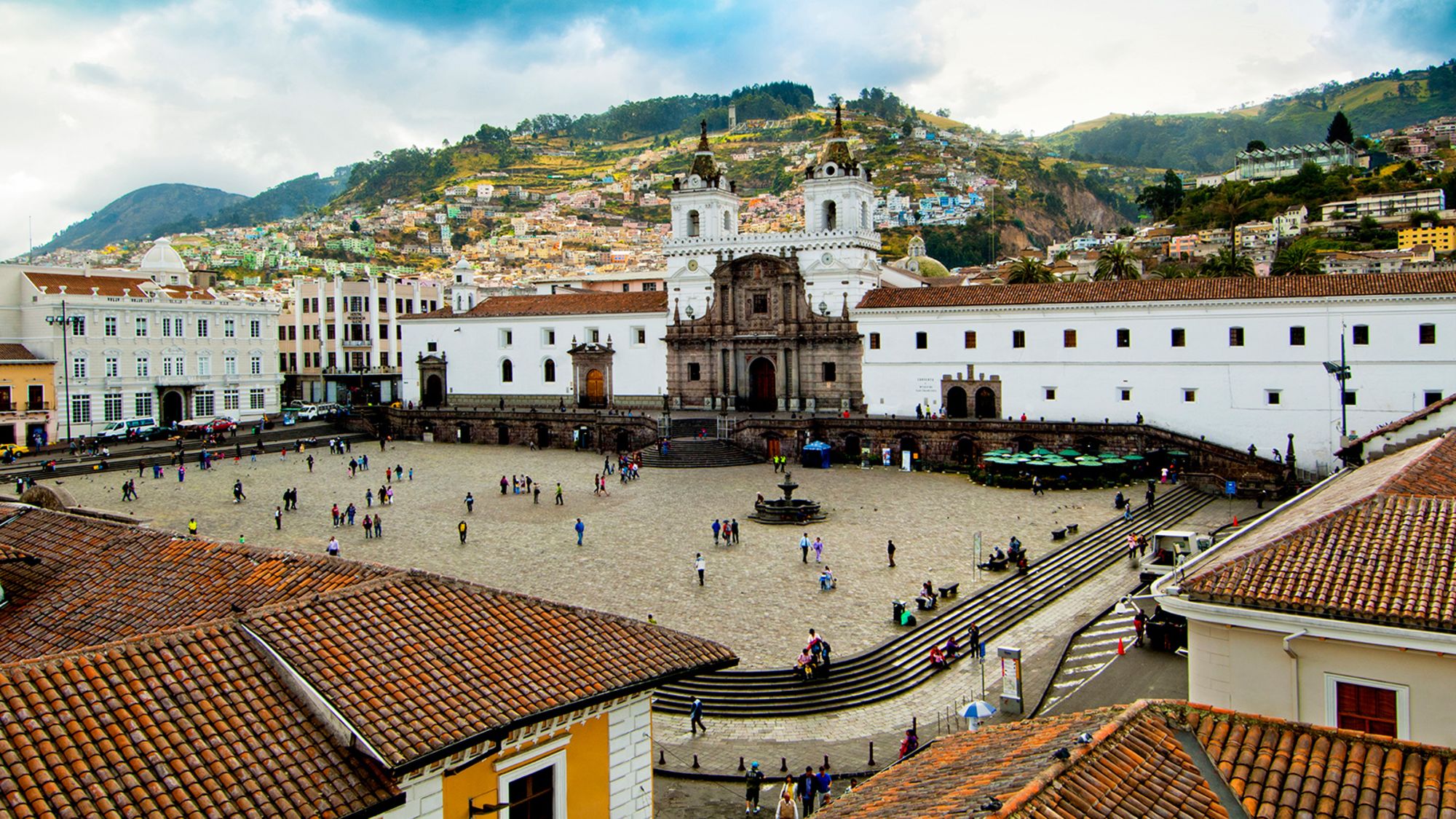
Isolated in the Andes at an altitude of 2,818 m, Quito is located on the slopes of the Pichincha volcano and bordered by the Panecillo and Itchimbía hills. Founded by the Spanish in 1534 on the ruins of an Inca city, Quito proudly holds one of the most extensive and best-preserved historic centers in Latin America. The city is a remarkable example of the Quito Baroque school (Escuela Quiteña), which merges local and European artistic traditions and is considered Latin America’s greatest contribution to universal art. The value of this art is represented by great spiritual citadels such as San Francisco, Santo Domingo, San Agustín, La Compañía, La Merced, the Sanctuary of Guápulo, and the San Diego Recoleta. These are recognized not only for their artistic and architectural value but also for their decorative elements (altars, paintings, sculptures). The colonizers knew how to adapt their artistic sensibility to reality, building their architecture in a very complex topographic environment.
Quito is the cradle of pre-Columbian cultures and an important witness to Spanish colonization. The influence of the Quito Baroque school (Escuela Quiteña) is acknowledged in culture, especially in the fields of architecture, sculpture, and painting.
The historic center of Quito has preserved its original configuration, with new constructions built outside the colonial core. Indeed, based on the first plan of Quito, designed in 1734 by Dionisio Alcedo y Herrera, it is noted that the original layout of streets, blocks, and squares—with a few rare exceptions—remains the same as can be seen today. Despite the many earthquakes that have struck it throughout history, the city has retained the least modified historic center in all of Latin America, thanks to coordinated actions by the municipal authorities of the Metropolitan District of Quito and the government of Ecuador. Overall, the urban plan and its integration into the landscape can be considered fully authentic, as the original overall form has remained unchanged and Plaza Mayor (the main square) has developed organically with very few changes. The preservation of traditional crafts, the contribution of artisans possessing ancient know-how, and the use of local materials (stone, lime, clay, and wood) have allowed the significant features of various architectural components and their decorative elements to be maintained.
The historic center of Quito is considered one of the most important historic areas in Latin America. It contains around 130 monumental buildings (housing a variety of visual arts and sculptures, mostly religiously inspired across different schools and styles) and 5,000 properties registered in the municipal list of heritage assets.