Oman is a country of 4.5 million people on the southeastern corner of the Arabian Peninsula — a Sultanate of extraordinary geographical diversity, from the Hajar Mountains (rising to 3,009 m at Jebel Shams, the highest peak in the Arabian Peninsula) to the Rub' al Khali desert, the dramatic Musandam fjords, the monsoon-greened Dhofar region, and a coastline of 3,165 km on the Arabian Sea and Gulf of Oman. It is simultaneously the most geographically dramatic country in Arabia and the most historically rooted — the ancient Magan civilisation (3rd millennium BC) traded copper across the Indian Ocean, the Frankincense Coast supported a global aromatic trade for 4,000 years, and the Omani maritime empire (17th–19th century) controlled Zanzibar and the East African coast. Under Sultan Qaboos (1970–2020), Oman achieved the fastest human development improvement of any country in history.
Capital: Muscat
Population: ~4.5 million (including approximately 45% foreign workers)
Area: 309,500 km²
Currency: Omani Rial (OMR) — one of the highest-valued currencies in the world
Language: Arabic (official); English widely spoken in business; Swahili spoken by the Zanzibari community; Balochi, Hindi widely used by expatriates
History: Ancient Magan civilisation 3rd millennium BC; Islamic from 630 AD; Omani Empire 17th–19th century; Sultan Qaboos modernised from 1970; Sultan Haitham since 2020
Fascinating Facts
- The fastest human development improvement in history: When Sultan Qaboos bin Said Al Said came to power in 1970, Oman had three primary schools, one hospital, 10 km of paved roads, and a per capita income of approximately $300. By his death in 2020, it had become a middle-income country with universal healthcare, free education to university level, 60,000 km of paved roads, and a life expectancy that had more than doubled. The UN Human Development Index improvement over this period — from one of the world's lowest to a high human development ranking — is the greatest of any country in recorded history.
- Frankincense — Oman's ancient gold: The Dhofar region of southern Oman is one of the world's two primary sources of true Boswellia sacra frankincense — the resin that was the most valuable trade commodity in the ancient world, burned in every temple from Rome to China, used in embalming by the Egyptians, presented to the infant Jesus, and worth its weight in silver for millennia. The ancient frankincense trade routes from Dhofar to the Mediterranean are UNESCO World Heritage (the Land of Frankincense site), and Dhofari trees still produce the world's finest quality resin.
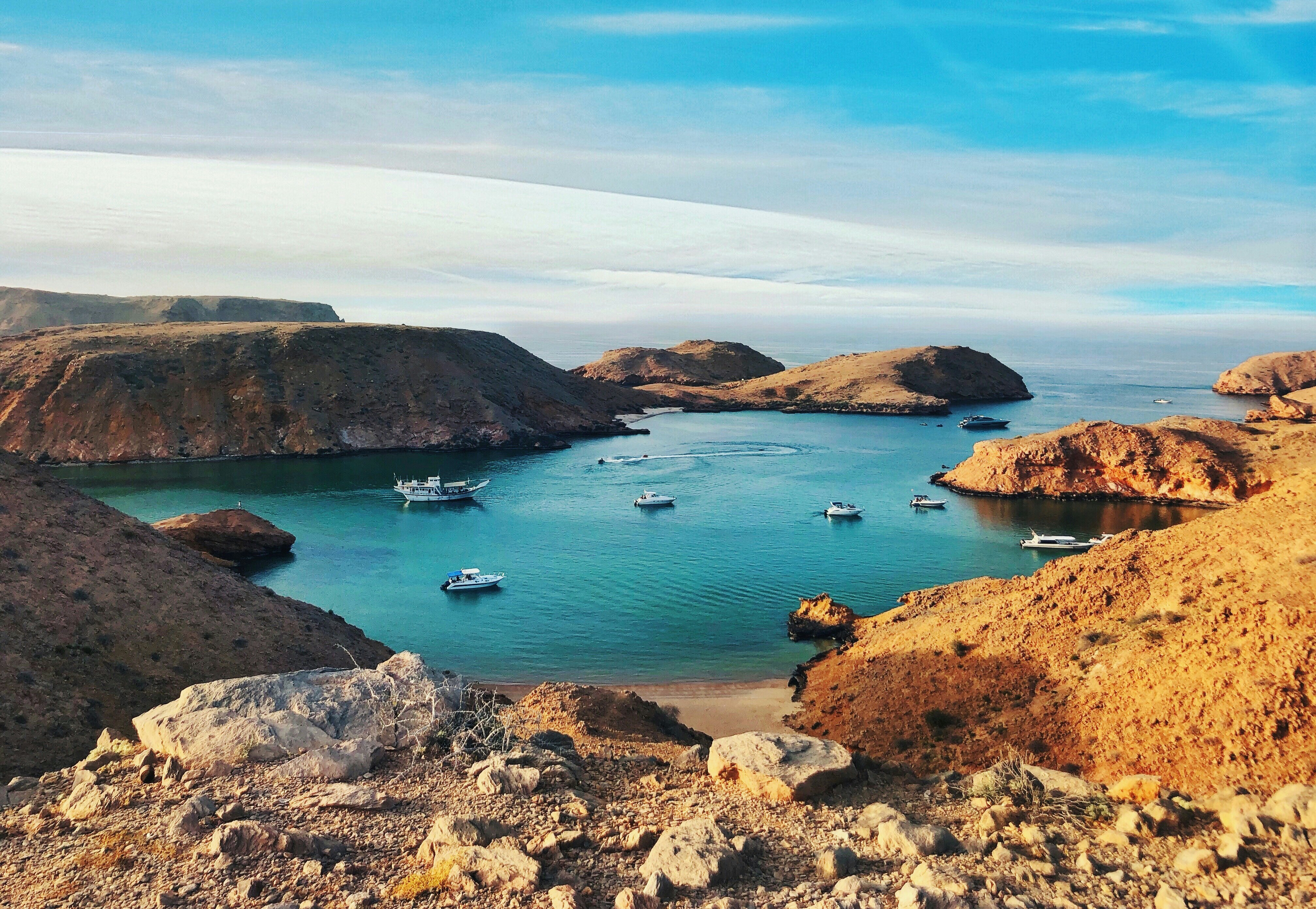
- The Musandam exclave — Arabia's Norway: The Musandam Peninsula — an Omani exclave separated from the rest of Oman by the UAE, jutting into the Strait of Hormuz through which 20% of the world's oil supply passes — is a landscape of vertical limestone cliffs descending into deep fjord-like inlets (khors) of extraordinary beauty, accessible by traditional dhow from Khasab. The dolphins, whale sharks, and the dramatic topography of the 'Norway of Arabia' make it one of the most spectacular landscapes in the Gulf region.
- Ras Al Jinz — the turtle coast: Ras Al Jinz (Ras Al Hadd) on the eastern tip of the Arabian Peninsula is the most important green turtle nesting site in the Indian Ocean and one of the most important in the world — approximately 20,000–30,000 female green turtles come ashore here each year to nest, in a programme tightly managed by the Oman government with mandatory guided night visits to protect both turtles and visitors. Watching a 150 kg turtle haul herself ashore in the moonlight to dig her nest is one of the most profound wildlife encounters in Arabia.
Nature & Key Destinations
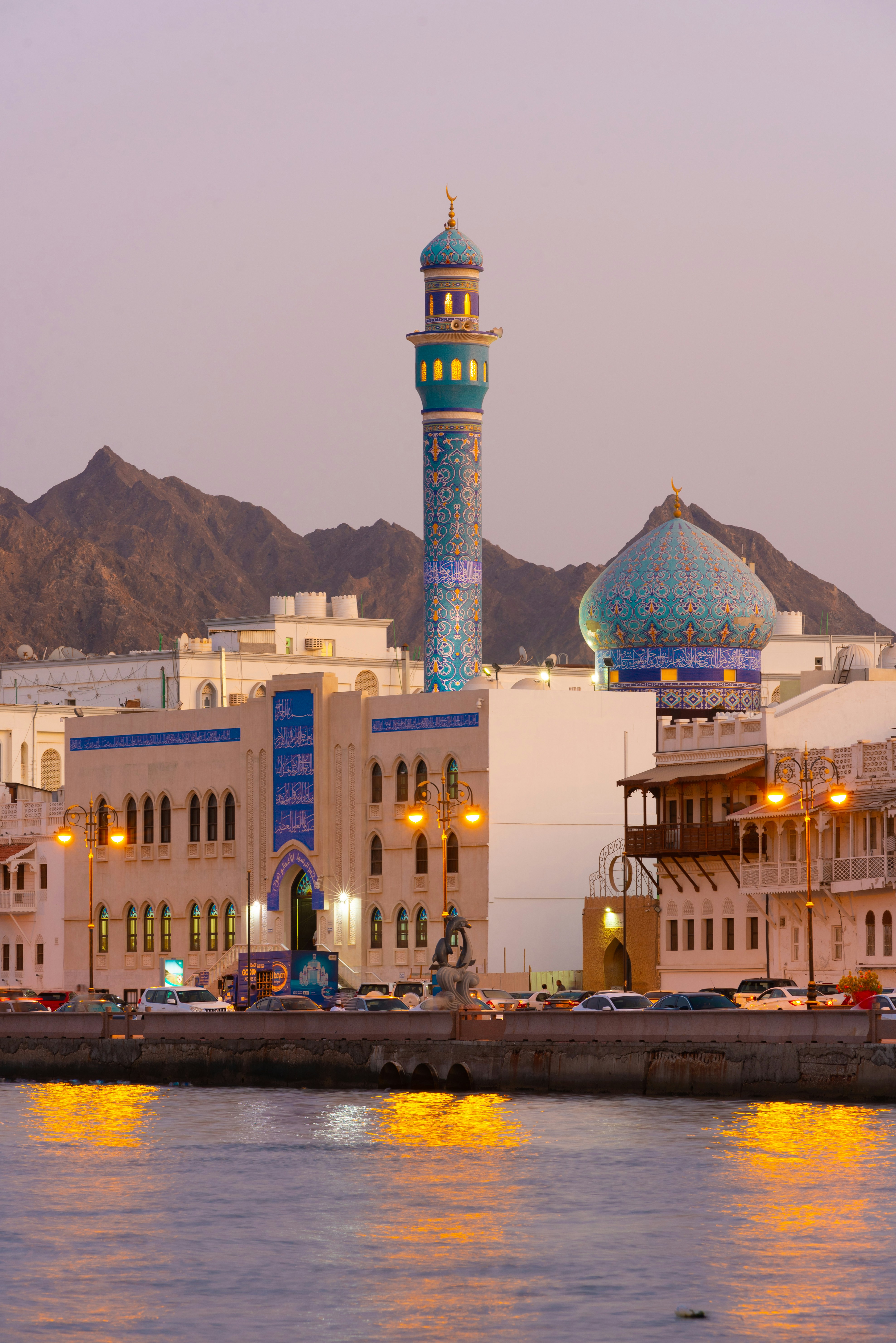
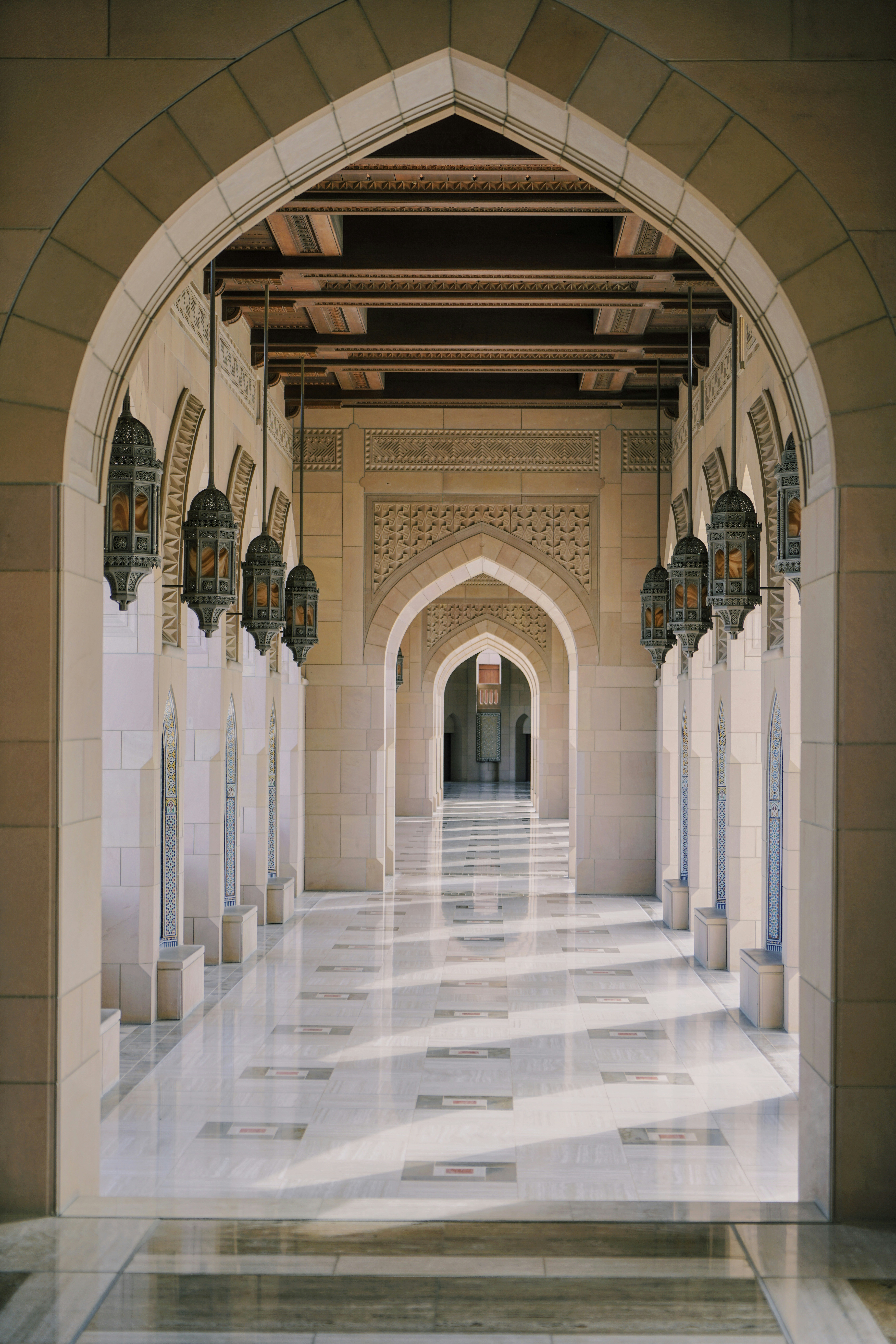
- Muscat & the Hajar Mountains: The capital's Mutrah Souk (the finest traditional souk in the Gulf, its labyrinthine lanes selling frankincense, silver khanjar daggers, Omani halwa, and textiles), the Sultan Qaboos Grand Mosque (with the world's largest hand-woven carpet, 4,343 m², and the world's largest Swarovski crystal chandelier, 8 m diameter), and the dramatic Hajar mountain backdrop — plus the Wadi Bani Awf drive (the most spectacular mountain road in Arabia).
- Nizwa & the interior: Nizwa — the ancient former capital, its 17th-century circular tower fort (the largest in Oman, its interior a warren of hidden stairways and defence mechanisms), the Friday goat and cattle market (the most authentic traditional market in Oman), the silver souk (Omani silver khanjar daggers and traditional jewellery), and the nearby beehive tombs of Al Ayn (UNESCO, 3rd millennium BC, among the oldest monuments in Arabia).
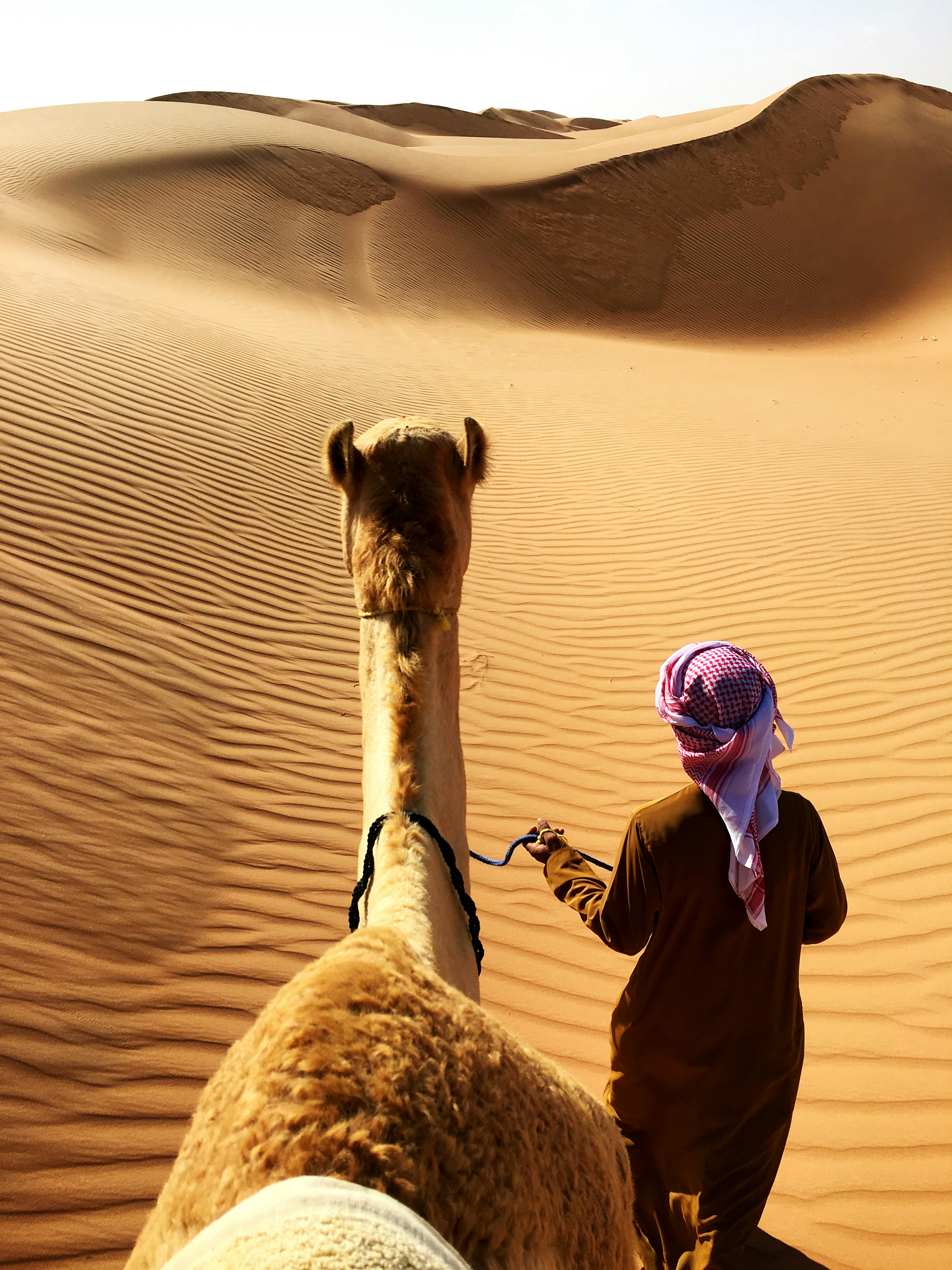
- Wahiba Sands & Wadi Shab: The Wahiba Sands (Sharqiyah Sands) — a sea of orange dunes 180 km long and 80 km wide, accessible by 4WD from Muscat in three hours, with Bedouin camp stays and camel treks — and Wadi Shab (a canyon of turquoise pools connected by narrow gorges, accessed by inflatable ferry across a river, its final pool entered through a narrow underwater passage into a cave with light pouring through the ceiling).
- Salalah & the Khareef monsoon: Salalah in the Dhofar region undergoes an extraordinary transformation during the khareef (June–September monsoon) — the same southwest monsoon that brings rain to India pushes up the Dhofar escarpment, transforming the normally arid landscape into lush green meadows, waterfalls, and mist-draped frankincense forests. The contrast with Arabia's usual desert image — cows grazing on green hillsides above coconut palms and banana groves — is one of the region's most disorienting and beautiful spectacles.
Cuisine
- Shuwa — the pit-roasted national dish: Shuwa — a whole lamb (or goat) marinated for 24 hours in a paste of dried chillies, cumin, coriander, cardamom, and vinegar, wrapped in banana or palm leaves, placed in an underground pit lined with hot coals, and sealed for 24–48 hours until the meat falls from the bone in smoked, spiced fragments — is Oman's most celebrated festive dish, prepared for Eid, weddings, and National Day. The slow underground cooking method produces meat of extraordinary tenderness and depth.
- Majboos & Omani hospitality food: Majboos (the Omani version of machboos/kabsa — spiced rice with meat or fish and dried lemon) and the Omani breakfast of khubz ragag (paper-thin flatbread cooked on a domed griddle) with eggs, honey, and Omani halwa (a dense, gelatinous confection of starch, ghee, rosewater, saffron, and nuts — the universal gift and hospitality sweet of Oman) represent the daily and ceremonial poles of Omani eating.
- Omani coffee & dates: Qahwa (Omani coffee — lightly roasted beans brewed with cardamom and saffron, served in small handleless cups alongside Omani dates) is the supreme expression of Omani hospitality, offered before any conversation and refilled continuously until the guest gives the specific wrist-flick gesture indicating sufficiency. Omani dates (over 200 varieties grown in the date gardens of the Batinah coast and the interior oases) are considered among the finest in the world and the most important element of any Omani gift.
Traditions & Culture
- Ibadi Islam — Oman's unique faith: Oman is the world's only Ibadi Muslim-majority country — Ibadism being an early Islamic sect (predating the Sunni-Shia split) that emphasises egalitarianism, quiet religious practice, and the selection of the most pious rather than the most powerful as community leader. Ibadi theology discourages sectarianism; Oman's remarkable religious tolerance (non-Muslim religious practice is openly permitted, churches and temples operate freely) derives partly from this tradition. It is one of the key reasons Oman has historically served as a diplomatic bridge between Sunni and Shia states.
- The khanjar & Omani dress: The khanjar — the curved silver dagger worn at the waist, its handle and sheath worked in intricate silver filigree — is the supreme symbol of Omani male identity, worn with the white dishdasha robe and the massar (intricately folded turban) for formal occasions and celebrations. Different regions of Oman have distinct khanjar styles; the quality of the silverwork is a precise indicator of social standing. The khanjar appears on the Omani national flag and national emblem — a nation that has placed its traditional dagger at the centre of its national identity.
Climate
- Desert to tropical, extreme variation: Oman's climate varies dramatically by region — Muscat has a hot desert climate (summer 38–45°C, June–September; mild winters 20–28°C, the best season November–March). The Hajar Mountains are cooler year-round. Salalah's unique khareef monsoon (June–September) brings cool, misty, green conditions entirely unlike the rest of Arabia — the best season for Dhofar. The Musandam fjords are pleasant October–April. The Wahiba Sands are best October–March. Oman's coast is warm for swimming year-round (water 23–30°C).

 Bulgaria
 Peru
Peru